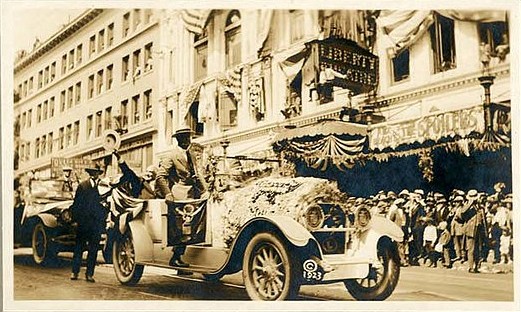
Crime. And Punishment. Sometimes:
Swindlers, Cons and Thieves Hit the Movies

Preview

Once movies became relatively mainstream, popular entertainment changed dramatically. With the demise of the Searchlight Theatre Circuit in 1902, motion pictures (in urban areas, at least) were most often seen as a single, short act on local vaudeville bills. By 1910, however, they were packing houses all by themselves. Theatrical men who rarely showed films in their venues began adding them to bills, sometimes as featured attractions. Tiny urban showhouses became hives of activity, with audiences filing in and out, all day long, in numbers that veteran showmen could barely comprehend.

Business was so good, in fact, that a good number of men (and a few women) made the decision to leave their chosen professions for a new opportunity in moving pictures. Many an exhibitor from the silent era has a sort of “origin story” about their entry into the business, and more than a few share common themes. To take a general example, consider the ambitious young store clerk who had an epiphany one day as he looked down the block toward the local movie theatre, its box office humming with lines of eager patrons. “Movies,” the young man might say, “now that’s the business I should get into.” And in this version of the story, that young man’s observation became a life-changing moment. It inspired him to eventually leave his position as a clerk, get a job at the local theatre, learn the ropes, and eventually graduate into the ranks of ownership – sometimes running one, two or maybe an entire circuit of theatres over his lifetime. Big or small, urban or rural, that young man became an American success story, and it was all thanks to the popularity of moving pictures.

But what these origin stories rarely mention was that the movie business was attractive to all kinds of people, some of whom saw a different set of opportunities. While our young hero was standing on one street corner, dreaming of success in a new profession, another was standing at the other end of the block, surveying the same scene from a slightly different angle. He, too, noticed the crowds at the local movie theatre; he, too, noticed the lines of patrons and the swelling box-office coffers. “Movies,” this second man growls, “now THAT’S the business I should get into!”

Two men, two dreams. And two completely different ideas on how to break into the movies.
Crime. And Punishment. Sometimes: Swindlers, Cons and Thieves Hit the Movies

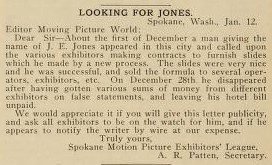
Reel 1: The Swindle

Crime. And Punishment. Sometimes: Swindlers, Cons and Thieves Hit the Movies

Reel 2: The Missing Reel

Crime. And Punishment. Sometimes: Swindlers, Cons and Thieves Hit the Movies

Reel 3: The Smash and Grab

Crime. And Punishment. Sometimes: Swindlers, Cons and Thieves Hit the Movies

Reel 4: I am the Yeggman...

Managers like Cecil Gwinn, Myrtle Geddes and Ben Profitt were few and far between – the kind that made stealing box office receipts a relatively straightforward process. Most theatre managers counted their take behind closed doors, then made sure it was tucked away in the house safe, where it would stay until it could be deposited at a local bank. Of course, there were plenty of criminals (“yeggmen,” to use the slang of the era) who scoffed at the notion of a safe; with tools and talent, those could be opened. And if they were opened on a Sunday night, that meant the safe would likely contain the collective box office receipts from Friday night, Saturday and Sunday, since banks weren’t open on the weekends.

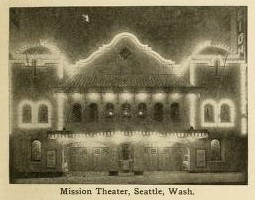
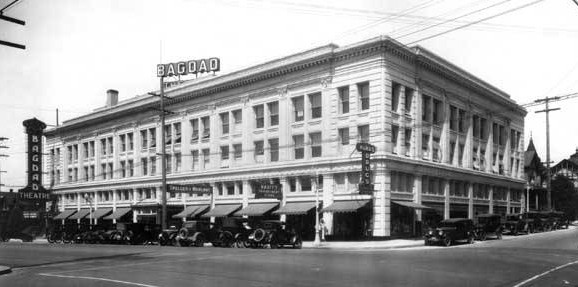
While safe heists could occur at any time, Sundays were the target night, as criminals – even the dim-witted ones – knew it was the best way to maximize their take. And assuming you could slip in and out unseen, the reward was frequently worth the risk. But sometimes you still couldn’t beat the neighborhood cops. In October 1927 two Seattle policemen stopped a robbery in progress at the Bagdad Theatre in Ballard, and managed to do so without realizing, at first, that they had.[1]

On the morning in question a pair of beat cops, Sergeant H.C. McLennan and Patrolman J.R. McMillan, observed a pair of attractive young ladies sitting in a parked car on Market Street. This was a bit unusual, since it was 3:00 a.m. and the streets were deserted, so the officers decided to engage the pair in conversation. Even stranger was when the ladies remarked that they were waiting for their male companions to score some moonshine, a detail they voluntarily offered up to a pair of police officers in the middle of Prohibition. And if that wasn’t suspicious enough, the woman behind the wheel absentmindedly leaned on the car horn in the middle of their conversation. Twice.

Eventually three men emerged from the darkness and approached the car. “Did you get that moonshine?,” one of the girls blurted out as the men piled into the vehicle. McLennan and McMillan were having none of that, but when they demanded the men exit the car for questioning, the driver quickly started up the vehicle and floored it. Both officers drew their weapons and fired eight shots, but the car sped away into the night.

Being on foot, McLennan and McMillan couldn’t give chase and instead inspected the area for clues. They found a gun and two flashlights nearby, on the pavement, but that didn’t really explain what the three men were up to. It wasn’t until the Bagdad opened later that morning that things came together – employees discovered that the house had been broken into and the safe tampered with, with the thieves leaving in such a hurry that they left behind an entire set of safecracking tools. Almost immediately, authorities settled on a likely suspect: Milo Eggers, a well-known figure to local police. Officers McLennan and McMillan were not only able to shoot at the escaping vehicle, but provided information that allowed police to trace the car right to Egger’s doorstep. Eggers was taken into custody, along with Dorothy, his wife, and four other individuals who were inside the house when police arrived. All six were booked into jail, and each quickly posted the $3,000 bail allowing them to go free, pending trial.[2]

Milo Eggers came with quite a resumé. A history of suspected lawbreaking culminated in his 1925 arrest in British Columbia on liquor hijacking charges, where he posted bail and promptly fled to California. There he was apprehended by federal marshals, but made a daring escape while being escorted through the Federal Building in San Francisco. As Eggers was being marched through a corridor, his brother Ariel appeared out of nowhere and sprayed the deputy marshal’s eyes with ammonia, allowing Milo to break free. He escaped, but Ariel was gunned down in the ensuing chase. Milo then slipped into Tacoma, but was apprehended by authorities and extradited back to Canada. In the end, however, fate was on Eggers’ side: he was acquitted on the booze charges, a decision that came mere days before the attempted robbery at the Bagdad.

Milo Eggers, his wife Dorothy and their companions eventually went before Justice Chester Batchelor for a preliminary hearing on the Bagdad Theatre incident.[3] The Eggers, of course, had an alibi – a couple in Tacoma claimed that they stopped by their home at 2:30 a.m. on the morning in question, making it impossible for the couple to have also committed a crime 30 miles away in Ballard. And, in the hearing’s most dramatic moment, Milo Eggers took the stand and squared off against attorney W.G. Beardslee, who asked Eggers point blank if he had ever been convicted of a crime. Eggers’ response was to smile broadly and tell the courtroom something that was, actually, completely true: “‘No,’” Eggers remarked, “‘I have never been convicted.’”[4]

Each of the six defendants was examined and cross-examined, and every one of them maintained that they, too, could not have in Ballard on the night the Bagdad was hit. And despite the fact that these defendants were known to police as low characters, despite the fact that their car had been identified by police, and despite the fact that W.G. Beardslee tried (and was prevented from) introducing fingerprint evidence from the Bagdad crime scene, Judge Batchelor ruled that the police failed to prove that the people facing charges were also the people in the car. The case was dropped, and although the state of Washington was given time to produce evidence that might overturn Batchelor’s decision, they did not.[5]

And so, once again, Milo Eggers could claim that he had never been convicted of a crime, something he could continue to say until 1933, when he was imprisoned in Utah on a robbery charge. And the October 1927 break-in at the Bagdad? Not surprisingly, it was never solved.

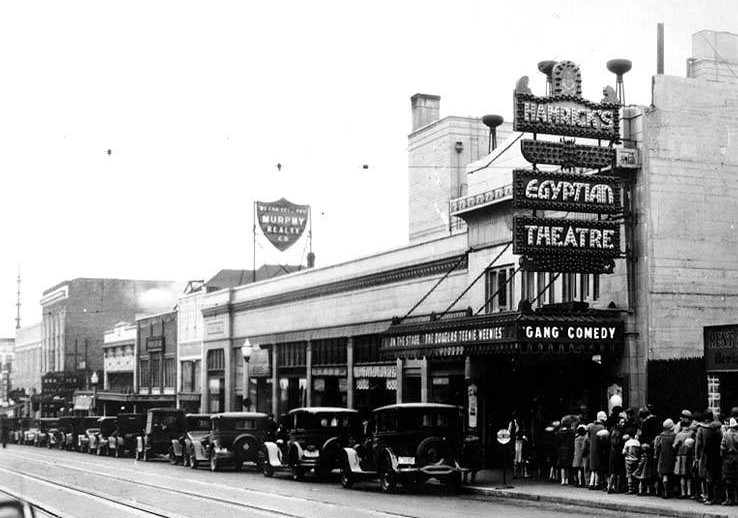
Of course, some robberies were better executed. One occurred in September 1926, when thieves broke into the Egyptian Theatre, on 45th Avenue in Seattle’s University District.[6] With this crime, the culprits (and there were at least two of them) demonstrated that they were true professionals, and had likely staked out the Egyptian for some time while devising their plan.

When it finally took place, this heist went off with cinematic precision. Occurring in the middle of the night, the thieves didn’t approach the Egyptian directly, but began the operation half a block away, in the back alley, when they climbed atop of a different building and made their way, rooftop by rooftop, all the way to the theatre. Once they got there, entering the Egyptian was easy – authorities speculated they climbed down the theatre marquee and entered through a window that was typically left open at night.

Once inside the plan was set into motion. The pair made their way into manager Carl Mahne’s office, where the house safe was located, and set up a pair of nitroglycerin charges. To muffle the sound of an explosion, burglars typically used something like the house curtains or other materials to plug the doors and windows.[7] At the Egyptian, however, this search was made easier by the fact that Carl Mahne had a closet in his office full of suits – more than enough to do the job. Then, once everything was set, the burglars appear to have stopped, sat down and waited. Part of planning this heist was to know the routines of the beat cops who prowled the University District at night. Not only did they know their route and how long it took to make a circuit, they seem to have also known that there was a shift change at approximately 3:45 a.m. near Cowen Park, well away from the Egyptian. So they sat and waited for the beat cop to make his round, then counted off the minutes until he was, theoretically, making his shift change.

Then they struck, blowing the safe (and Carl Mahne’s suits) before bagging up $1,500, all of which was covered by the Egyptian’s theft insurance. They then climbed back out the window, up the marquee to the top of the theatre, then made their way – roof by roof – back down the block. And then they likely sat and waited, again, for the new beat cop to pass by. Once he was safely away from their location, the men finally climbed back down into the alley and slipped away with their loot.

This crime at the Egyptian, which was never solved, was so well orchestrated that a few months later, when Spokane’s Auditorium Theatre was hit in a similar fashion, the police there sent investigators over to Seattle to compare notes. That crime doesn’t appear to have been solved either, but the initial theory was that both robberies may have been committed by the same perpetrators, since the modus operandi appeared to be similar.[8]

As both the Egyptian and Auditorium jobs demonstrated, by the mid-1920s it was no longer necessary to crack a safe – explosives had become the tool of choice. That shift made theatre robberies easier to undertake; whereas a team once needed an experienced safecracker, a skill that came with a price, that person could now be eliminated. Of course, no method was perfect. Explosives had to be handled carefully, and the amount had to be just enough to open the safe without destroying its contents. That was less of an issue than the adrenaline factor. An old-fashioned safecracking allowed the robbers to sneak in and sneak out on their own terms, going at their own pace – burglaries that relied on skill and stealth. Explosives, on the other hand, were loud and messy. Once the charges went off, there was smoke, there was property damage, but more importantly there was a lot of noise – the kind of noise that thieves typically avoided. So everything got ratcheted up a few notches, and whereas a safecracking team could slip undetected in and out of a venue, a burglary using explosives could (and often did) descend into chaos. No matter how meticulous they were in planning and executing the job, once the safe was detonated the burglars grabbed whatever they could, as fast as they could, so they could exit before being discovered.

The desire to beat a hasty retreat posed a few problems. In May 1927, at John Hamrick’s Lakeside Theatre in Seattle, burglars blew the house safe and made away with $100. That wasn’t much for a theatre heist, but they were hitting a small neighborhood theatre, a less complicated job where they knew the take would be modest. Still, you had to think they were a little perturbed to discover that while they made off with $100, news reports later noted that there was another $1,000 in one of the safe’s compartments that, in their haste, they failed to check.[9] And those robbers were lucky – at least they got a three-figure take. During a May 1924 burglary at the Liberty Theatre in Yakima, the perpetrators blew the safe door but got only $40 for the trouble. But they, too, were a little too focused on getting out of the building quickly. They also left a cool $1,000 behind, which was apparently sitting on a shelf, out in the open, right above where the $40 lay.[10]

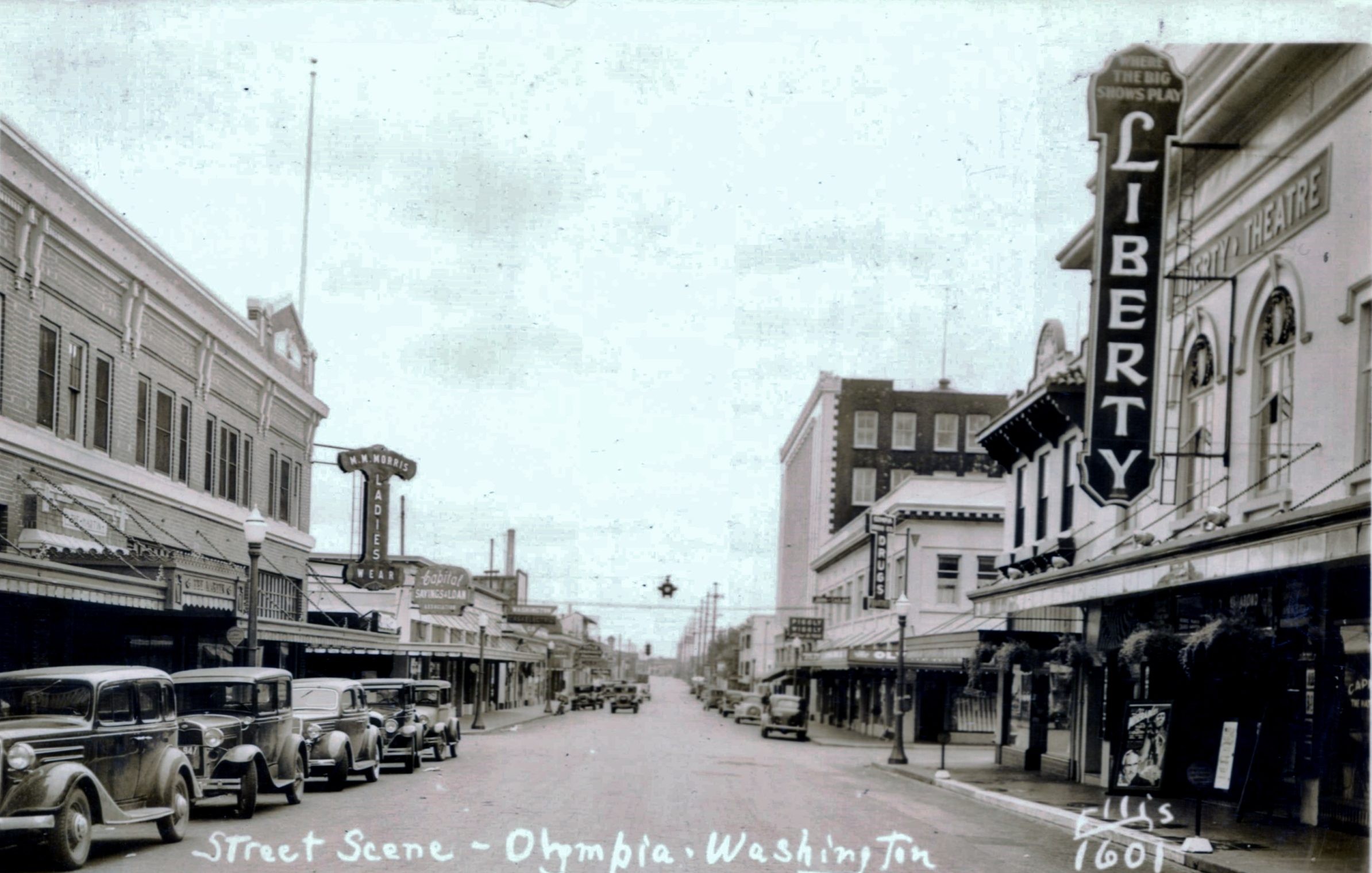
Of course, sometimes the venue and the robbers managed to break even. In 1929 thieves broke into the Liberty Theatre in Olympia and removed more than $1,000 from the house safe. But, before leaving, the crooks made sure to take the Liberty’s theft insurance policy, which was also in the safe, and place it prominently on the manager’s desk – a less-than-subtle reminder that, at the end of the day, the house would eventually be made whole.[11]

By Eric L. Flom – November 2025


Notes:

[1] See “Thieves are Thwarted in Plot to Get $12,000 Loot,” Seattle Daily Times, 24 October 1927, Pages 1 and 2; “Blonde Coos at Officers, Saves Pals,” Seattle Post-Intelligencer, 25 October 1927, Page 17; and “Northwest,” Moving Picture World, 12 November 1927, Page 41.
[2] See “Milo Eggers is Jailed as Yegg Suspect,” Seattle Post-Intelligencer, 27 October 1927, Page 2; “Eggers, Wife Win Freedom With Alibis,” Seattle Post-Intelligencer, 28 October 1927, Page 10; “Eggers, Wife Again in Jail,” Seattle Post-Intelligencer, 29 October 1927, Page 1; “Burglary Charged to Eggers and Wife,” Seattle Daily Times, 30 October 1927, Page 15; and “Eggers, Wife, Pals are Freed on Bond,” Seattle Daily Times, 31 October 1927, Page 26.
[3] See “Eggers and Pals on Trial as Burglars,” Seattle Post-Intelligencer, 15 November 1927, Page 25; “Eggers, Wife and Four Companions Will Face Court,” Seattle Daily Times, 20 November 1927, Page 26; and “Sergeant Ate His Candy While He Scanned Suspects,” Seattle Post-Intelligencer, 22 November 1927, Page 2; “Eggers and Wife Present Alibi in Theft Attempt,” Seattle Daily Times, 30 November 1927, Page 3.
[4] “Eggers and Wife Present Alibi in Theft Attempt,” Seattle Daily Times, 30 November 1927, Page 3.
[5] See “Eggers, Wife Win When Evidence is Held Insufficient,” Seattle Daily Times, 3 December 1927, Page 1; “Judge Threatens to Release All in Eggers Case,” Seattle Daily Times, 4 December 1927, Page 19; “Court Dismisses Charges Against Eggers, 4 Others,” Seattle Daily Times, 11 December 1927, Page 18; and “Milo Eggers Imprisoned for Robbery,” Seattle Daily Times, 3 October 1933, Page 13.
[6] “Yeggs Blow U. District Theatre Safe,” Seattle Post-Intelligencer, 8 September 1926, Page 2; and “Thieves Successfully Blow Safe of Seattle Egyptian,” Motion Picture News, 9 October 1926, Page 1372.
[7] Once explosives replaced old-fashioned safecracking, experienced burglars often found ways to muffle the sound of the explosion so as not to arouse suspicion. In 1925, for example, thieves at the Legion Theatre in Walla Walla carried the house safe to an entirely different part of the theatre before blowing it open, ostensibly to make the sound less likely to be heard. The same thing occurred at the Venetian Theatre in Seattle – that time, the culprits dragged the safe to a space underneath the stage before blowing the door. And in the spring of 1927, when the house safe for the Vogue Theatre in Kelso was blown, thieves used the venue’s own velvet curtains – torn from the foyer – to help silence the blast. (See “Seattle,” Motion Picture News, 16 May 1925, Page 304; “Northwest,” Moving Picture World, 12 February 1927, Page 503; and “Seattle,” Motion Picture News, 6 May 1927, Page 1688.)
[8] “Bandits Blow Safe of Spokane Auditorium Theatre,” Motion Picture News, 28 January 1927, Page 294.
[9] See “Lakeside Theatre Robbed for Second Time in Two Months,” Seattle Daily Times, 2 May 1927, Page 12; “Lakeside Theatre Safe Robbed by Experts,” Seattle Daily Times, 3 May 1927, Page 3; “Baby, Theatre Safes Robbed,” Seattle Post-Intelligencer, 3 May 1927, Page 6; and “Lakeside Theatre, Seattle, Again Robbed,” Motion Picture News, 3 June 1927, Page 2210. In this case, details of the crime were drawn from the pages of Motion Picture News, which typically printed their accounts long after the news had already been reported in the Seattle dailies. Neither the Daily Times nor the Post-Intelligencer, for example, mentioned the $1,000 left behind in their brief articles on the Lakeside robbery – only the trade paper contained this detail. In addition, while Motion Picture News indicated that explosives were used to open the house safe, both Seattle dailies – reporting in the immediate aftermath – were saying that it was initially unclear whether the safe was blown or whether it had been jimmied open. The thinking here is that the trade paper was able to include additional details hadn’t yet been disclosed when the stories initially ran.
[10] “Yakima Theatre Thieves Overlook $1,000,” Motion Picture News, 14 June 1924, Page 2852.
[11] See “Seattle,” Motion Picture Record, 2 March 1929 (Vol. 6, No. 9), Page 4.

Crime. And Punishment. Sometimes: Swindlers, Cons and Thieves Hit the Movies

Reel 5: The Hold-Up

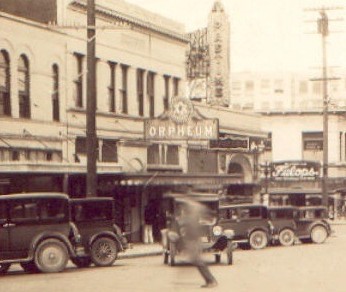
The riskiest of all crimes was the hold-up, in which there was a face-to-face confrontation between the burglar and the target. One of these took place on the evening of January 9, 1929, when a pair of robbers hid inside Seattle’s Venetian Theatre until it locked up for the evening, then emerged and held the organist, a janitor and several ushers hostage. The thieves were convinced that someone in the group knew the combination to the house safe, and spent the next several hours trying to get one of them to cough up that information. It wasn’t until 3:00 a.m. that the pair finally gave up this fruitless intimidation, setting the staff free before escaping into the night, emptyhanded.[1]

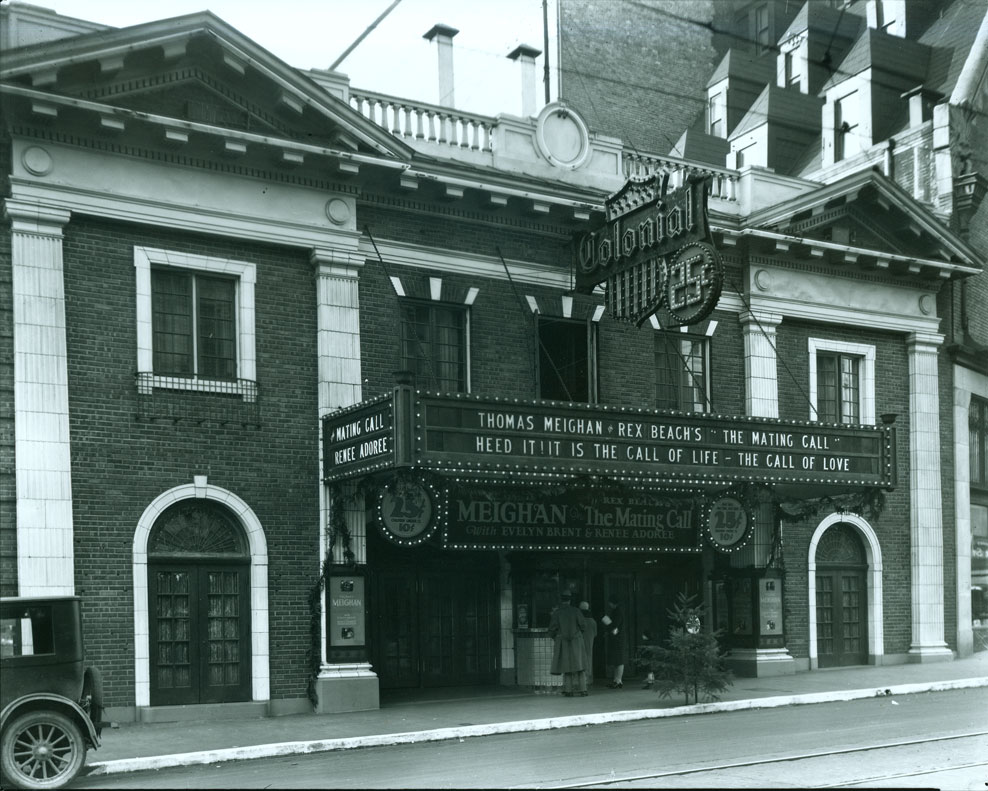
A more brazen robbery occurred in October 1922 at Tacoma’s Colonial Theatre.[2] It’s one thing to break into a theatre at night, but quite another when you’re willing to do it during business hours, with packed house inside and a full staff working all around you. Nonetheless, that’s exactly what happened to Ralph Winsor, manager of the Colonial, on the evening of October 15th. At the time the venue was anchored by the Lon Chaney feature Flesh and Blood, and a large audience had gathered to take in the bill. Amongst those patrons, however, were a pair of well-dressed young men who had no intention of seeing the picture to its conclusion. This pair paid their admission, sat through the preliminary attractions and at least half the feature, then rose from their seats and began to walk out.

This was the perfect time to strike – the patrons were enveloped in the movie and the staff was busy preparing for the next show. That allowed the men to stroll right past everyone and up to the manager’s office, which could be accessed through a doorway in the balcony of the Colonial. Armed with pistols, they surprised Winsor, forcing him to open the house safe, then had him bound and gagged. The culprits collected roughly $1,600, but snorted at the $50 sitting on Winsor’s desk, dismissing it as mere “chicken feed.” Moving quickly and efficiently, the pair bagged up their take and calmly walked out of the manager’s office, slipping quietly through the balcony area and walking right out the front doors of the Colonial with no one paying them any attention. The audience, at least, was so riveted to the Lon Chaney feature that they never noticed the crime drama playing out directly behind them. Tacoma police arrested one of the men immediately, and were tracking the second by the time Moving Picture World reported the incident.

Neither of those incidents, however, held a candle to what was the most spectacular theatre robbery of the era, which occurred on November 10, 1924. On a Monday morning, the Greater Theatres Company was taken for an estimated loss of $10,000, representing the weekend box-office receipts from not one, but two of their busiest downtown Seattle theatres.[3]

The crime reads like an elaborate movie sequence. On the morning of the 10th, manager Frank Steffy of the Coliseum met up with LeRoy Johnson at the Liberty, which served as the headquarters for the Greater Theatres Company. As was their weekly routine, the pair took their weekend box-office receipts, contained in several bags, and loaded them into Steffy’s car so they could be deposited at a nearby bank. Accompanying them that morning, as usual, was Robert Murray, an armed guard hired by Greater Theatres to accompany the managers on this weekly errand.

Steffy’s car departed the Liberty, but as it approached the bank, a few blocks down First Avenue, their lane was suddenly blocked when a Paige motorcar unexpectedly backed out of an alleyway and into the road. Before they knew what was happening, a pair of men brandishing pistols approached Steffy’s vehicle, while two additional gunmen emerged from a nearby hotel. The first pair attacked Murray as he tried to exit the car, disarming him, while the others held Steffy and Johnson at gunpoint. In broad daylight, in the middle of First Avenue, in full view of everyone, the thieves grabbed the bags from Steffy’s vehicle and threw them into the Paige, the driver speeding up First Avenue with both the loot and Steffy’s car keys, ensuring that the theatre men could not give chase.

Even so, security guard Robert Murray gave it a shot. As the robbers sped northward towards Queen Anne, he rushed into oncoming traffic on First Avenue, threw up his hands to stop a vehicle, then yanked the driver out and tore up First Avenue in pursuit. He made good time, too, tailing the Paige all the way to Queen Anne Hill, before gravity brought this dramatic chase back to earth. The Paige he was tailing was a substantial vehicle, with an engine large enough to sail right up the hill and out of sight. The car that Murray was driving, however, wasn’t up to the task. Murray’s vehicle coughed and wheezed as he attempted an ascent, until he finally had to pull over and let the robbers speed away with $10,000 in loot.

Frank Steffy and LeRoy Johnson notified Seattle police, and a pair of arrests were made the following day, November 11th, in Bellingham, but those individuals were released in short order. The Bellingham arrests appeared to be somewhat of a boondoggle; the abandoned Paige was eventually located elsewhere in Seattle, and some of the empty money bags were found floating underneath a local bridge. This was the fourth large-scale robbery attempt on the Greater Theatre Company in recent years, but the most damaging in terms of losses. Two earlier attempts – both hits on the Coliseum Theatre – had failed, while a third robbery resulted in a $500 loss. Theft insurance purchased by the company (at that point, an excellent choice) covered both amounts.

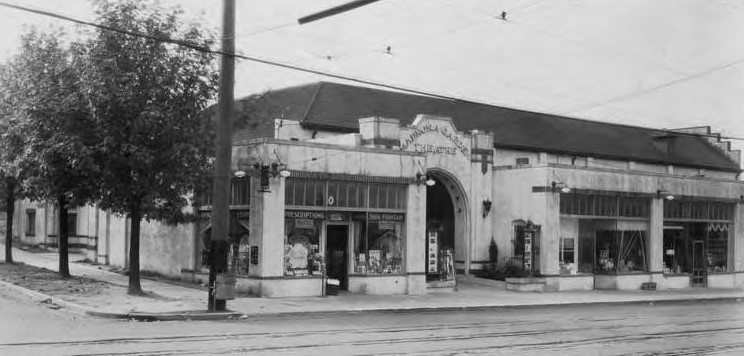
Of course, not every theft resulted in a loss, even when the theatre didn’t have insurance. In 1926, at the Madrona Garden Theatre in Seattle, manager P.E. Irving found a way to turn the tables on one would-be robber. Granted, he may have unleashed an extended crime spree in the process, but at least the Madrona Garden was made whole.[4]

It began on the evening of January 27, 1926, at a small house located at 906 24th Avenue South, in the Judkins Park neighborhood, just to the east of Rainier Avenue South. The home was owned by Ralph Macchia, a local butcher who owned a shop a short distance away. This was a modest, working-class house, situated in a modest, working-class neighborhood, but Macchia was a success story – a homeowner, a business owner, and also the owner of a brand new automobile. Or that was true until the evening of the 27th, when he looked out his front window and notice that his prized vehicle was no longer there. Macchia made an immediate call to the Seattle police department, and word began to filter out that patrolmen should be on the lookout for cars matching its description.

It wouldn’t be long before it turned up. A short time later, about a mile from where it was stolen, Macchia’s vehicle pulled up in front of the Madrona Garden Theatre. A well-dressed man in a dark blue suit parked the car, exited the vehicle and approached Ellen Fenton, cashier for the sleepy neighborhood movie house, asking for a single ticket to see the show. None of this was extraordinary until Fenton glanced upwards with the stub and the man’s change. The man in the blue suit was no longer interested in the picture – he was now brandishing a pistol and demanding everything in Fenton’s till. She was scared and in no position to argue; Fenton quickly stuffed $40 into a canvas bag and pushed it through the kiosk opening.

All of this transpired in seconds, but somehow, in that short amount of time, manager P.E. Irving came upon the scene out in front of the Madrona Garden. While he had no intention of playing the hero, he tried to reason with a criminal who, almost certainly, didn’t want to be reasoned with. Irving made his case quickly: he was just the manager of a small theatre, the house that didn’t make much money, and he really couldn’t afford the loss. Irving wanted no trouble – if the bandit would just drop the bag on the sidewalk and leave, he wouldn’t contact police. But that, of course, wasn’t going to happen. The criminal had a sack full of money and a pistol, so he clearly had the upper hand. He scoffed at the offer and tossed the canvas bag through the open passenger window of Macchia’s car, onto the front seat. The man in the blue suit then walked around to the driver’s side, got into the stolen vehicle and started making his getaway.

Manger Irving, however, wasn’t giving up so easily. When he said he wanted his money back, he wasn’t kidding. So, while the bandit’s head was turned and the car began pulling into traffic, Irving impulsively stepped forward, reached through the open passenger window and grabbed the bag, yanking it back out and fleeing to safety inside the Madrona Garden Theatre. The man in the blue suit never saw it coming; the robber had been robbed.

Irving’s move was so quick, so bold and so unexpected that the culprit was dumbstruck – so much so, in fact, that he forgot that he had been, to that point, pulling into traffic. And that wasn’t good, because while the thief was distracted his car was sideswiped by a passing vehicle, blowing out the windows on the driver’s side of the car. This was the worst of all worlds for the man in the blue suit; he got into an accident, in a stolen car, in front of a failed crime scene, and now had to deal with an agitated driver in the street who was yelling loudly as onlookers began gathering on the sidewalk. He didn’t stick around to sort any of that out; the stolen vehicle was damaged but drivable, so the thief popped it into gear and sped away from the scene, shooting up East Cherry before eventually turning northward.

Now, one would expect this crook to try and cut his losses. He stole a car; the police were notified. He tried to rob a theatre; the police were notified. He got into a car accident and fled the scene; the police would eventually be notified. The getaway car was identifiable because it was damaged from bumper to bumper; it may have been dark out, but it was going to be a little difficult to blend in. Logic dictates that you ditch the car and lay low. But this criminal had persistence, and the night was young.

Down, but not out, the man drove his limping vehicle northward, to a filling station at 24th and Boyer, on the edge of the Montlake neighborhood, about 3½ miles from the Madrona Garden Theatre. Now he was improvising. Thwarted in his earlier stick-up attempt, he pulled into the station and confronted the lone attendant, John Campbell, looking to come away with whatever cash was in the register. But that didn’t work either, because just as he went for his pistol a second car pulled into the filling station. Spooked, the man in the blue suit put the gun away, jumped back into the damaged car and sped up the street, eventually going onto Boyer Avenue East.

The failed gas station robbery likely prompted another call to local police, but it still wasn’t time to quit. The man raced up Boyer for about mile, then turned left and headed uphill to the corner of Harvard and Roanoke, where he stopped at a Standard Oil filling station, this one attended by Charles Falk. And this robbery, his third attempt of the evening, was the charm. This time there were no interruptions – Falk handed over an undisclosed amount of cash, then stood there helplessly as the banged-up car hobbled away up Capitol Hill.

So now, finally, after stealing a car, crashing it within minutes, batting one for three in robbery attempts, and generating at least four or five police calls, the man in the blue suit finally decided that it was time, perhaps, to ditch the car. So, after fleeing the Standard Oil station and driving south on Broadway, he pulled onto a side street and, at 1711 Bellevue Avenue, parked the car on a quiet side street and walked away. Or, more precisely, he walked about 15 feet away. That’s because he parked the car, exited, then went directly to the other side of the street, where he proceeded to steal his second vehicle of the evening.

New car, new cycle. The man in the blue suit traveled north on Bellevue before turning right onto East Mercer, heading back towards Broadway. But as he reached Summit Avenue East, he spied Inez Morrison walking alone in the darkness. Still improvising, it seems, he drove past Morrison, pulled the car over, got out and walked back toward the woman, flashing his gun and making off with $6. He then dashed back, jumped in the car and drove out to Broadway, where he turned right and headed south.

Inez Morrison was a crime of opportunity – easy pickings that were too good to pass up. But the man in the blue suit, now that he was behind the wheel of an entirely new car, appears to have had a renewed sense of purpose. After being thwarted at the filling station at 24th and Boyer, he did not give up, turning around and hitting the station at Harvard and Roanoke, this time successfully. Persistence paid. So, as he drove down Broadway, he seems to have turned his thoughts to the botched robbery attempt at the Madrona Garden Theatre. Certainly that could have gone better. Perhaps it was time for another shot.

Hitting the Madrona Garden again would have been foolish, but Seattle had plenty of other neighborhood theatres. And at some point during his drive, the man in the blue suit settled on his next target: the ironically-named Good Luck Theatre, at 24th and Jackson.

Say what you will about this brash robber, but he learned from his mistakes. As before, he parked the car directly in front of the Good Luck, exited the vehicle, and approached the cashier, Pauline Knight, when no one was around. This time, however, he wasn’t taking any chances. He did not ask for a ticket, nor did he immediately pull his gun. Instead, he explained to Knight that he was meeting someone at the Good Luck and wanted to peek inside and see if his friend had arrived. That sounded reasonable, so Knight let him peer into the venue and see if anyone was around. It was late at night; the lobby was empty. Then he turned, glancing one way up the street, before also scanning the other. No one was anywhere – not a good Samaritan as far as the eye could see.

And so the man in the blue suit returned to the box office, took out his pistol, and relieved the Good Luck of $10 before jumping back into his stolen car and (successfully, this time) pulling into traffic and zooming off into the night. And that robbery seems to have ended the man’s crime spree for the evening, or at least it ended the crime spree that we know about. The second stolen car was discovered the following day near Second Avenue and Battery, several miles from the Good Luck Theatre, his last known location. But judging from this man’s track record there was a lot he could have accomplished in that distance, had he chosen to do so.

The irony, of course, was that after an evening that featured two stolen cars, a hit-and-run, four hold-ups and a mugging, no one knows who this individual was. On one night, this man single-handedly terrorized businesses and pedestrians from the Central District all the way up to Montlake and back, only to disappear and never get caught.[5]

Cops and robbers. Just, from time to time, without the cops.

By Eric L. Flom – November 2025


Notes:

[1] “Seattle,” Motion Picture Record, 12 January 1929 (Vol. 6, No. 2), Page 4.
[2] See “No Traces of Bold Gunmen,” Tacoma News Tribune, 16 October 1922, Pages 1-2; “Theatre Bandits Here Believe Police,” Seattle Post-Intelligencer, 17 October 1922, Page 1; “Man Held, Suspected of Theatre Robbery,” Seattle Post-Intelligencer, 18 October 1922, Page 4; “Tacoma Exhibitor is Robbed of $1,600 at Point of Gun,” Moving Picture World, 4 November 1922, Page 44; and “Seattle Slants,” Motion Picture News, 4 November 1922, Page 2329.
[3] See “Bandits Get $10,000 From Theatre Men,” Seattle Post-Intelligencer, 11 November 1924, Page 1; “Jensen & Von Herberg Robbed of $10,000 Week-end Receipts,” Moving Picture World, 29 November 1924, Page 405; and “Yeggmen Get $10,000 from Seattle Exhibitor,” Motion Picture News, 29 November 1924, Page 2706.
[4] See “Movie Owner Grabs His Till From Bandit,” Seattle Daily Times, 28 January 1926, Page 26; “Four Held Up by One Thug,” Seattle Star, 28 January 1926, Pages 1 and 9; and “Seattle,” Motion Picture News, 27 February 1926, Page 1021.
[5] It’s interesting to note that Seattle’s dailies reported this crime spree differently. The most colorful account – the one related here – comes from the Daily Times, which plotted the bandit’s movements all throughout the evening, plus a later report that appeared in Motion Picture News. Both are consistent in fact and tone, but differ from the account that ran in the Star, Seattle’s most popular daily at the time. The basics are the same: two stolen cars, two theatre robberies, two gas station robberies. But the Star ordered them differently, reporting that the bandit went from his failed robbery at the Madrona Garden directly over to the Good Luck, where he was successful. That’s entirely possible, but it would have required the man in the blue suit to drive his stolen (and now damaged) vehicle directly through an area where there was a lot of police activity, no thanks to him. The Star, in fact, doesn’t even explain the car accident at all. When the robber arrives at the first gas station near Montlake (which would have required a second pass through the area with increased police activity), he’s driving a damaged vehicle; the Star doesn’t explain why or how it was damaged, it just was. They also reported that the second stolen car was the last crime of the night, and didn’t mention the Inez Morrison mugging at all.
          The biggest difference, however, is how the Star treated the Madrona Garden robbery. The Daily Times and Motion Picture News portrayed manager P.E. Irving as someone who tried to reason with the bandit, and when that didn’t work snatched the money back when the robber let his guard down. That was quite a contrast to the story that made it into the Star. There, P.E. Irving didn’t negotiate at all; he demanded the money back, even daring the robber to shoot him dead, right there, in what seems like a poor strategy for an unarmed neighborhood theatre manager. Then, when Irving reached into the car and grabbed the sack of money, he didn’t turn and run. Instead, he just glared at the thief, Dirty Harry-style, before turning and slowly walking away, as if he had just taken a toy from a naughty child. According to the Star, the robber was so intimidated by P.E. Irving that instead of shooting him dead, he drove over to the Good Luck Theatre where there was less resistance. (See “Movie Owner Grabs His Till From Bandit,” Seattle Daily Times, 28 January 1926, Page 26; “Four Held Up by One Thug,” Seattle Star, 28 January 1926, Pages 1 and 9; and “Seattle,” Motion Picture News, 27 February 1926, Page 1021.) The odd man out here was the Seattle Post-Intelligencer, which had been scooped by both the Star and the Daily Times by the time their story could run; their version of the crime spree warrants barely a mention.