As the films inspired by the Seattle General Strike of 1919 showed, labor unions in the Pacific Northwest weren’t afraid to flex their muscles when need be. This was certainly the case for the many unions that covered the local theatrical and motion picture industry, which included small groups (such as ushers, stagehands and janitors) all the way up to significant players like musicians and projectionists. Union organizations had long been part of the industry. One of the first to organize in the Northwest were the moving picture operators in Spokane, who applied for a charter to become a separate local under the existing stage employees’ union in early 1908. This became the International Association of Theatrical and Stage Employees (IATSE) Local No. 9, and it started an avalanche; later that fall projectionists in Portland became IATSE Local No. 28, while Seattle eventually organized as IATSE Local No. 154.[1]
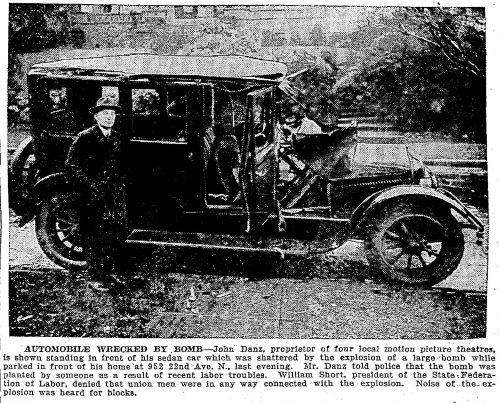
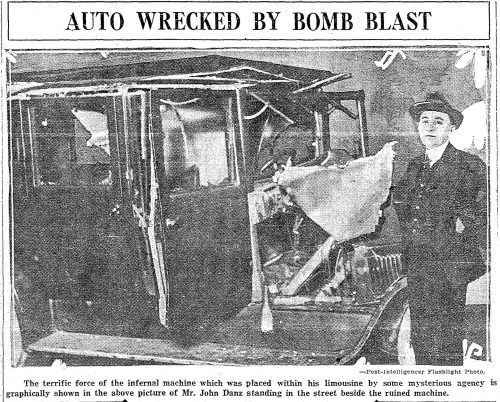
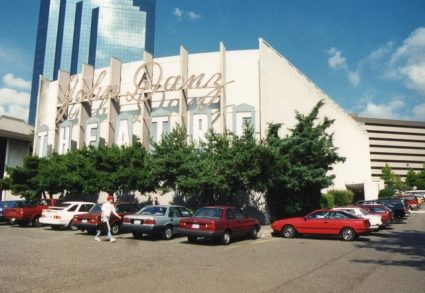
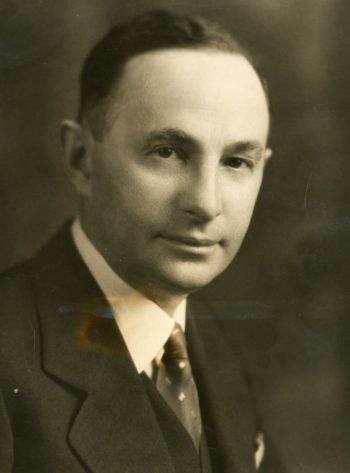
Union representation did much to improve working conditions and increase wages at moving picture theatres across the country. They were also helpful in fighting measures that either impeded or put additional burdens on certain types of work. But the advocacy for union interests could also, on occasion, be a tad forceful. Motion pictures were a thriving industry and, particularly in urban areas, there were times when management was at loggerheads with their own workers. These situations could become contentious, but rarely were they dangerous. Unless you were Seattle exhibitor John Danz, who forcefully, consistently, and gleefully took on local unions, in battles that didn’t last for weeks or months, but for years.
Notes:
[1] See “Washington Operators Apply for Union Charter,” Moving Picture World, 9 May 1908, Page 417; “Operators’ Union in Spokane, Wash.,” Moving Picture World, 23 May 1908, Page 457; “Notes of the Trade,” Moving Picture World, 3 October 1908, Page 256; and “Notes of the Trade,” Moving Picture World, 14 November 1908, Page 380.