The Atlas Shrugs:
The Rise, Fall, Rise and Fall of Seattle's Most Unique Theatre

Preview

Silent film history is, in many cases, a white history. Audiences of all races and ethnicities attended the movies, but certain minorities were sometimes forced to sit apart from the rest of the audience, in accordance with local custom or law. In Washington, at least, there were several theatres that had more liberal seating policies, but often they were smaller venues that operated only briefly or left behind few records, so their histories are difficult to trace.

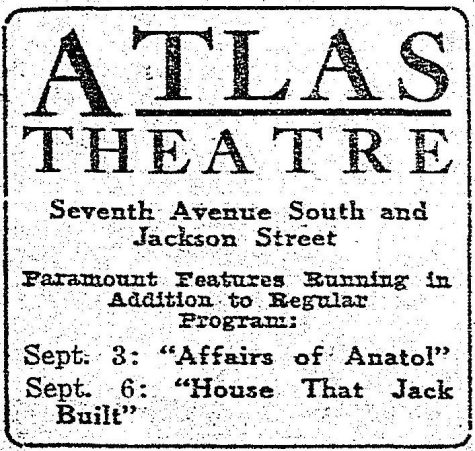
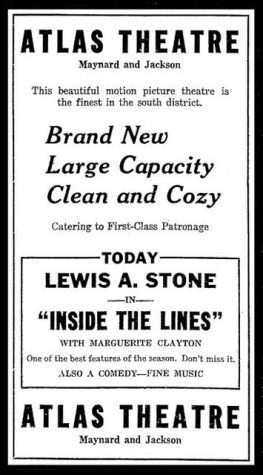
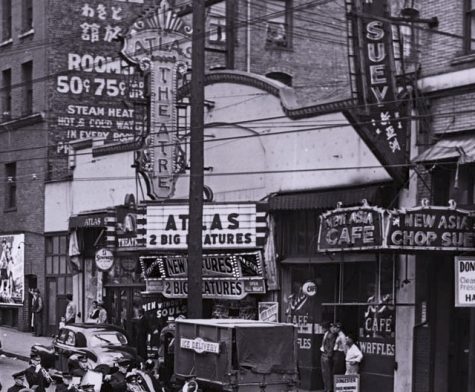
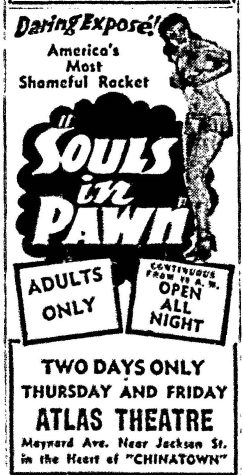
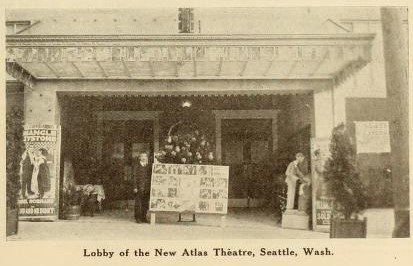
But in one case, at least, Seattle was different. Consider at the history of the Atlas Theatre in the city’s Chinatown neighborhood, built by Japanese owners in 1919. This was a modern theatre of the first order; the films were American, but the clientele was largely Asian. It stood as the neighborhood gem when it debuted, and remained an important gathering place throughout the 1920s, but the original luster wouldn’t last. The fortunes of the Atlas fell along with the broader neighborhood during the Depression, after which it limped along into the 1950s, known more for crime and vagrancy than the pictures it showed. Normally, that would have been the end of the line – any number of theatres in Seattle’s so-called “better” neighborhoods were being shut down by this time, victims of a newer era and a populace that was expanding outward after World War II.  And yet the Atlas managed to survive, in an area that seemed unable to support it.  That’s because the venue was completely revitalized in the 1960s, leaving behind its former history and transforming into one of the West Coast’s first all-Asian movie theatres, showing Japanese, Chinese and Filipino movies for the better part of two decades.

Renamed the Kokusai, Chinatown’s Atlas Theatre was getting a second lease on life – rescued and revitalized in a much more meaningful way than period theatres in Seattle’s other various neighborhoods. And, in the process, the Kokusai (nee, the Atlas) ended up playing an important role in Chinatown’s (nee, the International District’s) history, influencing generations of residents even after its closing.
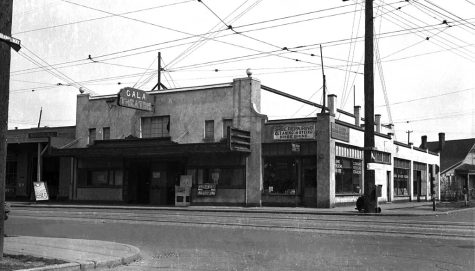
The Atlas Shrugs: The Rise, Fall, Rise and Fall of Seattle’s Most Unique Theatre

Reel 1: Lay of the Land

The Atlas Shrugs: The Rise, Fall, Rise and Fall of Seattle’s Most Unique Theatre

Reel 2: Big in (Little) Japan

The Atlas Shrugs: The Rise, Fall, Rise and Fall of Seattle’s Most Unique Theatre

Reel 3: The Setting Sun

The Atlas Shrugs: The Rise, Fall, Rise and Fall of Seattle’s Most Unique Theatre

Reel 4: Renewed and Reimagined

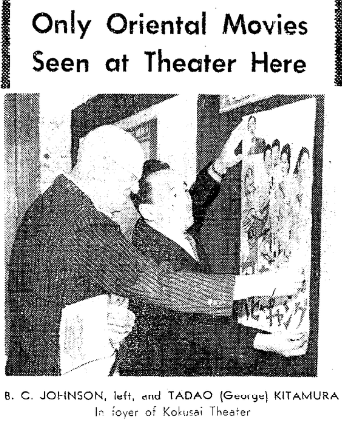
By 1960 Burrell Johnson had done about all he could do with the Atlas. But rather than shutter it for good, he was lucky enough to find a buyer – Tadao Kitamura. Kitamura was a Chinatown resident who had been dabbling in small-time movie exhibition for years, screening imported films at a local Buddhist church and giving occasional shows at the Ship Ahoy Café, among other places.[1] The Atlas was Kitamura’s first attempt at running an actual movie theatre, and his first order of business was an unusual one: he took the traditional playbook and threw it out the window. For Tadao Kitamura, the Atlas wasn’t just a theatre – it was an opportunity to bring the Chinatown community closer together through motion picture entertainment. To that end he took the Atlas’ entire history, the good and the bad, and set it off to the side. He was going to take the venue in an entirely new direction, one that would, over time, restore its reputation and cement its legacy in Seattle film history.

Tadao Kitamura was a Kibei – born in the United States (April 1, 1919, in Bellingham), but educated in Japan, at least some of that in the city of Hikone.[2] He returned to the United States in May 1936, at age 17, coming from Yokohama on the ship Heian Maru. He settled into the Chinatown neighborhood and worked a variety of kitchen jobs until August of 1942, when he and thousands of other local Japanese were rounded up and interned in accordance with Executive Order 9066. Tadao was sent to Camp Harmony, the temporary holding quarters for Japanese citizens constructed on and around the Western Washington Fairgrounds in Puyallup. This was a temporary stop before being transferred to the Minidoka Camp in Jerome, Idaho, where he lived until August 1945.

After the war Tadao Kitamura pursued his passion of becoming a chef, even going to New York study the craft, though he had already developed a parallel interest in motion pictures. This may not have been new, given his family; the details aren’t entirely clear, but Kitamura’s father Chutaro may have had some sort of connection to the Japanese film industry. When Tadao was interned in 1942, his primary occupation was listed as a restaurant worker, but his secondary occupation was as a “semiskilled motion picture projectionists [sic].”[3] (For the record Chutaro’s occupations, also listed on Tadao’s internment paperwork, made no mention of any motion picture experience. He was listed a skilled craftsman with experience in farming operations.)

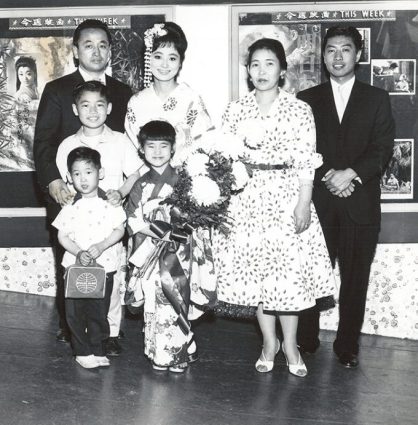
After his brief stay in New York, Tadao Kitamura returned to Seattle and went back into the restaurant business, eventually marrying Mitsuye Tanaka on November 27, 1951. Mitsuye was nine years his junior. Like Tadao she was a Kibei, born in Kent but educated in Japan, where she lived through the end of World War II. Mitsuye eventually returned to the United States, and after getting married the Kitamuras settled down and started a family. They would eventually have four children – Lance, Elaine, Darrell and Zen.

Despite a new marriage, a growing family and more responsibility, Tadao continued to indulge his interest in film, and by the mid-1950s had a side hustle exhibiting Japanese pictures in various rented locations. When he took over the Atlas Theatre in 1960 it was both an opportunity to pursue his passion and to further the connection between himself, his community and his Japanese homeland. “I think his interest [in movies] was because we were Japanese,” daughter Elaine remembered, “[and] we wanted to worship and treasure the language and culture…”[4]

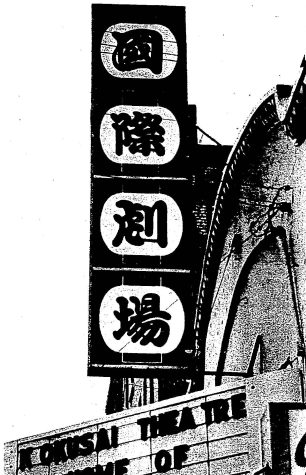
Kitamura started by refurbishing the Atlas from top to bottom, and by giving it a new name – the Kokusai, the Japanese word for “international.” According to Seattle Times columnist John Reddin, who visited the “much-maligned little theater” in 1963, the Kokusai’s modest exterior now hid an interior filled with “exotic Buddhas, bonsai trees, samurai swords, costumed Japanese dolls and other Oriental statuary,” creating an atmosphere that invoked “a bit of old Kyoto lifted intact and put down in the heart of Chinatown.”[5] This change was transformative, breathing new life into the old theatre and better aligning it with the community it served. In this sense, the Kokusai fit the neighborhood like a glove. “Some shop owners still used abacuses instead of cash registers [in the 1960s],” remembered Ron Chew. “I watched their deft fingers slide quickly and lightly across the clacking beads. My mother wrangled over prices, trying to squeeze out the best deal. Transactions were handled in cash. My father and mother didn’t have checkbooks or credit cards. Receipts were written with fountain pens dipped in inkwells.”[6]

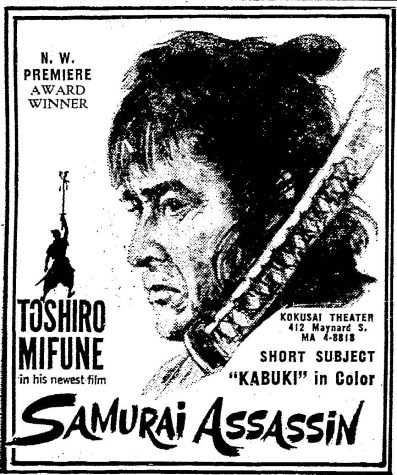
Tadao Kitamura transformed more than just the look and feel of the Kokusai. A modern Cinemascope screen was installed, and ticket prices were raised to cater to an entirely different type of moviegoer. Kitamura also enhanced the cultural experience by operating a restaurant/tearoom, the Raku, in the space next to the Kokusai – a Shibai tradition that was a throwback to the old picture houses of Japan. But nowhere were the changes at the Kokusai more evident than in its programming. For its lifetime the venue had only shown American-made films. But once Kitamura took over, those were out. He only wanted to show Asian films, making the Kokusai, at the time, one of only a handful of theatres in the United States dedicated to showing Asian cinema. He was ahead of the curve; eventually a tiny circuit of theatres emerged, most centered around the Asian communities along the West Coast. “‘The entire International community is proud of our Kokusai Theatre,’” attorney Clarence Arai told John Reddin in 1963. “‘[Tadao] kicked the winos out and made it into a family theater, neat and clean and usually playing to a full house.’”[7]

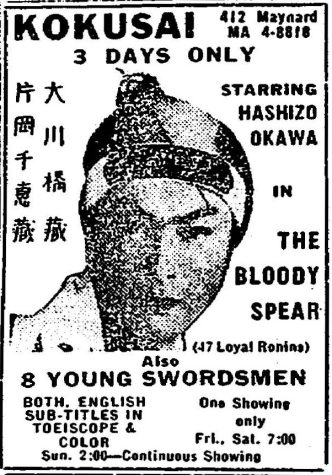
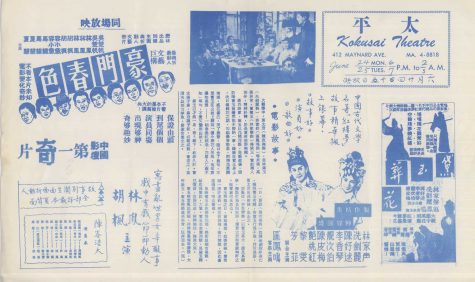
Kitamura’s screening policy was to show Chinese features on Monday and Tuesday, Filipino pictures (often in the Tagalog dialect) on Wednesday and Thursday, then Japanese features on Friday through Sunday.[8] Eventually the Kokusai dropped the Thursday screenings, but for years the venue opened in the late afternoon and ran until 11 p.m. or midnight. There were even a few nights when the venue stayed open into the wee hours of the morning, which they did so nearby restaurant workers could attend shows after their closing shifts. The Kokusai’s only matinee screening was on Sunday afternoon. Most Japanese programs, at least, were double features. Kitamura tried to pair films that were new to the venue with an older picture that had already played before, ideally when they had some sort of link (theme, director, performer, etc.). Most pictures weren’t subtitled, but a few were – not that it really helped. In one such film, when the male lead turned to the heroine and warned her to “be careful,” the line ended up being translated as “your single walking is prohibited.”[9]

Tadao Kitamura took an unusual approach to operating the Kokusai Theatre. In most neighborhood venues the manager had an active hand in booking and advertising, and that was true at the Kokusai, at least with respect to their Japanese offerings. For these, Tadao and Mitsuye collaborated on selecting and booking films, with Mitsuye handing the scheduling and shipping details for film prints. She also handled the advertising for these shows, which were typically promoted using flyers distributed at the theatre and by hanging programs or posters in local businesses. For the most part Tadao outsourced the programming of Chinese and Filipino films to others, who not only selected the pictures but were responsible for promoting those engagements within their own communities. With the Kokusai’s Japanese programming the Kitamuras took on every aspect showing these films and reaped the financial gain of these shows. For their Chinese and Filipino movies, they simply rented out the venue and took a portion of the box office receipts, the remainder going to the program organizers.

In a way, Tadao Kitamura’s business model was to organize a miniature Asian film festival every single week; “‘[w]e were multicultural before it was cool,’” daughter Elaine once quipped.[10] Tadao’s programming choices were geared to serve the entertainment needs of the greater Chinatown community, but unconsciously he was tapping into a new movie culture in the 1960s. The house was designed to serve the neighborhood, but over time the shows (particularly the Japanese films) started attracting white audiences as well, especially when the Kokusai booked samurai-themed movies. Kitamura also found success with Japanese chambara films; set in historical Japan, these features had a familiar ring for American viewers. “‘I think you could say that the chambara were the first of the horse operas,’” he told a reporter in 1961. “‘The structure is almost exactly the same as that of the western turkeys you see on teevee today.’”[11] This was a complete surprise – the Kokusai didn’t advertise outside of Chinatown, and was mentioned in Seattle newspapers only occasionally. “White audiences came from nowhere,” Elaine recalled, unable to explain how they crossed cultural barriers without even trying. The Chinese and Filipino nights, as well, had their own specific film genres that were also quite popular. As a boy Ron Chew, of Chinese descent, came down from his Beacon Hill home on occasion to see Cantonese opera, but he much preferred trips to the Kokusai where his mother went to see their Chinese films. “I marveled at the martial arts and supernatural ghosts flying through the air,” Chew recalled. “I didn’t care for the violent sword-play and the brutality of severed limbs and heads. There were moments when I had to close my eyes and turn away. My mother hated the violence as well. She came for the romantic stories of separation and heartbreak, the epic tales of devotion, and the heroic stories of uprisings against tyrannical rulers. She arrived with a full box of napkins in her purse, readying herself for cathartic crying sessions.”[12]

At the time, seeing a film at the Kokusai was an experience unlike any other. At the Chinese pictures that Chew attended, he vividly recalled his mother bringing sacks of ga ghee (Chinese watermelon seeds) and chicken wings into the venue, and she was not alone in that practice. The crunching of seeds could be heard all over the theatre, to the point where it was mildly distracting, while other patrons dug through their own homemade concessions, the remnants of everything ending up on the floor. “I felt sorry for the people who had to clean up,” said Chew. (That clean-up crew was the Kitamura family, who had the task of scrubbing the auditorium floor to remove debris that didn’t easily sweep up. “It was a mess,” Elaine remembered, “a complete mess.”[13])

There were even differences from night-to-night at the Kokusai, depending on the type of films being screened. In 1961 Tadao Kitamura claimed he couldn’t make enough popcorn when showing Filipino or Japanese pictures, but at Chinese screenings he didn’t even bother turning the machine on.[14] (Ron Chew explained that the core audience at the shows he attended was Chinese women who were relatively new of America, so popcorn would have been an unfamiliar snack. Filipino and Japanese patrons, many of whom had grown up in and around American military bases in their homelands, were more attuned to this time-honored movie ritual.) The venue itself sold popcorn and American candy, as well as soda; because the Kokusai never had an ice machine, the drinks were served at room temperature. Sometimes street vendors parked outside the Kokusai to take advantage of their shows. Elaine Kitamura recalled that on Filipino nights it wasn’t uncommon for someone to sell lumpia and other quick foods on the street, which patrons would then bring into the theatre. Tadao Kitamura had no hand in organizing these street vendors, but he also didn’t discourage them and never charged anyone for setting up shop. For him it was part of the cultural experience – his goal was to bring authentic Asian cinema to the people of Chinatown, and the food vendors played right into that vision.[15]

Kitamura ran his theatre like he ran his family. The Kitamuras were prim, proper and private, but Tadao could be strict – as a Kibei, he wanted everything traditional and orderly. The Kitamuras observed all Japanese festivals and holidays. They could speak English outside the family home, when they had to, but inside they spoke only Japanese. This was also true at the Kokusai, particularly during the weekend shows – Tadao insisted that Japanese patrons were only to be addressed in Japanese, and that all Japanese customs should be observed. Everyone in the Kitamura family had to be on their best behavior at all times. As a prominent family in Chinatown, this was something of a double-edged sword for the kids. On the one hand everyone knew who they were, so they were greeted warmly wherever they went and shown a great deal of respect. On the other they were always being watched, since their public behavior reflected on the family name. There were no youthful hijinks of any kind – no one wanted to run afoul of Tadao or Mitsuye by doing something that reflected poorly on the family.

When the kids were young, and from time to time thereafter, Tadao employed others to help run the Kokusai, but once his children were old enough they graduated into the family business, working evenings and weekends for years. (Zen, the youngest, managed to avoid conscripted service.) In fact, the Kokusai was mostly run by the Kitamura family with no outside employees, except for the house projectionist – a setup used at thousands of small movie venues across North America during the silent era and beyond. “I was the cashier,” Elaine remembered, “and [my father] wouldn’t allow me to use a calculator to do the calculations of how many adults, kids and stuff, so I had to do everything by hand to figure out the total cost…I’m sure he lost money because I wasn’t very good at math!”[16] This was part of Tadao’s teaching method – Elaine needed to learn how to do the calculations in her head. (And she did, but only after creating cheat sheets to help with the adding.) Sometimes he could be difficult, but it was only because Tadao took such pride in the Kokusai that he considered the theatre an extension of himself and his family.

But if there was one thing that Elaine remembered vividly about her father, it was his steadfast commitment to the Chinatown community. If the family ate at a restaurant, it was local; if they needed an item, they bought it from a neighborhood merchant. But being a member of the community meant much more than just patronizing local businesses. Tadao would never just buy an item and leave – he made a point to talk with the shopkeepers and staff, to know their family and friends by name, and to stay connected. Sometimes he dragged the children into stores just to make a social call on the owner. These conversations might run for an hour or more, and the kids were obligated to stand at his side and remain engaged. This was also part of their training, both in how to converse with adults but also in how to interact with the broader community. Tadao Kitamura wasn’t unusual in this sense, because this was how things were done in Chinatown. Everyone knew everyone, and everyone supported everyone. He regularly patronized neighborhood businesses, and in turn those people went to the Kokusai to support his. Privately, daughter Elaine liked to refer to her father as the unofficial “mayor” of Chinatown, and she wasn’t joking – Tadao took the time to know people, their businesses, their families, and their concerns, and those were all very important to him.

Thanks to the hard-working Kitamura family, the problems that once hounded the old Atlas Theatre were completely forgotten in a matter of years. Tadao had tapped into something special. Using the Kokusai as a vehicle, he was building a community within his own community.

It was a good formula, and one that was eventually copied. In 1971 the Kokusai Theatre was joined by the Toyo, a venue known previously as the American and the Beaux Arts, which also began programming Asian films. That venue, located outside Chinatown on Rainier Avenue South, was run by the father/son team of John and Terry Nakano. Together with some smaller venues that cropped up in and around the area, by the 1970s Seattle had a miniature circuit of movie houses specializing in Asian cinema. But, despite their similarity, the Kokusai and Toyo, at least, differed in their programming choices. The Kokusai was more likely to show older films and classics, although they also had to evolve with the Asian film market. “[Ken Wong, Kokusai projectionist] says the most popular films for years involved wild swordsman battles, but now fistfights – kung fu – are the rage,” it was observed in 1974.[17] While the Toyo also showed these types of pictures, they were more likely to book newer releases that appealed to younger audiences. Either way, this was cinema that was skewed toward a narrow portion of the moviegoing public, so the margins at both venues were tight. And the pickings could be slim, because in the early 1970s a single Asian film print often had to travel from house to house along the West Coast. Some of these were less than pristine by the time they got to Seattle – scratched and patched, many of them arrived looking rough around the edges. But audiences at both venues didn’t seem to mind.

The Kokusai Theatre enjoyed a good 15-year run before the venue started running into challenges. Foremost was Tadao Kitamura’s death on February 11, 1976. He spearheaded the venue’s reemergence as a popular movie house and served as the face of the business; Tadao’s loss was a devastating blow not only to his family but to the entire community. Even so, there was never a question of whether the Kokusai would continue. The theatre had been, for most of its existence, a family-run business, with few (and sometimes no) other employees. The best way to honor Tadao’s memory was to continue serving the people of Chinatown, just as they always had.

It fell to Lance, the eldest Kitamura son, to take the lead. Both Lance and Elaine were students at the University of Washington at the time, but they dropped out and came back to the Kokusai on a full-time basis. Elaine would eventually return and earn a communications degree, but Lance gave up his studies to ensure the theatre would continue operating. Warm and personable, Lance was now the face of the venue, greeting customers and running the house projectors, something he did with the help of younger brother Darrell, who also split time with Elaine in the box-office. The Kokusai’s secret weapon, however, had always been Mitsuye Kitamura. Tadao was the name above the title, and the success of his theatre a reflection of his vision and hard work. But like so many exhibitor wives before her, Mitsuye was always there, behind the scenes, ensuring the trains ran on time, booking the house’s Japanese features and coordinating their promotion, but now with help from daughter Elaine. From the outside the Kokusai had passed from father to son, but it was a façade that hid the critical role that Mitsuye continued to play even after her husband passed. At all times, however, she stayed in the background, taking no credit for her role, substantial though it was. “She was so private,” Elaine said of her mother. “People didn’t even know she was behind the scenes running around because they thought Tadao was doing it. Yes, he was, but you know what, my dad couldn’t have done it without her. She was in the background making things happen.”[18]

With Tadao gone, work at the Kokusai became even more of a family affair, since they came together to ensure the business continued. Even after Elaine got older and had her own full-time job, it wasn’t uncommon for her to work a full day, then run down to the Kokusai to help out.[19] After so many years, she had gotten used to the family tradition of taking meals in shifts. When everyone was at the theatre, two of them would run out to a nearby restaurant, order food and eat, then get up and rush back to the Kokusai, leaving the table awash in unfinished plates. But staff at these local restaurants knew the Kitamura family and their routine, so nothing was cleared away. Once the first two got back to the theatre, the next two would run out and slip into the same booth, and meal would continue, and it would keep on going until everyone had finished eating. The restaurants frequented by the Kitamuras also served as banks when the Kokusai ran short on change, which sometimes occurred at odd hours. One of the kids, usually Elaine, would run out to a local eatery to trade dollar bills for smaller denominations or coins, as needed.

So, despite Tadao Kitamura’s death, the Kokusai kept right on running. And the Kitamuras were fully equipped to do that, except that outside forces in the mid-70s were making things more and more difficult. One issue was the demographics of their core audience. For the Japanese films that the Kitamuras programmed, most of the audience had been Issei and Nisei Japanese. (Issei were born in Japan but emigrated to the United States; Nisei were the American-born children of Issei parents.) This was also true of their Chinese and Filipino audiences – the Kokusai programming was skewed toward an older generation, some of whom could no longer attend the venue on a regular basis. Elaine, in fact, remembered that it wasn’t uncommon in the late 70s and early 80s to see adult children drop off their elderly parents at the Kokusai, only to return and pick them up after the show – a reversal of the modern-day parent who drops the kids off at the local cineplex for a Saturday matinee. More often than not, however, as these folks continued aging, they came to the Kokusai with less and less frequency.

The changing times had an impact on theatre attendance in other ways. When the Kingdome opened in 1976 as the home of the Seattle Seahawks and Seattle Mariners, its location a short distance away changed the nature of Chinatown. For the Kokusai and surrounding businesses, the added congestion took away parking spaces that regular patrons used when shopping, eating or attending shows. The theatre responded in the only way it could, by giving away parking tokens for the new pay lots that had sprouted up throughout the neighborhood. Patrons could pull up in front of the venue, jump out and grab free token from the box office, then park and return to the Kokusai for a show. But this was a costly solution to the parking problem, and no doubt the theatre was scammed by people who asked for tokens with no intention of returning. But the Kokusai had few choices – if it didn’t make theatregoing easy, people would stop coming. This same thing was occurring all across Chinatown; while the Kingdome brought new business to area restaurants and bars, the traffic and parking situation also made it harder for people to patronize local merchants.

Changes in the Asian entertainment industry, as well, were adding to the Kokusai’s woes. For the house’s Japanese films, there were fewer and fewer movies available to book by the 1980s. “‘Business is fair-to-middling right now,’” Lance Kitamura told the Seattle Times in 1981. “‘I wish there were more new films, but Japan produces only 10 to 20 Class A movies a year now. Most of the studios are going into television.’”[20] Still, the Kitamuras remained committed to fighting the good fight. “‘…[I]t would be difficult to give [the Kokusai] up,’” Lance said a year earlier, “‘partly because of ties to family tradition and business and because it serves a need in the community, be it entertainment or a social purpose.’”[21]

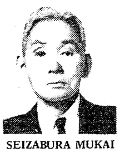
Unfortunately, this wasn’t a battle they were going to win. The Kokusai Theatre, formerly the Atlas, finally shut its doors in the early 1980s. Even if they bridged the generation gap, even if they navigated the parking and congestion issues, even if the state of Asian filmmaking changed in their favor, there was still one obstacle they couldn’t surmount: the exploding home video market. Many Asian films, the very ones that venues like the Kokusai and Toyo would have shown on their screens, were becoming readily available for home consumption, and could often be bought or rented from shops throughout Chinatown, soon to be renamed the International District. The times were changing and older, single screen theatres like the Kokusai didn’t have good answers. Despite the brave public face, eventually the Kitamuras recognized that the family business had run its course. “We were so proud of that theatre and hated to give it up,” Elaine recalled 40 years later, “but the kids [were older and] had to develop their careers. [The Kokusai] wasn’t going to go any further…we had a good run and couldn’t see how [the situation] could get better.”[22] Following Tadao Kitamura’s death, the family continued running the Kokusai in his memory, but now it was time. Better to bow out on a high note than preside over a struggling venue, as Seizabura Mukai and Burrell Johnson had done with the old Atlas. The Kitamura family provided a service to the residents of Chinatown for nearly a quarter century – far and away the theatre’s best years. For them, and for the old picture house itself, it was time for the next chapter.

By Eric L. Flom – November 2025


Notes:

[1] See Frank Lynch, “Meet the Hon. Marilyn Monroe of Japan,” Seattle Post-Intelligencer, 15 March 1955, Page 6.
[2] See “U.S., Japanese Americans Relocated During World War II, 1942-1946 (Tadao Kitamura),” Ancestry.com (https://search.ancestry.com/cgi-bin/sse.dll?indiv=1&dbid=8918&h=24226&tid=&pid=&queryId=367b056d30f4e4b244fdb9671437eafe&usePUB=true&_phsrc=lIU47&_phstart=successSource), accessed 16 January 2022.
[3] See “U.S., Japanese Americans Relocated During World War II, 1942-1946 (Tadao Kitamura),” Ancestry.com (https://search.ancestry.com/cgi-bin/sse.dll?indiv=1&dbid=8918&h=24226&tid=&pid=&queryId=367b056d30f4e4b244fdb9671437eafe&usePUB=true&_phsrc=lIU47&_phstart=successSource), accessed 16 January 2022.
[4] Elaine Kitamura interview with Eric L. Flom, 7 March 2021.
[5] John J. Reddin, “Only Oriental Movies Seen at Theater Here,” Seattle Daily Times, 10 March 1963, Fourth Section (Local/Amusement News), Page 43.
[6] Ron Chew, My Unforgotten Seattle (Seattle: International Examiner Press – 2020), Page 112.
[7] John J. Reddin, “Only Oriental Movies Seen at Theater Here,” Seattle Daily Times, 10 March 1963, Fourth Section (Local/Amusement News), Page 43.
[8] See Frank Lynch, “A Japanese Horse Opera in the Movies,” Seattle Post-Intelligencer, 7 March 1961, Page 8; and John J. Reddin, “Only Oriental Movies Seen at Theater Here,” Seattle Daily Times, 10 March 1963, Fourth Section (Local/Amusement News), Page 43.
[9] Emmett Watson, “This Our City,” Seattle Post-Intelligencer, 27 March 1964, Page 17.
[10] Elaine Kitamura, as quoted in David Yamaguchi, “Growing up at the Kokusai Theater,” Discover Nikkei (http://www.discovernikkei.org/en/jounral/2016/6/14/Kokusai-theater/), accessed 7 February 2021.
[11] Tadao Kitamura as quoted in Frank Lynch, “A Japanese Horse Opera in the Movies,” Seattle Post-Intelligencer, 7 March 1961, Page 8.
[12] Ron Chew, My Unforgotten Seattle (Seattle: International Examiner Press – 2020), Page 115.
[13] Elaine Kitamura interview with Eric L. Flom, 9 January 2022.
[14] See Frank Lynch, “A Japanese Horse Opera in the Movies,” Seattle Post-Intelligencer, 7 March 1961, Page 8; and Ron Chew interview with Eric L. Flom, 5 February 2021.
[15] Kitamura interview, 7 March 2021.
[16] Ibid.
[17] Ken Wong to Dick Young, as quoted in “Kokusai Theater – Truly International,” Seattle Post-Intelligencer, 23 January 1974, Page C16.
[18] Kitamura interview, 9 January 2022.
[19] Kitamura interview, 7 March 2021.
[20] John Hartl, “Two Seattle Theaters Present Wide Range of Japanese Movies, Seattle Times, 29 October 1981, Page 50.
[21] Ellen Kiyomizu, “Kokusai: 60 Years of Asian Films, International Examiner, Volume 7, Number 10 (October 15-November 15, 1980), Page 8.
[22] Kitamura interview, 9 January 2022.

The Atlas Shrugs: The Rise, Fall, Rise and Fall of Seattle’s Most Unique Theatre

Reel 5: Twilight

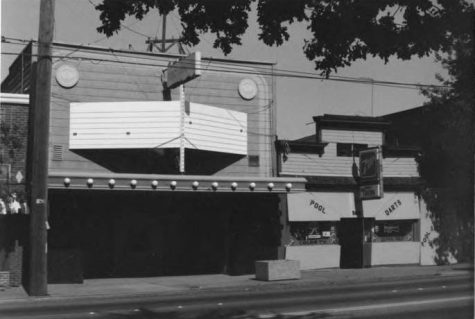
So the Kokusai closed its doors, but it didn’t disappear from the landscape. It never again showed motion pictures, but the front portion of the venue was adapted into a variety of small businesses, primarily restaurants. Behind those establishments, however, the auditorium stood empty, seats intact, waiting for the possibility of a third lease on life. But this time there was no lifesaver like Tadao Kitamura to take the reigns, and eventually the years of neglect caught up with the building.

Bought from the Kitamura family in 1989 by George Lui and Assunta Ng, the structure plodded along until the afternoon of February 10, 1997, when a pair of wood trusses over the auditorium gave way after years of weather damage.[1] Two restaurants occupied the building at the time – one was closed when the accident occurred, but the other was in the middle of the lunch rush. Thankfully the damage was confined to the back portion of the building, so no one was hurt.

The day before, on February 9th, Sam Ung, owner of the Phnom Penh Noodle House, the restaurant open at the time of the collapse, noticed something odd when taking out some trash. The back wall of the Kokusai appeared to be buckling, the brickwork twisted in a way he hadn’t noticed before. He wasn’t the only one who spotted the problem. The property manager for the Evergreen Apartments next door observed the same thing, then alerted tenants and businesses in their building to the situation. George Lui was contacted and came to inspect the scene, then arranged for a contractor to come out to assess the situation. But the trusses gave way before the contactor arrived, spilling debris in the alleyway and closing several nearby businesses. (The Wing Luke Museum, for example, had to close for two weeks because brick and woodwork from the old Kokusai blocked one of their fire exits.) Local media descended on the International District, with several reaching out to the Kitamura family for comment. But the Kitamuras didn’t want to inject themselves into the situation. When she learned of the collapse, Elaine remembered feeling great concern for anyone that may have been hurt – that weighed on her more than the fact that her family once owned the building. Mitsuye Kitamura, on the other hand, was devastated; the Kokusai had been such an important part of her life. But the family turned away media requests, asking instead for privacy.[2]

An investigation into the collapse revealed a flaw in Seattle’s building inspection process. In 1997 commercial buildings deemed “low hazard” were required to be inspected every two years, and the Kokusai had passed its most recent inspection. However, the city officials who conducted that review only inspected the front portion of the building, where the commercial operations were located – the auditorium space was only given a cursory review. Once the Kokusai had ceased to be an active movie theatre, almost all the subsequent renovations had been made to the old lobby area, leaving the back portion (with its older walls and flat roof) largely untouched. Seattle’s Department of Construction and Land Use later determined that the truss gave way due to weather exposure – damage exacerbated by heavy snowfall and rain that occurred a few months previous. (A minor earthquake in the summer of 1996 probably didn’t help.) When it finally caved in, the Kokusai roof fell largely onto the old stage area, taking out several rows of theatre seating in the process, as well as spilling into the back alley.[3]

The city of Seattle gave George Lui and Assunta Ng 48 hours to shore up the building, but realistically the fate of the Kokusai was already sealed. Area residents voiced safety concerns, not only from further collapse but also from the asbestos used to construct the building way back in 1918. “‘Our child has been coughing at night ever since the building collapsed, and there’s black stuff coming out of his nose,’” complained one woman who lived in Evergreen Apartments next door. Older folks living near the building also claimed to have breathing difficulties after the collapse. To address health concerns Lu and Ng arranged for the site to be tested for both asbestos and lead, while plans for demolition were made.[4] When TLH Demolition came to inspect the job, they speculated that the Kokusai – equal parts treasure and eyesore during its 80-year history – could be razed in a week. And so, within days of the collapse, this piece of Seattle history simply disappeared. A new multi-story structure was eventually put up in its place.[5]

Nonetheless, memories of the Kokusai remained. On the Cinema Treasures website, a contributor posting under the name “Paghat” remembered how the venue left its seedy past behind and became an oasis in the International District. “In the 1960s and 1970s the Kokusai was very run down because it did not have enough business anymore to afford repairs,” Paghat recalled. “It was showing aged film prints, many of the color films washed out to pink, and the projectors frequently broke down but a patient audience would await repairs, or in some cases wait for reels to be changed on the same projector if one of them needed new parts…When there were more Issei (first generation Japanese Americans) in Seattle, the Kokusai was always well attended by people nostalgic to hear their language and see their history played out in samurai films and the like. But as that generation died or became less ambulatory, the newer generation did not speak Japanese and felt much less nostalgia for more than going to the films with grandma. The audience was vanishing.”[6]

The death of the Atlas/Kokusai was a watershed moment for Paghat, who frequented the venue (as well as the Toyo on Rainier Avenue South) for almost 10 years during an important period in his life. When the roof of the old theatre collapsed, “for me personally it is a loss that can bring me to tears if I dare think too long about it.”

 To me it was a dreamy, dreamy, wonderful cinema because I could see two Japanese movies each week, then the next night at Toyo Cinema down Rainier Avenue I’d see two more, so for over a decade I was watching four Japanese movies per week not counting what could be found in [W]hite theaters or campus film programs (not the mention all the Chinese films I could see around town). Thousands of Japanese movies I got to see, and the DVD revolution has not yet reduplicated that possibility even for the small screen; certainly no one will ever have that opportunity to see so many Japanese films on a big screen ever again in America. I was absolutely steeped in samurai ethos and it shaped my young life as a martial artist, then as a novelist, and even affected by diet and the clothes I wore. I would not be the same human being without Kokusai Theater.[7]

In 2016 David Yamaguchi, a journalist with The North American Post, observed that members of his community still retained a strong attachment to the old theatre, on terms similar to what Paghat was expressing. “The Kokusai Theater lives on in the minds of many of us who grew up watching movies there,” he wrote. “It positively influenced our lives through impressing on us varying degrees of Japanese history and culture which we would not otherwise have been exposed to. Across the past twenty years, whenever I have asked fellow Sansei [third generation Japanese Americans] why they were attending or volunteering at a Japanese cultural event, a common reply has been a variant of, ‘I grew up watching movies at the Kokusai Theater with my grandmother.’”[8]

Time has allowed Elaine Kitamura, Tadao and Mitsuye’s daughter, to reflect on the legacy they left for the people of Seattle’s International District. She didn’t necessarily recognize it growing up; as a youngster, her thoughts frequently went to all the fun times she was missing because she had to work the family business. “…[N]ow that I’m much older I can see how valuable [the Kokusai] was,” she told me in 2021. “At the time I was a young kid and I was sorta like ‘Why are we working so hard?’” Today, however, she treasures what she once resented, mostly because it brought such joy to local residents. You still can feel her attachment to the Kokusai and her pride in the family’s legacy, even though the Kitamuras gave up running the venue more than four decades ago. The Kokusai is what her father built, and it’s what the Kitamura family had to offer. “It’s really good to know that my father made a difference in that community. That he had the theatre, people came, people enjoyed watching these films, enjoying he culture and the language…The theatre was really a hub…it meant a lot to us, but then also, now that I think about it, it really served the community.”[9]

Indeed, it did – impacting the local Japanese, Chinese and Filipino communities for generations and beyond. Over its history the venue experienced some down times – a lot of down times – and it’s the unlikeliest of silent era movie theatres to have survived for as long as it did. Realistically the Atlas should have been razed in the 1960s, after which it would only be a curiosity in old photographs. But thanks to Tadao Kitamura and his family, the venue was given a second lease on life and, in the process, secured its legacy. On the one hand it evolved into something entirely different. But on the other the venue ended its life the same way it started – a place where local residents, from a minority community, came to enjoy movies on their own terms. The programming had changed, but in a way the Atlas/Kokusai came full circle, fulfilling its purpose.

By Eric L. Flom – November 2025


Notes:

[1] See Linda Keene, Susan Byrnes and Marla Williams, “Last Reel for Kokusai Theater – Roof of Old Japanese Cinema Collapses,” Seattle Times, 11 February 1997, Page B1; and “Experts Don’t Know Yet Why Part of Theater’s Roof Collapsed,” Seattle Post-Intelligencer, 12 February 1997, Page B2.
[2] Elaine Kitamura interview with Eric L. Flom, 7 March 2021.
[3] Linda Keene, Susan Byrnes and Marla Williams, “Last Reel for Kokusai Theater – Roof of Old Japanese Cinema Collapses,” Seattle Times, 11 February 1997, Page B1.
[4] See “Concerns Over Asbestos Linger after Collapse,” Seattle Post-Intelligencer, 14 February 1997, Page B2; and Charlie Ritts, “Concerning the Kokusai: An investigative report on the collapse of the Kokusai Building,” International Examiner, 5 March-18 March, 1997, Page 16.
[5] “Burned Kokusai Theater to be Razed,” Seattle Times, 14 February 1997, Page B2.
[6] “Paghat,” Kokusai Theatre, Cinema Treasures (http://cinematreasures.org/theaters/12527), accessed 3 February 2016. In another parallel with the way silent film theatres ran half a century before, the Kokusai Theatre had a specially prepared slide that they could throw up on the screen whenever the film broke, asking for the audience’s forgiveness while they fixed the picture. (Elaine Kitamura interview with Eric L. Flom, 9 January 2022.)
[7] “Paghat,” Kokusai Theatre, Cinema Treasures (http://cinematreasures.org/theaters/12527), accessed 3 February 2016.
[8] David Yamaguchi, “Growing up at the Kokusai Theater,” Discover Nikkei (http://www.discovernikkei.org/en/jounral/2016/6/14/Kokusai-theater/), accessed 7 February 2021.
[9] Kitamura interview, 7 March 2021.

The Atlas Shrugs: The Rise, Fall, Rise and Fall of Seattle’s Most Unique Theatre

Reel 6: Postscript

It’s January 2022 and I’m meeting Elaine Kitamura for the first time. We were introduced about nine months earlier, had already conducted a short telephone interview and exchanged a few emails. But this was our first time meeting face-to-face.

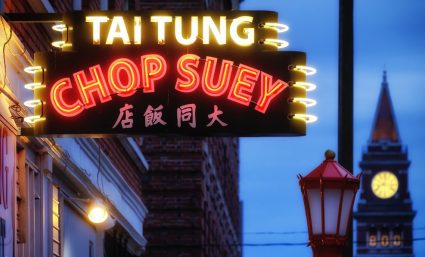
We met for lunch at Tai Tung (655 S. King Street), about half a block from where the Kokusai once stood. This was one of the many local restaurants that the Kitamuras patronized back when they ran the theatre, dashing off in small groups to eat in shifts so they could get back to work as quickly as possible. The International District has changed significantly over the last 40 years, so many of the old establishments are long gone. Tai Tung bills itself as the oldest Chinese restaurant in Seattle, having been operated by the Chan family since 1935; current owner Harry Chan is the third generation to run the establishment. Having the Kitamuras as regulars isn’t Tai Tung’s only brush with the movies. Back in the 1960s, when actor Bruce Lee called Seattle home, Tai Tung was a favorite restaurant, and the booth he frequented has become a shrine for die-hard fans. Unsurprisingly, the Kitamura family has remained extremely loyal to Tai Tung. Not only did it feed them back in the Kokusai days, but Harry Chan has been a longtime family friend. They continue to patronize the restaurant to this day, and usually came down from their Beacon Hill home at least once a week for a family meal, until Mitsuye’s health (and COVID-19) forced a switch to take-out.

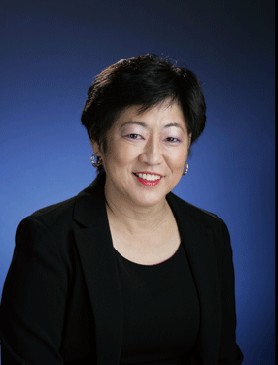
Elaine is in her mid-60s with a sunny disposition. After earning her communications degree from the University of Washington, she spent most of her career working for various local media outlets, including KOMO television and KJR radio. In 2016 she moved into the healthcare field, becoming the Regional Director for Multicultural Initiatives at the American Heart Association.

When we talked the first time, many months earlier, Elaine was leery of being interviewed. She didn’t know anything about me or my project, so the barriers were up. For me this was a new experience – most interviewees are only too delighted when I ask them to talk about themselves. But, like Mitsuye, Elaine’s a very private person, so I was going to have to earn her trust. It took some work on my part, but I eventually got there. Still, however, there were parameters. Even though the Kokusai Theatre had been dark for almost 40 years, the family was still extremely protective of their legacy. Once Elaine got comfortable, she opened up on lots of subjects. But not everything was up for grabs – she was very specific about information I could use, and information that were meant only for my ears.

Tai Tung was Elaine’s idea, and she made all the arrangements, phoning Harry Chan and reserving a quiet table where we could talk. We shared a meal, but I deferred to her expertise with the menu; this turned out to be one of my better decisions. But, before we could order, a Tai Tung employee came over to say hello – he had not seen the Kitamura family in some time, and was happy to have Elaine back. Elaine, too, was pleased to see an old friend, addressing him by name and asking about his family. She wasn’t as familiar with the server, but was quite specific about how she wanted her dishes prepared. To that end, Elaine offered to speak directly with the cook if it would help avoid confusion with the order. The cook never emerged from the back, but over the course of our 90-minute lunch several other Tai Tung employees dropped by, one by one, welcoming Elaine and inquiring about the family. It was like dining with a celebrity.

The Kitamuras are fiercely proud of the Kokusai Theatre, but were working too hard to stop and consider the impact they were having. It was always their goal to serve the greater good, but they didn’t expect Tadao’s business would be so fondly remembered after all these years. “My dad did that…,” Elaine remarked over the shrimp with lobster sauce, prepared to her exact specifications. “I just didn’t realize how much that theatre meant to a lot of people. It was a big deal for people to have a place to go because there [were] no other forms of media reflecting your culture.”[1]

Elaine was candid about the difficulty of growing with Kibei parents, in a traditional Japanese family that operated under a rigid set of rules. Several times she laughed about instances when her parents were too stern or too stubborn, but at no point did you question her affection or respect. This was especially apparent because Mitsuye Kitamura passed away only four months before we met, in September 2021, at the age of 93. Elaine was living in the family home and personally cared for Mitsuye for as long as she could. Nearly four months on, it was still difficult for her to talk about her mother.

What helped Elaine through the grieving process were the commitments she made to Mitsuye. This is exactly what the family did when Tadao passed away in 1976 – they carried on, operating the Kokusai as before, honoring his memory by showing films the way he wanted them shown. History was repeating itself. Before she passed in September, Mitsuye was already discussing who would be getting what on her annual Christmas list – something Elaine dutifully followed through on. And she was still rising at 5:30 a.m. every day to feed the family cats, as her mother always insisted she do. Elaine laughed a bit and fully acknowledged that she could change that schedule if she wanted, but she hadn’t, and she probably wouldn’t, at least as long as she has those cats. “A lot of that is in memory of them,” she said of Tadao and Mitsuye, “but they instilled that in us.”[2]

Toward the end of our meal, as people continued to drop by and wish Elaine well, I reminded her that Tadao had been the neighborhood’s goodwill ambassador, making social calls on all kinds of local businesses. As a child Elaine wasn’t very fond of these stops. And yet, here she was, in a corner of the Tai Tung dining room, greeting person after person as old friends and asking, warmly and genuinely, about themselves and their families. And her trip down from Beacon Hill didn’t end with me. After lunch there were errands to run. There was barbecued pork to pick up at a shop across the street – Elaine assured me it was the best in the entire International District. Then there was grocery shopping to do at Uwajimaya, the famed Asian market with Northwest origins going back to 1928. There may have been other places she planned to go as well. I was just her lunch date; several other things also needed her attention.

No one can replace Tadao Kitamura, the unofficial mayor of Chinatown. But based on what I observed in January 2022, I feel assured that the deputy mayor is now on duty.

By Eric L. Flom – November 2025


Notes:

[1] Elaine Kitamura interview with Eric L. Flom, 9 January 2022.
[2] Ibid.