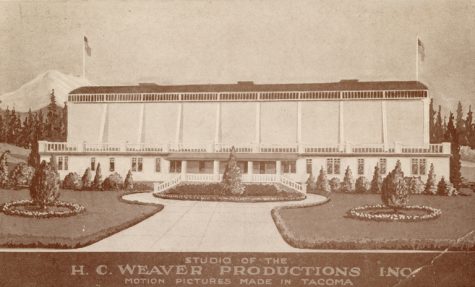
Hollywood by the Sea:
A New Tacoma, Through the Eyes of H.C. Weaver

Preview

There is every evidence that the charms and alluring nature-settings of Seattle and the Puget Sound districts
are to be embodied in moving pictures. Through its great variety of scenery, its mountains, plain, forest and
marine perspectives, the Puget Sound district offers most unusual advantages for
the setting of moving picture scenarios, especially in the radiant days of the long summer.[1]

Moving Picture World – January 30, 1915

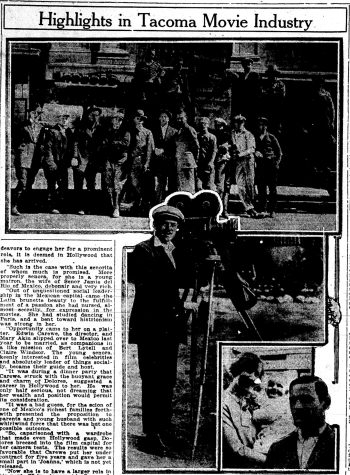
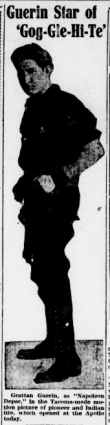
In August 1924 a newcomer to Tacoma, the City of Destiny, arrived to open a brand-new business. Ambitious and determined, he scouted the downtown area for a place to set up shop, eventually settling on some office space along Pacific Avenue.

Advertising for this new entity had begun much earlier, such that the man was already in business by the time his doors flung open. His was a one-man operation specializing in identifying and placing acting talent. Based on newspaper ads he had a great hook, trumpeting the fact that a number of Hollywood productions were due to begin filming in locations around the South Sound, and many would need to fill supporting players and extra roles with local talent. For a $1 fee, applicants got a private, one-on-one meeting with the agent, who would evaluate their background and skills, both theatrical and non-theatrical. If the applicant showed potential they could, for an additional cost, move forward with a series of test photographs showing him or her in a variety of outfits and poses, each specifically designed to catch the eye of casting directors. And finally, for what one assumes was yet another charge, the man would use his extensive industry connections to have applicants placed into one of these upcoming productions, at a salary that could go as high as $7.50 per day.

Tacoma’s newest talent scout, dubbed “Mr. Newby” by the Daily Ledger, was – as you might expect – a fraud. “The game is as old as the picture business and has been played in California since the first studio was opened in Hollywood,” they observed. “The police were notified of Mr. Newby’s operations and the day after he opened his office…the case was turned over to the Women’s Protective division. No investigation was made, however, and after obtaining several hundred dollars, Mr. Newby departed for parts unknown.”[2]

In reporting on the incident, the Daily Ledger was entirely correct – the talent scout scam was as old as the industry itself. But the irony here was that Mr. Newby was also correct. Tacoma really was on the verge of becoming a filmmaking hub. Mr. Newby’s victims were out some money, but there would be no shortage of film productions in and around Tacoma in the years following his (brief) residence.

Mr. Newby was a fraud, but a fraud with a point.


Notes:

[1] “A Charming Country for Pictures,” Moving Picture World, 30 January 1915, Page 661.
[2] “Siren Call of Movies Answered Freely in Tacoma,” Tacoma Daily Ledger, 3 August 1924, Page A4. The previous year, in 1923, “a mysterious Madame Terpsichore” of Seattle was investigated by the Washington Better Business Bureau for running a similar bogus acting school. (See “Seattle,” Moving Picture World, 10 February 1923, Page 550.)
Hollywood by the Sea: A New Tacoma, Though the Eyes of H.C. Weaver

Reel 1: Pre-Productions

Hollywood by the Sea: A New Tacoma, Though the Eyes of H.C. Weaver

Reel 2: Dream Weaver

Hollywood by the Sea: A New Tacoma, Through the Eyes of H.C. Weaver

Reel 3: Hearts and Fists

Hollywood by the Sea: A New Tacoma, Though the Eyes of H.C. Weaver

Reel 4: The Totem Pole Beggar

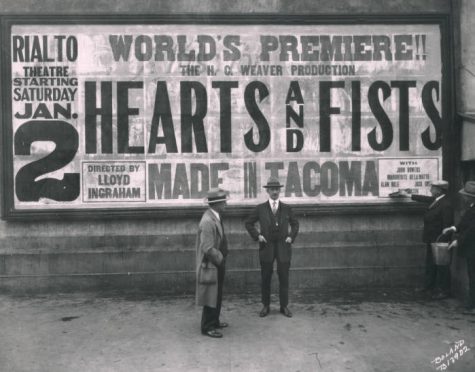
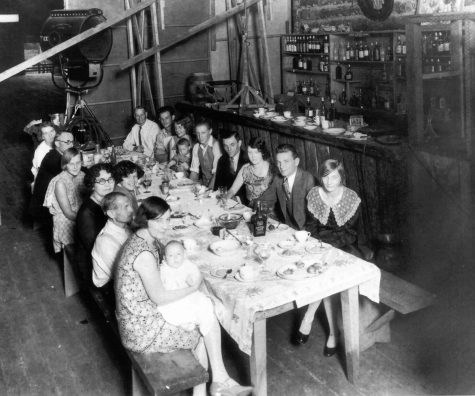
By the time Hearts and Fists was being distributed outside the Northwest, the Weaver Studios were hard at work on their follow-up. The original cast and some of the crew would not be back for this next production; part of the Weaver business model was to cast each picture individually, signing talent in Hollywood and bringing them northward for each new film. Once shooting on Hearts and Fists concluded in June 1925, for example, the performers themselves were quick to disperse. For whatever connection they claimed to have publicly for the Northwest and the city of Tacoma, that loyalty tended to dry up once the paychecks stopped coming.

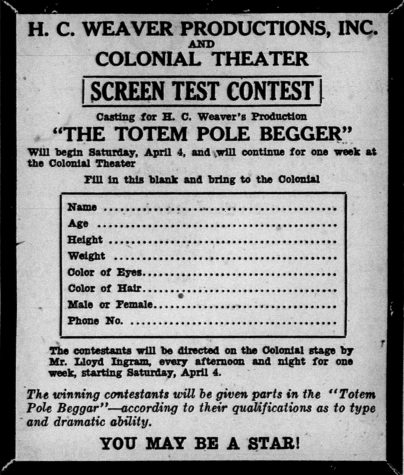
The next Weaver production was called The Totem Pole Beggar. This film was originally slated to be the company’s first production, and to that end they held a full week of “screen tests” for prospective extras at Tacoma’s Colonial Theatre beginning April 4, 1925.[1] But for reasons unclear, The Totem Pole Beggar was shelved for the time being and the studio instead pushed forward with Hearts and Fists as their initial production.

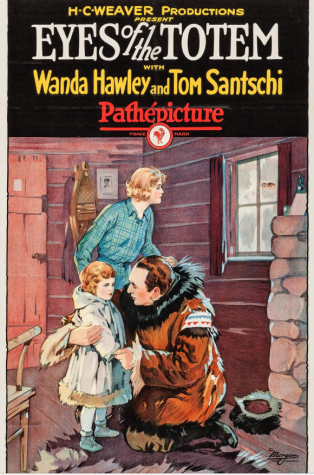
As before, H.C. Weaver traveled to Hollywood to secure his cast of performers. This time he signed leading lady Wanda Hawley, a veteran of several Cecil B. De Mille productions, who also played opposite Rudolph Valentino in The Young Rajah. Hawley had Northwest connections, having been born in Pennsylvania but raised in Bremerton and Seattle; later, after her acting days were over, she lived briefly in both Seattle and Tacoma. Hawley was paired with Tom Santschi, a veteran character actor who specialized in playing villains. The Weaver Studios also got a new director for this film – Lloyd Ingraham was out, replaced by W.S. “Woody” Van Dyke. Like Hawley, Van Dyke also spent part of his childhood in Seattle, played in a stock theatre company at Tacoma’s Empress Theatre and, in 1909, married his first wife, Zina Ashford, in the Northwest. He was an ideal choice for a fledgling concern like the Weaver Studios: his nickname was “One-Take Woody,” given his reputation for speed and efficiency on the set. The only difference between studio work in Hollywood and in Tacoma was his margin of error. “‘It might be possible make a bad picture elsewhere,’” Van Dyke admitted to the News Tribune, “‘but I cannot afford to do that here.’”[2]

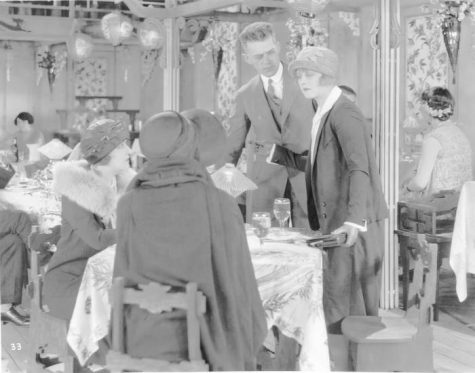
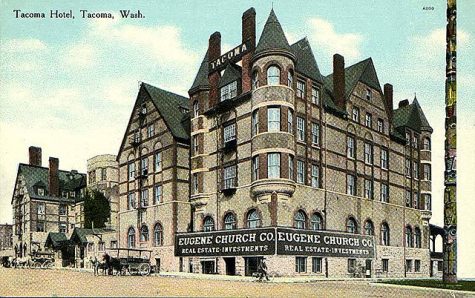
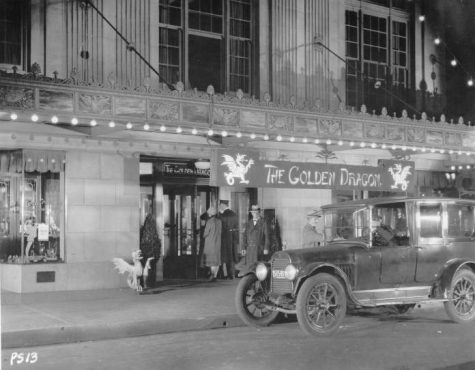
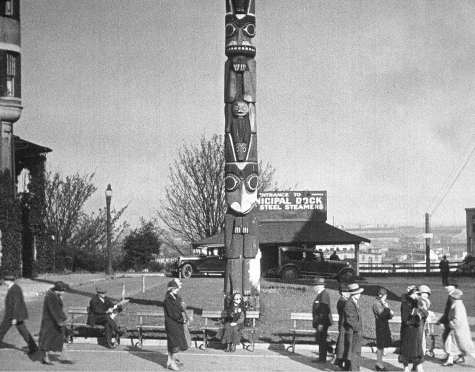
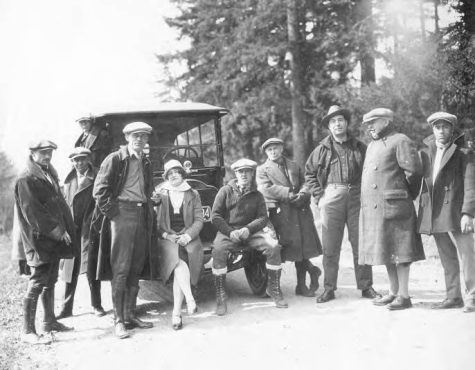
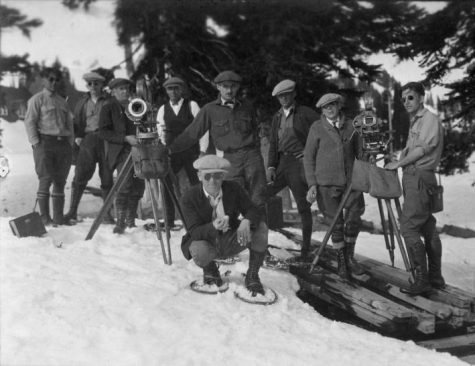
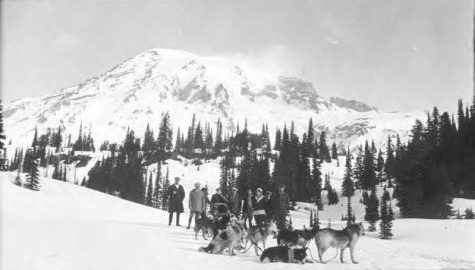
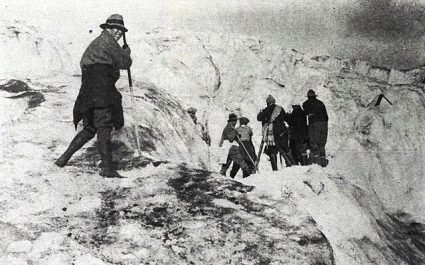
Woody Van Dyke arrived in Tacoma in February 1926 to look over the studio and begin preparations for The Totem Pole Beggar, which included a scouting trip to Paradise Inn, as the script would call for both mountain and snow scenes in the first part of the picture. One-Take Woody also created a tight production schedule. The company would start shooting interior scenes at the Titlow Beach studio (including ones on an elaborate “Oriental” cabaret set where members of the Tacoma Police Department were used as extras), after which they would move into the city for a two-day shoot near the Tacoma Hotel with its iconic totem pole as a backdrop. Then they would move again, up to the snowfields near the mountain, where they would take location shots at Narada Falls, among other locations.[3]

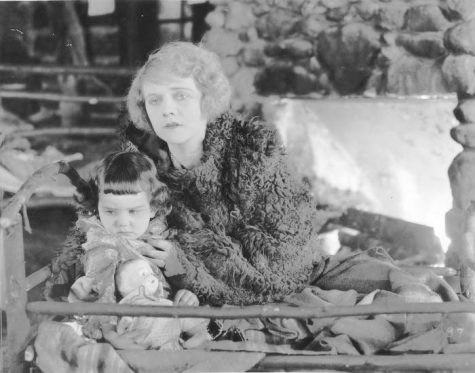
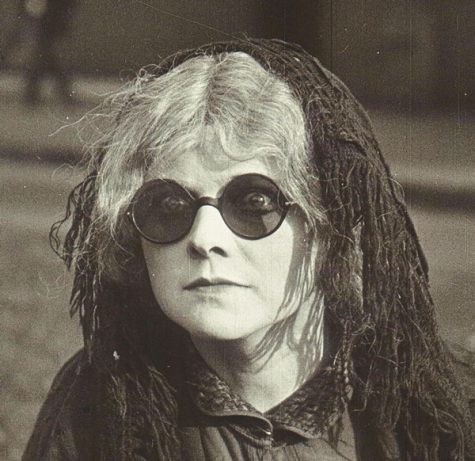
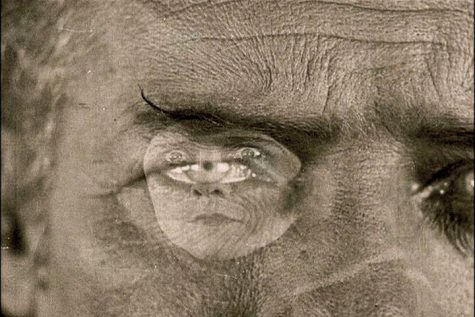
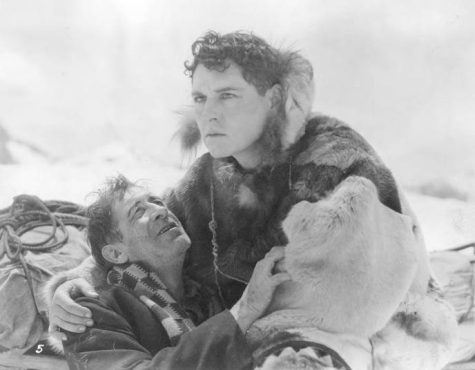
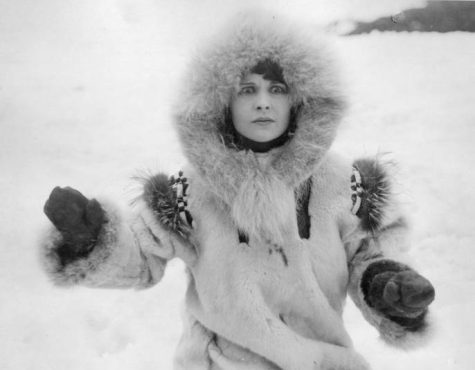
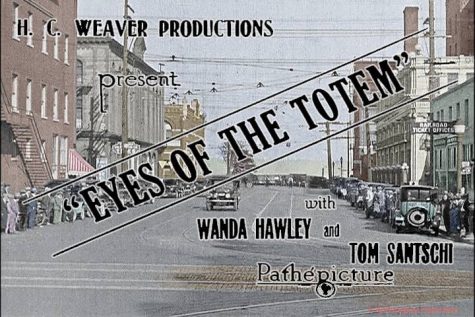
Shooting proper didn’t begin until March 8th and Van Dyke – living up to his nickname – proceeded quickly, with filming completed and a rough cut of the picture assembled by the end of April. The film cast Wanda Hawley as Mariam Hardy, the wife of an Alaskan prospector who sells his lucrative mining claims and brings his family down to Tacoma, intent starting a new life. But, as the boat is about to dock, Miriam’s husband is killed by a mysterious man and has his fortune stolen. Miriam, who fainted at the scene of the crime, cannot remember anything about the killer except for his evil gaze. Ultimately the crime goes unsolved, and the plot leaps forward 15 years to a time when Mariam Hardy is working as a street beggar, staring into the eyes of passers-by in the hopes she’ll spot her husband’s killer, while also waiting to be reunited with her daughter, who’s been left at a girl’s seminary. Fate, of course, eventually puts her face-to-face with the killer, and sets in motion events that will punish the wrongdoer and reunite Miriam with her daughter Betty.

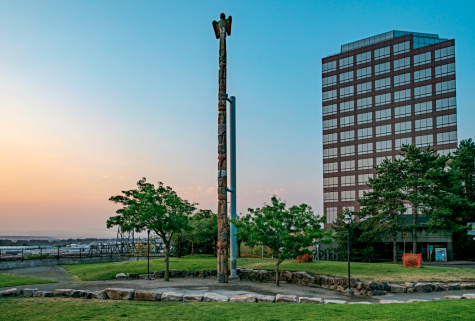
This was a story tailor-made for the city of Tacoma. In 1903, civic leaders erected what they claimed was the largest totem pole in world, standing some 105 feet tall at the corner of South 10th and A Streets, next to the Tacoma Hotel. In the two decades since, the totem pole had become a downtown landmark, one that the Weavers used as inspiration for The Totem Pole Beggar and a key location for their shooting, becoming a visual touchstone like Mount Tacoma/Rainier had been for Hearts and Fists.

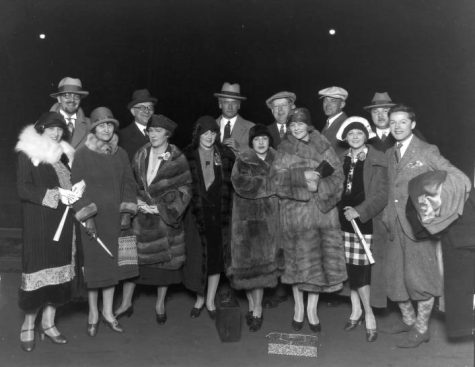
But unlike the first Weaver film shot at Titlow Beach, which received a good deal of local publicity, the filming of The Total Pole Beggar (as well as Raw Country, the working title for the next Weaver film) wouldn’t garner nearly as much coverage in local papers. The Weaver Studio was still a source of community pride, but 18 months had passed with only one film to show for the effort, so the novelty of Tacoma’s production company was starting to wear off. The cast and crew of The Totem Pole Beggar was still seen frequently in public, but they didn’t always garner the type of press coverage they had for Hearts and Fists. This was the new normal; for as much their first production was documented in Tacoma’s daily papers, subsequent Weaver productions had less and less attention paid to them, and hence fewer details are known about these shoots. But they could still create their own publicity. When the principal actors arrived by train at Union Station on the evening of March 6, 1926, every one of them lingered an extra 30 minutes or so to sign autographs and pose for photos. The Weavers also arranged for a pair of well-connected Tacoma women to join their cast, who just happened to be the wife and daughter of former Tacoma mayor (and prominent judge) John W. Linck. The studio claimed, unconvincingly, this was no mere ploy. As the Daily Ledger noted, both mother and daughter had previously appeared as extras in Hollywood, with the younger Miss Linck, in particular, not only filming “unusually well” but also scoring “a percentage of 90 percent” – whatever that meant.[4]

Unlike Hearts and Fists, most of the shooting on The Totem Pole Beggar was done in the studio or up in the Cascades, so there were fewer street scenes – an exception being the totem pole sequences shot in front of the Tacoma Hotel. Work on those scenes began on March 19th, with actress Wanda Hawley dressed a beggar woman at the foot of the pole while a large crowd of onlookers ringed the location.[5] “Quite a crowd was assembled at 10th and A Streets yesterday,” remarked the Daily Ledger. “Apparently everybody in Tacoma not working was there, and it is barely possible some of those present should have been working at that.”[6] Wanda Hawley got a laugh from everyone when, after concluding a take, she turned to actress Anne Cornwall (cast as her daughter Betty), who was standing just off camera. Hawley locked eyes with Cornwall, then tipped her tin cup upside down, dropping six pennies onto the sidewalk. “‘My dear daughter,’ Hawley sighed, “‘I’m afraid this won’t send you very far through school.’”

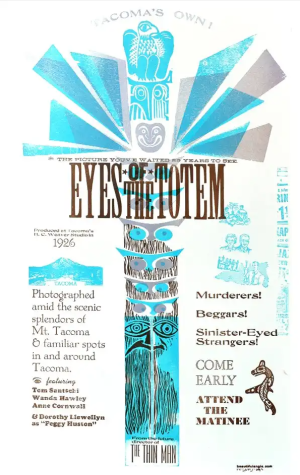
The two days spent in front of the Tacoma Hotel were one of the only sequences that local movie buffs would have been able to see live, for Van Dyke’s tight schedule, studio and location shooting kept them largely out of the public eye, save for a handful of car chases along Pacific Avenue and elsewhere. And it was all over rather quickly, just six weeks after shooting began, in late April 1926, when the bulk of the cast slipped out of town and folks at the Weaver Studios began preparing a rough cut of the picture. It was also about this time, during post-production, that the Weavers’ sophomore release changed names from The Totem Pole Beggar to Eyes of the Totem. Pat Powers of Associated Exhibitors, who previewed the rough cut under its revised title, was so impressed with Eyes of the Totem that he made it a special program feature, meaning that Associated would put extra promotion behind the film and would rent it at advanced prices.[7]

But, again, the business side of the business got in the way of efforts to release the picture widely. Despite Powers’ apparent satisfaction with the film, Associated Exhibitors failed to step up and immediately release it. As the situation dragged into the fall, there was a falling out between the parties, with Harvey Weaver announcing the company was severing ties with Associated Exhibitors and would instead sign with Producers’ Distribution Corporation Exchange, at least for the company’s next two pictures.

This change in distribution partners caused an enormous delay in the picture’s general release, so Eyes of the Totem sat on a shelf for more than a year – the picture, in fact, wouldn’t have its Tacoma debut until June 10, 1927, when it was finally booked into the Broadway Theatre. The results were indeed pleasing, at least to local reviewers, but the plaudits masked the fact that H.C. Weaver and his studio were struggling to find revenue streams. “To say that [Eyes of the Totem] is a mystery in which a woman’s search for the murderer of her husband provides the dramatic highlights, [but] doesn’t do it justice,” said the Daily Ledger when it finally arrived. “Around his fundamental theme, [director Woody Van Dyke] has built up a novel and thrilling plot with many variations which put it in a class by itself.”[8] The Broadway showed the picture five times a day, paired with the Fanchon and Marco stage revue Fan Idea, with Oliver Wallace helming the organ with a backing band called “The Knights o’ Notes.”

Eyes of the Totem was finally seeing the light of day, but H.C. Weaver and his Titlow Beach movie studio were quickly losing steam. Whereas Hearts and Fists was an eagerly anticipated release, at least in Tacoma, it took 18 months for the follow-up to arrive. And despite sustained pride in Tacoma’s movie concern, it was apparent that the grandiose benefits of this venture were not materializing, or at least not in the way H.C. Weaver originally sold them. Distribution issues delayed the release of both of their finished films, resulting in prolonged periods of inactivity at the Weaver Studios; this, in turn, impacted the new homes and businesses slated to crop up around the studio complex. Naturally, Eyes of the Totem played well during its run at the Broadway, but the gap between releases was hurting the company’s bottom line and making their financial situation precarious.

Still, however, H.C. Weaver and his Tacoma studio complex persevered. It’s just that their situation wouldn’t get much better.

By Eric L. Flom – November 2025


Notes:

[1] See H.C. Weaver/Colonial Theatre advertisement, Tacoma News Tribune, 2 April 1925, Page 8; and “Film Folk See Town Actors, Tacoma News Tribune, 4 April 1925, Page 4.
[2] “W.S. Van Dyke,” Tacoma News Tribune, 20 February 1926, Page 16.
[3] See “Totem Pole Film Stars Reach City,” Tacoma Daily Ledger, 6 March 1926, Page A1; and “Tacomans are Cabaret Guests in Movie,” Tacoma Daily Ledger, 14 March 1926, Page A14.
[4] See “Tacomans Join Weaver Productions Cast,” Tacoma Daily Ledger, 14 March 1926, Page A10; and “Tacoma Borrows Hollywood for Movie,” Tacoma Daily Ledger, 6 March 1926, Page A1.
[5] See “Watching Filming of Totem Pole Beggar,” Tacoma Daily Ledger, 20 March 1926, Page A1; and “Tacomans See Movie in Making,” Tacoma Daily Ledger, 20 March 1926, Pages A1 and A2.
[6] “Tacomans See Movie in Making,” Tacoma Daily Ledger, 20 March 1926, Pages A1.
[7] See “Beggar’s Title is Changed,” Tacoma News Tribune, 9 April 1926, Page 12; and “Eyes of Totem Shine,” Tacoma News Tribune, 24 April 1926, Page 5.
[8] “Thrilling Drama Made in Tacoma,” Tacoma Daily Ledger, 12 June 1927, Page H3.

Hollywood by the Sea: A New Tacoma, Through the Eyes of H.C. Weaver

Reel 5: End of the Line

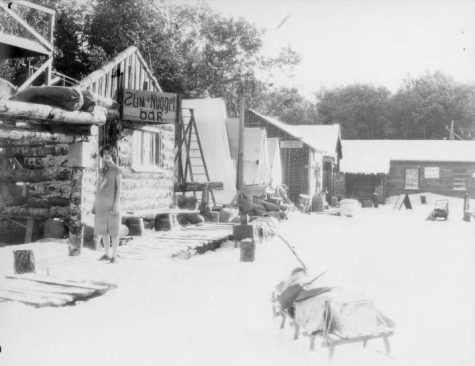
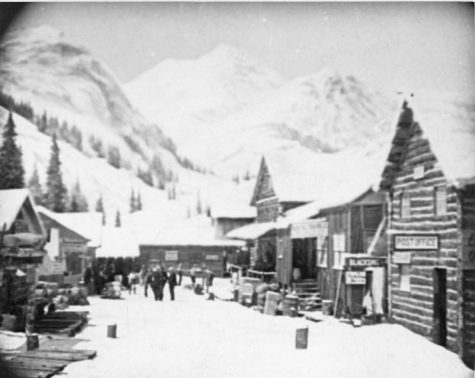
Before distribution problems hung up the release of Eyes of the Totem, the Weaver Studios appeared to be back in business, so much so that they plunged headlong into a third film. This was an Alaskan gold mining story called Raw Country, dreamt up by Woody Van Dyke and inspired, in part, by the location shooting done on Mount Rainier during The Totem Pole Beggar. The plot centered on a young heiress (played by Anne Cornwall) who travels to Alaska in search of her long-lost father. Known as Old Skin Full, her dad (Frank Campeau) has become the town drunk. But another man, Cash Cynon (Russell Simpson), sees an opportunity to dupe the girl and steal her money by plying Old Skin Full with alcohol, then passing himself off as her missing father. The scheme nearly works, until the heiress is rescued by a sympathetic young miner (John Bowers), who exposes the treachery and fights Cash Cynon in an Alaskan snowfield, ultimately throwing the imposter into a crevasse.

While Woody Van Dyke stayed at the helm for this production, H.C. Weaver once again looked to California for his cast. Some were not entirely new – Anne Cornwall, who had impressed as Betty Hardy in Eyes of the Totem, was re-engaged, this time as leading lady. Weaver also brought back John Bowers, who appeared in Hearts and Fists, as well as a newcomer to the family, veteran character actor Frank Campeau. The initial cast for Raw Country was to include Swedish actor Warner Olund, later to gain fame for the 16 films in which he portrayed the screen detective Charlie Chan, but Oland exited the production at the last minute and had to be replaced. Some of the newcomers to Titlow Beach were good for publicity fodder. One of the supporting actors, for example, was Edward Hearn, who originally hailed from Dayton, near Walla Walla. And Hearn brought along his wife on the shoot; she was also an actress and also had Washington ties – much publicity was made when she took a day trip down to Chehalis to visit her parents.[1]

Preparations for Raw Country were made quickly – so quickly, in fact, that the Weaver company was back in production a mere three weeks after assembling a rough cut for Eyes of the Totem. Anne Cornwall arrived via train on the morning of May 20, 1926, and was immediately swept off to Mount Rainier (nee, Tacoma), where some of the cast and crew were already engaged in preliminary work. “‘I’m glad to get back to Tacoma,’” Cornwall remarked upon her arrival at Union Depot, though she was somewhat apprehensive about heading up to the mountain set, where “blizzard” conditions had struck the crew just a few days before her arrival.[2] Van Dyke, scenario writer E.C. Maxwell and cameraman Abe Shultz, among others, had to seek shelter in nearby Paradise Inn when a storm struck unexpectedly, something the News Tribune dutifully reported as a life-or-death situation.

As on The Totem Pole Beggar, Van Dyke’s shooting schedule was a short one, with the settings for Raw Country (most of which took place in Alaska) keeping the company either on the mountain or in the studio, and generally inaccessible to the public. That, coupled with less press coverage devoted to Tacoma’s one and only film studio, combined to make the film’s shooting much less documented than previous features. The studio, to be sure, rolled out the usual set of events for the cast to attend, but by then the Weavers just weren’t getting the same traction as before.

What was consistent, however, was the enormous lag between completion of Raw Country and when it finally debuted for local audiences. In this case, there was roughly a year between the end of principal shooting and its July 24, 1927, debut at the Rialto in Tacoma – an engagement that took place just five weeks after Eyes of the Totem finally opened over at the Broadway. These extended delays were a huge drag on Harvey Weaver’s bottom line. What’s more, because Hollywood wasn’t exactly lining up to shoot films at his facility, as originally envisioned, the studio complex was sitting idle for extended periods, even while other film companies moved in and out of the region. The Weaver business model helped things – they didn’t have a regular stable of actors, and only kept a skeleton crew at the Titlow Beach facility between productions. But this was not a small enterprise and had stockholders to answer to, so it was becoming increasingly clear that something had to change for the Weaver Studios to remain viable in the long term.

Still, they managed to bring their third motion picture release to market, and L.L. Clemans, writing for the Daily Ledger, was impressed with the results. Raw Country (renamed The Heart of the Yukon for wider release, but playing Tacoma under its original title) was, in his opinion, the best production the Weaver Studios had yet produced. “In many ways, both technically and photographically, it is far superior to the others exhibited, and it has a far better story than Eyes of the Totem,” Clemans exclaimed. “W.S. Van Dyke, the director, is credited with the writing of the scenario and thanks to Mr. Van Dyke, the continuity is unbroken and the story has been directed in such a manner to create the necessary suspense to make it a gripping evening’s entertainment.” This was pretty fair praise from Clemans, given that he also admitted the story was “neither new nor novel.” Van Dyke’s direction, plus the local angle, won the day. “I liked Raw Country and I am pretty sure that the great majority of the Tacoma fans who see this film was agree with me that it is above the average Alaskan pictures that have done before.”[3]

L.L. Clemans thoroughly enjoyed the latest Weaver release, as did patrons during its initial Tacoma run. The continued local support was gratifying, but this was a production company now in need of serious help. The Heart of the Yukon had to be a hit, or at least it needed to do substantially better than previous Weaver releases, bringing much-needed cash back to the enterprise. Harvey C. Weaver kept a brave public face, but in reality, they were running out of time.

In December 1926, with one feature film released and two in the can, H.C. Weaver was the guest speaker at the monthly Tacoma Real Estate Board luncheon. In addressing the group, Weaver stated his belief that the movie industry was only beginning to realize its potential as an educational and advertising medium. His own pictures, in fact, were clearly promoting both Tacoma and the Northwest to audiences nationwide. His studio complex at Titlow Beach had made it through the “pioneering stage,” demonstrating for Hollywood that movies could be made successfully in Tacoma for a fraction of the cost it would take in California or New York. Coming off a newly-inked distribution deal with Producer’s Distribution Corporation, the Weaver Studio was poised to operate on an even larger scale, becoming a home for an expanding roster of productions while allowing traveling film companies to get Hollywood results while shooting in the Northwest.[4]

This was Harvey Weaver’s vision, but over the next 18 months it never materialized in any meaningful way. The reality was stark: the Weaver pictures were made on tight budgets, and distribution troubles were weakening the company over time. They were fighting an uphill battle in an industry that had grown increasingly corporate and controlled, both from a production and distribution standpoint. There was still a market for independent features like those made at Titlow Beach, but the profits weren’t as great and it forced H.C. Weaver to walk a tightrope to stay in business. As Woody Van Dyke previously observed, all it was going to take was one or two failed pictures (or in their case, one or two delayed releases) to put them in a bind. And despite Harvey Weaver’s claim that the Titlow Beach studio would become a magnet attracting other filmmakers to the Northwest, that hadn’t been the case at all. Most production companies came to western Washington for the mountains, the water or the evergreen forests, and not because there was cheap studio space at Titlow Beach. When the biggest production of the era, The Patent Leather Kid, came to town, in fact, they did virtually all their shooting on location at Camp Lewis. The lure of the Northwest was the Northwest, not the amenities at the Weaver Studios. What H.C. Weaver accomplished with his independent studio was impressive, but he was swimming upstream in an industry that was about to be flipped on its head, given the arrival of sound pictures and with the Great Depression looming on the horizon. Just when Harvey C. Weaver and his studio needed a break, they weren’t going to get one.

One only has to look at the reception of the Weaver films outside Tacoma, in Seattle, to see how difficult it was for an independent producer to penetrate the film market. Take their first release, Hearts and Fists. Despite the occasional notice in the Seattle dailies mentioning the Weaver Studios and their debut production, it doesn’t appear that the film was ever booked into one of the large downtown theatres, and if it played at all, it may have slid into one of the city’s small neighborhood houses. And that’s downright remarkable, given that the picture was made in the Northwest and could have been sold, at the very least, on that angle alone. But for reasons that aren’t clear, none of Seattle’s biggest venues seem to have picked up Hearts and Fists; if this also occurred in other metropolitan areas around the country, as seems likely, that had a huge impact the studio’s bottom line.

Unfortunately, Eyes of the Totem and The Heart of the Yukon didn’t fare much better. In Seattle both ended up playing the Palace Hip, a long-running vaudeville house at Second and Spring. The venue’s format at the time was to have a master of ceremonies (in this case, Al Franks) preside over a gaggle of live acts organized around a particular theme; the week Eyes of the Totem played, this live show was titled Nearly an Elk. It wasn’t uncommon for older venues such as the Palace Hip (or the Pantages or Orpheum Theatres) to augment their live bills with a feature film. But none of these venues were thought of by the trade (or the public, for that matter) as moving picture houses. They tended to show modest new features or second-run films, but were generally considered stage venues. The entire aesthetic was different in these theatres, as were the crowds they attracted, which skewed older and didn’t necessarily attend the show for the motion picture attraction.

So despite the fact that Eyes of the Totem was shot locally, that alone didn’t get it booked into one of Seattle’s larger downtown theatres, and the film press wasn’t exactly helping matters. Two days before Eyes of the Totem was released nationally, Raymond Ganly of Motion Picture Daily offered a dismal review of the picture, which almost certainly warned away prospective exhibitors. “Frankly it is nothing much in the way of sincere or even melodramatic entertainment,” he noted. “…It proceeds to become slow in motivation, poor in continuity and certainly not convincing. Wanda Hawley is woefully miscast and is utterly incapable of putting over her highly emotional role…Tom Santschi as the heavy is convincing but tends to overact…the rest of the cast is mediocre. Director Van Dyke has not succeeded in putting over his ‘big’ scenes…” Film Daily didn’t think much of Eyes of the Totem, either. Wanda Hawley wasn’t good, the screen characters barely registered, and “for the truly well educated [sic] audience it is rather useless to expect them to accept such hokum as entertainment.”[5]

With reviews like that, it’s no wonder that both Weaver films played Seattle in smaller, less popular venues that didn’t necessarily spend their booking dollars on motion pictures. And if the local angle wasn’t working in Seattle, then the picture had even less going for it in other locations. For exhibitors outside the Northwest, the Weaver pictures were likely viewed as low-budget potboilers that lacked polish and held little value.

It’s not surprising, then, that six months after the film debuted in Tacoma, when Eyes of the Totem finally opened at Seattle’s Palace Hip on December 13, 1927, it barely created a ripple. In their review of the bill, the Daily Times devoted four paragraphs to the various song and dance offerings in Nearly an Elk, but had only one sentence for the Weaver release, which they thought was “a clever drama.”[6] Nothing about the Weaver Studios, and no mention that the picture was made in the Northwest. The Colonial Theatre in Seattle brought the film back in June 1928, but again did nothing to promote it as a local feature, and it did little more than fill space during its brief run.

The Heart of the Yukon, aka Raw Country, didn’t fare much better. That film opened at the Palace Hip on January 10, 1928 (again, about six months after Tacoma audiences saw it), and it played the undercard for an Al Franks variety ensemble called Cake Eatin’ Daddy. The press treatment was much the same as before – the Daily Times spent most of their review praising the stage offering, with only a passing mention of The Heart of the Yukon. The picture would be shown again in Seattle at least twice – two weeks later, in a brief engagement at the Neptune in the University District, and then again at the Colonial, a one-night engagement in May where it accompanied a “vodvil” bill.[7]

So despite the high hopes greeting H.C. Weaver and his Tacoma movie studio when it debuted in December 1924, they were competing in a niche market with narrow margins. This, coupled with the distribution issues that cropped up on each of their productions, was a stone around the neck of H.C. Weaver and his company. Two years in and they were struggling; if the eventual arrival of sound didn’t kill them, the Depression surely would have.

Nonetheless, H.C. Weaver remained a fixture in Tacoma for a short while, attempting to restart studio activities, until he had no choice but to close up in 1928. The H.C. Weaver Company was eventually dissolved, though stockholders still owned the Titlow Beach studio and the land it was built on. And for the most part the space lay unused until the early 1930’s, when it was briefly converted into a dance hall, allowing the owners to generate some income on the property.

But the Titlow Beach complex was about as successful as a dance hall as it was as a movie studio. In the early morning hours of August 25, 1932, the old Weaver Studios burned to the ground in a spectacular fire that did an estimated $100,000 in damages, and which may have been the work of arsonists. The blaze broke out around midnight, but within an hour the main studio building was a total loss; the wooden structure, coupled with a lack of fire plugs in that part of the city, combined to hamper firefighting efforts. Two men were seen near the old building earlier that evening, but their identities and their connection to the fire were never firmly established.

By that time, however, the Weaver Company was defunct and its founder had left the Northwest, though the Tacoma News Tribune got General James Ashton, former Secretary/Treasurer of the studio, to comment. “‘The talkies were the direct cause of the concern going into a state of insolvency,’” he claimed. “‘They had completed three silent pictures out there, and they were splendid productions, but were never marketed [effectively]. The loss of revenues from three films is what caused the financial dissolution of the company.’”[8]

In addition to losing the main studio space, which still housed some film equipment, the blaze jumped from the main structure to an outbuilding where additional equipment had been stored, destroying almost all that remained of the old Weaver Studios. “Thousands of Tacomans, attracted by the red skies and sounds of the speeding fire equipment, were present at the fire, their cars lining both sides of the highway for nearly a mile.”[9] It was an unseemly end to the film company that once filled Tacoma with so much civic pride, and with insurance policies that amounted to a mere $12,000, anyone with an outstanding claim on the Weaver property was getting pennies on the dollar.

Harvey Weaver wasn’t around to see his namesake studio go up in flames. Once his stint in Tacoma came to an end, he went first to New York, then to Florida before eventually returning to California. In New York he worked in film sales, but after returning to the West Coast he was out of the movie business altogether, spending his last years in oil prospecting. He passed away in Hollywood on November 4, 1942, at the age of 63.[10]

By Eric L. Flom – November 2025


Notes: 

[1] See “Weavers Sign Up Raw Country Players,” Tacoma News Tribune, 15 May 1926, Pages 1 and 14; and “Weaver Actor’s Wife Now Visiting Parents in Chehalis,” Tacoma News Tribune, 24 May 1926, Page 6.
[2] “Here to Star in Film,” Tacoma News Tribune, 25 May 1926, Page 8; see also “Screen Stars Go to Mount Tacoma,” Tacoma Daily Ledger, 21 May 1926, Page 7.
[3] L.L. Clemans, “Tacoma-Made Picture Now Showing at Rialto; Other Attractions Now on View,” Tacoma Daily Ledger, 30 July 1927, Page A3.
[4] “Weaver Speaks on Future of the Movies,” Tacoma Daily Ledger, 12 December 1926, Page E10.
[5] See Raymond Ganly, “Eyes of the Totem,” Motion Picture Daily, 13 May 1927, and “Eyes of the Totem,” Film Daily, 15 May 1927 (reprinted in Clay Eals, “The Tacoma Totem Pole, 1927,” Seattle Now & Then website [https://pauldorpat.com/2021/09/02/seattle-now-then-tacoma-totem-pole-1927/], accessed 18 September 2021).
[6] “Palace Hip Performance is a Big Hit with Fans,” Seattle Daily Times, 14 December 1927, Page 18.
[7] See “Palace Hip Signs on Two New Stars,” Seattle Daily Times, 15 January 1928, Page 22; Neptune Theatre advertisement, Seattle Daily Times, 26 January 1928, Page 20; and Colonial Theatre advertisement, Seattle Daily Times, 11 May 1928, Page 14.
[8] General James M. Ashton, as quoted in “$100,000 Studio Burns,” Tacoma News Tribune, 25 August 1932, Page 1.
[9] Ibid. The only thing that remains today from the original H.C. Weaver Studios is the film vault, which sits crumbling away in someone’s backyard.
[10] “Harvey C. Weaver Dies,” Seattle Daily Times, 5 November 1943, Page 21.

Hollywood by the Sea: A New Tacoma, Through the Eyes of H.C. Weaver

Reel 6: Local Historian Makes Good

With the fire at the old Weaver Studios in 1932, Tacoma’s dalliance with the movies came to an end. The building was gone, H.C. Weaver had left years earlier and no one was talking anymore about “Hollywood by the Sea.” Yet another story of high hopes and miserable results.

For the most part that chapter of Tacoma’s history stayed closed for years, becoming a curiosity of the city’s past. But the Weaver story resurfaced from time to time, usually in newspapers or local histories. For some it was hard to believe that Tacoma once had its own functioning movie studio, and somehow fancied itself as the new Hollywood. Yet despite the occasional news article or photo, most forgot about Harvey C. Weaver.

For a select few, however, this was history waiting to be rediscovered. The Weaver Studio was gone but its legacy was in its films, which provided a unique window into Tacoma’s past. Yet no one seemed to know where those pictures had gone. If the Weaver Studios owned prints of their own work, they were a casualty of the company’s demise. Copies were not held by any local institution, nor were they known to be held by private individuals associated with the H.C. Weaver enterprise. Of course, few people at the time thought much of old moving pictures – once they exhausted their commercial value, why keep them? They were relics of a bygone day, the film stock was flammable, and they required delicate (and expensive) care so they didn’t deteriorate over time. The Weaver films didn’t exactly move the movie world, so it appeared that the pictures had simply vanished – no one knew where they were, and few seemed to care.

Over the years there were sporadic attempts by historians at locating these films, but this was a daunting process in the pre-internet world. There are hundreds of film archives around the globe, in a field that’s highly specialized – institutions that, many times, don’t have the funding to document (much less restore) their holdings. Nonetheless, a handful of Northwest historians made attempts, only to be met with repeated dead ends that always seemed to point to the obvious: with an estimated 80%-90% of all silent films no longer extant, the three Weaver titles had become a statistic.

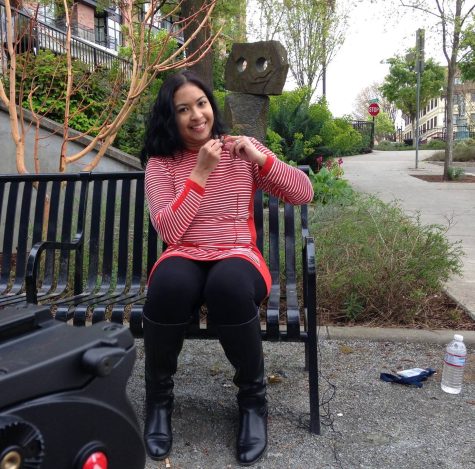
But, after years of fruitless searches, things took a turn in June 2014, when Lauren Hoogkamer became Tacoma’s new Historic Preservation Coordinator. Hoogkamer is a Northwest native, having graduated high school in Pe Ell, in rural Lewis County. In college she studied journalism and history at the University of Southern California, then went on to get a pair of masters degrees from Columbia University, in historic preservation and urban planning. Interested in the public sector, she returned to the Northwest and worked briefly for the city of Bothell, among other places, before landing a position in Tacoma. In her new role, Hoogkamer would be coordinating efforts to connect people with local history, usually by organizing events, exhibits, tours and the like.[1]

It wasn’t long after Hoogkamer began that she was introduced to the Weaver story. Like many, she was shocked to learn that Tacoma had a functioning movie studio during the silent era, but for her this was more than a bit of local color. Previously, as an undergrad at USC, Hoogkamer interned with the Los Angeles Conservancy, which ran a film program called “Last Remaining Seats.” Begun in 1987, each year sponsor companies select a classic Hollywood film, which would then be shown in one of LA’s old historic theatres, with Conservancy staff building an entire program around the screening to illuminate the picture, its stars and its story. “Last Remaining Seats” was one of the Conservancy’s biggest annual fundraisers, and gave Hoogkamer experience in film research, programming and event planning, all in a historic theatre setting. Given that several older venues still dotted downtown Tacoma, she had already given thought to developing a similar film program as part of her new role.

While no one had been able to locate Weaver films, the story was appealing to Hoogkamer because it had everything she loved. Here was a real opportunity to make local history come alive, preferably in one of Tacoma’s period theatres. “If I could find these films, this would really put our program on the map,” she recalled. So, over the next several months, beginning in June 2014, she took it upon herself to begin looking for the lost Weaver films, and did so in spite of the dismal track record of everyone before her. “Maybe she hadn’t heard the truth, as it was understood in Tacoma, that nothing existed” said Michael Sullivan, a local historian and preservationist, “so she didn’t know any better.”[2] Still, she was new to her job, was experienced in that type of research, and was willing to try.

And, predictably, it didn’t start well. Hoogkamer began, as most researchers would, by searching on Harvey Weaver and the individual film titles, coming up with little. These were the same dead ends encountered by everyone else – there just wasn’t a lot of information, and even small leads tended to fizzle. She had the benefit of online search tools, allowing Hoogkamer to cast her net more widely, but wasn’t getting much of anywhere until she finally had a lightbulb moment. The focus of her initial search had been on Weaver and his films, but maybe that wasn’t the right approach. Maybe the better option was to start over again with a different research focus – say, director Woody Van Dyke.

Of all the Weaver alums, Woody Van Dyke went on to have the biggest career in Hollywood. He started in the early teens and even had a small hand in the production of The Birth of a Nation, but got his first real break as one of D.W. Griffith’s assistants on 1916’s Intolerance. Between that production and his time at the Weaver Studios, Van Dyke rose through the ranks to direct program features at several studios. After helming Eyes of the Totem and The Spell of the Yukon in Tacoma, he returned to California and joined MGM, eventually directing such films as The Pagan (1929), starring Ramon Novarro and Renée Adorée, and Tarzan the Ape Man (1932), with Johnny Weissmuller. By far his biggest success, however, was directing William Powell and Myrna Loy in The Thin Man (1934), after which he made a pair of Thin Man sequels. He earned two Academy Award nominations for directing, one for The Thin Man and another for 1936’s San Francisco, starring Clark Gable and Spencer Tracy, which included some impressive special effects depicting the city’s 1906 earthquake and fire. For all that success, however, his life ended on a sour note. Van Dyke was a Christian Scientist and refused medical treatment after being diagnosed with cancer, opting instead to take his own life in 1943. Eventually, in 1960, he was remembered with a posthumous star on the Hollywood Walk of Fame.

For Lauren Hoogkamer, flipping the search on its ear was the key to solving the Weaver riddle. Woody Van Dyke’s personal papers had been left to the Museum of Modern Art (MoMA) in New York, and there she discovered a print of Eyes of the Totem had been part of those materials. But the film wasn’t listed in MoMA’s public film catalogue (one reason why it had never been “found”), hadn’t been restored and likely hadn’t been screened at all since it was originally handed over.

Just a few months on the job and Lauren Hoogkamer had located Tacoma’s Holy Grail. She reported back to members of the local history community, including Bill Baarsma, former mayor and President of the Tacoma Historical Society, as well as historian and preservationist Michael Sullivan. This was a hugely important find, and everyone agreed that there was work to be done. The group immediately reached out to Stephanie Stebich, Executive Director of the Tacoma Art Museum, for help; she, in turn, reached out to Glenn Lowry, the Director of MoMA, whom she had known for years. He was enthusiastic about the find and happy to have his staff assist with the project.

Things started quicky, and the moment so many had waited for seemed close at hand – one of the Weaver films had been found! But, as it turns out, the group’s moment of triumph was also the moment when reality kicked in. MoMA has thousands of films in their vaults; the preservation print of Eyes of the Totem was on five reels of old nitrate film, and a new print had to be made before it could be shown. The museum regularly restores films and makes them available for wider viewing, but it also doesn’t have unlimited time or money. Working on Eyes of the Totem was not on their priority list – not by a longshot. An unrestored print of the film could be made, of course, something that MoMA was willing to do if the Tacoma group ponied up the $30,000 pricetag, give or take. But as a small local group with virtually no money, that wasn’t an option. Fortunately, continued negotiations between the Tacoma Art Museum and MoMA resulted in a compromise: a digital copy of the preservation print could be made for slightly over $4,000. This wasn’t just the best option, it was the only option; to keep things moving, Michael Sullivan stepped forward and paid the entire amount himself.

Getting the digital print took months. The MoMA archivist assigned to help the Tacoma group was helpful, but not fully engaged; the Eyes of the Totem transfer was delayed multiple times due to bureaucratic inertia, holiday schedules and sometimes, they suspected, apathy. Thankfully the Stebich/Lowry relationship could be tapped from time to time to nudge the project along whenever things seemed to stall.

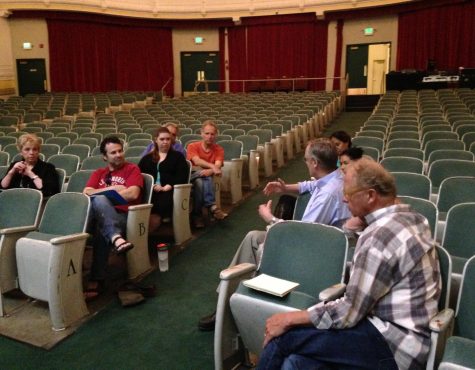
Then, finally, in March 2015, the digital copy from MoMA arrived in Tacoma. On the 12th, Michael Sullivan – part of an ownership group that helped save and restore Tacoma’s Blue Mouse Theatre on Proctor Street – reserved the venue so they could preview Eyes of the Totem for the first time. There were only about 10 people in the audience, and no one had any idea of what they were about to see. There were any number of scenarios that could have played out. The film could be so damaged that it was mostly (or completely) useless. The film might be damaged but salvageable, which would require an extensive and costly restoration. Either way, the film might not be complete – MoMA’s preservation print might be only part of the film, with sections or entire reels missing. Eyes of the Totem was almost 90 years old at the time; nitrate films are flammable, deteriorate in the wrong conditions, are brittle, and can be easily scratched or torn. “We expected it to be pretty damn rough,” Sullivan remembered. “We did not have high expectations of what we were going to see.”[3]

Sullivan, Stebich, Hoogkamer and others waited patiently in the dark to see what they had gotten themselves into. This was not the ideal setting; Eyes of the Totem was being shown in a nearly empty theatre, in complete silence, with no musical score. But everyone was in for a huge surprise, because the digital transfer showed that the surviving print was in excellent condition. Moreover, it was intact, and although there was damage in a few places (some creases, tears and contrast issues, plus the lack of title and end credits), extensive restoration work wouldn’t be necessary. Almost all the work that was needed on Eyes of the Totem, in fact, could be done directly to the digital transfer, in Tacoma, at a significantly reduced cost. “And then [the movie] starts, and we were all just shocked,” Lauren Hoogkamer recalled of the moment. “…Is it SO clear…it was just breathtaking, like ‘Oh my gosh – we’ve got something big here!’”[4] Michael Sullivan, drawing on a longtime love of film, felt similarly. “I have been thrilled to my core by many movies [during my lifetime]…Sitting in that theatre and seeing that film unfold was absolutely transformational. It was like a window opened up into a time machine into my city and into a story I knew…and it was GLORIOUS!”[5] If this was a horse race, the folks in Tacoma hit the trifecta.

How had they gotten so lucky? The answer to that question lies in the provenance of MoMA’s nitrate print. This wasn’t a regular film, one that had been sent to an exchange and made the rounds at innumerable theatres, only to end up at the museum decades later. This was Woody Van Dyke’s personal print, something he kept for himself, which may have been shown only a handful of times, in private settings, while he was alive. Once it arrived at MoMA, it doesn’t appear to have been shown often, if ever – it was preserved but largely sat idle in the museum’s film vault for over half a century.

The fact that Hoogskamer, Sullivan, et. al., had an excellent copy to work with was great news, but they were a long way from the finish line. Preview attendees immediately formed a group (“Team Totem”) to coordinate details around preparing the film to be shown locally. Michael Sullivan became Team Totem’s chairman; Lauren Hoogkamer, based on her experience with the “Last Remaining Seats” program, took on coordinating the film’s eventual “re-premiere;” producers John N. Miller and John Carlton, together with documentary filmmaker Mick Flaaen, worked on the digital enhancements; and local composer John C. Bayman was brought on board to create music for the film. All of this work took place under the watchful eye of Bill Baarsma and the Tacoma Historical Society, with the occasional assist from Stephanie Stebich whenever a MoMA logjam needed to be cleared.

For Michael Sullivan and Mick Flaaen, Team Totem brought them back to their roots. Sullivan is a native Northwesterner, but graduated from high school near Toluca Lake, California, near the Disney and Warner Bros. studios. Movies were his passion, so he enrolled at UCLA with the intention of studying film, though he ended up getting a degree in history. A trip to Europe spurred his interest in architecture, so he followed his Bachelor degree by getting a Master’s in public history and historic preservation. Sullivan then came back to the Northwest and went to work for the city of Tacoma, first as its Historic Preservation Officer and later as the Director of Cultural Resources. He taught Pacific Northwest history for more than 24 years at the University of Washington’s Tacoma campus, while also running a consulting business that specialized in historical preservation and architectural conservation. Sullivan’s consulting work took him all over Washington, including a massive 2008 study of the state’s surviving historic theatres, commissioned by the Washington Department of Archeology and Historic Preservation. He’s also part of the ownership group that operates the historic Blue Mouse Theatre on Proctor Street in Tacoma, a house operated by longtime Northwest exhibitor John Hamrick.[6]

Mick Flaaen also has ties to southern California.[7] Growing up he used to play on the MGM backlot and, later, in the early 1970s, got summer jobs at the studio, including a stint in the mailroom. He grew up toying with an 8mm camera, dreaming of breaking into the business, though he eventually married and settled down. Once he started a family, Flaaen decamped from California to Tacoma, where his dad worked in the trucking industry. By the late 2000s, however, he was ready for a new challenge, so he went back to school at the University of Washington to study filmmaking.

It was there that Flaaen first learned about the old Weaver Studios, which made him wonder – how was it that Tacoma once had a functioning movie studio and no one seemed to know about it? He wrote a history of the Weaver Studios and even made a short documentary on the subject, which played a handful of dates in Tacoma and was later posted to YouTube. But what really got him was the fact that the Weaver films were apparently nowhere to be found. With no formal training whatsoever, he started looking around for these prints, a search that eventually led him to the MoMA in New York. By sheer luck, Flaaen stumbled upon Eyes of the Totem – the same print Lauren Hoogkamer would eventually locate – around 2010. Astonished at the find, he fired off a series of emails looking for information on the picture, an effort that got him absolutely nowhere – he couldn’t even get the museum to respond. (Later, Flaaen and Hoogkamer surmised that MoMA may have responded to her inquiry, and not his, because she was using her old email address from Columbia University to conduct her search. Membership in the East Coast establishment has its privileges.) Eventually Flaaen got pulled away on his studies and had to give up this (apparently) fruitless quest.
Flaaen later graduated from the University of Washington and set up his own production company in Tacoma, Mariposa Productions, making documentary subjects while also teaching film and photography at Gig Harbor High School. Once Eyes of the Totem was located again in 2014, a friend put Flaaen in touch with Michael Sullivan, who brought him on board to help with the digital enhancements and to document the group’s efforts on video. Flaaen, in fact, was one of the 10 people who saw the film for the first time at the Blue Mouse Theatre. “I’ll never forget that…it was incredible. I did not expect to find [a nitrate print] that pristine.”[8]

With the personnel in place, the first step for Team Totem, in May 2015, was for Lauren Hoogkamer to organize a Kickstarter fundraising campaign, while others looked to publicize the find in local media outlets. There was no extensive restoration work to do on Eyes of the Totem, but money was still needed to make the digital enhancements, write a score, secure one of Tacoma’s historic downtown theatres for the re-premiere event, as well as pay for a variety of costs associated with bringing the film back to life. To their surprise and delight, Hoogkamer’s fundraising campaign attracted over 400 contributors and raised more than $27,000, far exceeding their goal. Meanwhile, Team Totem also worked to shore up institutional support, partnering with the city of Tacoma, the Tacoma Public Library, local history and fraternal groups, and the Broadway Center for Performing Arts. The media, as well, latched onto the story, a key factor in the group’s fundraising success – along with several print outlets, King 5 television, the NBC affiliate in Seattle, did an extended piece on the rediscovery of Eyes of the Totem that looked forward to its eventual unveiling later in 2015. In a way, all these things coming together was simply history repeating itself. The greater Tacoma community was stepping up with support for Team Totem, much as the locals stepped up to support the Weaver Studios when it originally launched way back in 1924.

If only that momentum could keep going. Just a few weeks into their work, the members of Team Totem received an email from Michael Sullivan telling them to stop everything. MoMA had reentered the picture, and not in a good way. Whereas Team Totem previously struggled, at times, to keep MoMA engaged with the project, suddenly the museum was alive, attentive, and in their face.  And they were not happy.

By Eric L. Flom – November 2025


Notes:

[1] Information on Lauren Hoogkamer’s work on Eyes of the Totem comes from Lauren Hoogkamer, “Rediscovering Eyes of the Totem,” from Blaine Johnson and Brian Kamens, Showtime in Tacoma (Tacoma: Tacoma Historical Society Press – 2017), Pages 65-67; and Lauren Hoogkamer interview with Eric L. Flom, 24 September 2021.
[2] Hoogkamer interview; see also Michael Sullivan, as quoted in Mick Flaaen, A Totem Tale, Mariposa Productions – 2018 (https://vimeo.com/252791821), accessed 6 October 2021.
[3] Michael Sullivan interview with Eric L. Flom, 1 October 2021.
[4] Hoogkamer interview.
[5] Sullivan interview.
[6] Ibid.
[7] Mick Flaaen interview with Eric L. Flom, 30 September 2021.
[8] Ibid.

Hollywood by the Sea: A New Tacoma, Through the Eyes of H.C. Weaver

Reel 7: The Storm Before the Calm

As fabulous as the rediscovery of Eyes of the Totem seemed from a local perspective, MoMA had an entirely different take. The museum had been following the media hits from afar, including King 5’s story, and was none too pleased with the attention. MoMA had a cornucopia of objections with the Totem coverage. First, many of these reports portrayed the members of Team Totem as experts on the film. They weren’t – the print was MoMA’s, and MoMA was the expert. Second, the museum claimed it was their understanding that the digital copy of Eyes of the Totem would only be used for research purposes, and would not be shown to paying audiences. (This was something that Team Totem disputed vigorously, claiming they had been transparent about their intentions all along.) Third, several media hits indicated that Eyes of the Totem had been “lost,” when in fact it had been safe in MoMA’s film vault for almost 70 years. True, it was part of their non-circulating catalogue, but a picture isn’t lost simply because a few yokels from Tacoma couldn’t find it. Furthermore, the impression left by some reports was that it had somehow been neglected, as if MoMA archivists shoved Eyes of the Totem in a cardboard box and left it to gather dust. This was also not true – the movie was stored safely in a temperature- and humidity-controlled environment that prevented further deterioration. It may not have been on MoMA’s priority list to restore, but all their holdings were important, even the ones they weren’t actively working on. But what really got under the museum’s skin was a comment Mick Flaaen made in one of these reports, when he identified himself as someone who was helping “restore” the film. It was an offhand remark, made to a local media outlet, that helped explain his role on the project, but it was a poor choice of words. Any restoration work on a MoMA film had to be coordinated through the museum. The restoration of movies that old, existing on fragile nitrate stock, was a highly technical process that only a handful of places are qualified to undertake. MoMA had a set of vendors, each with different skills and specialties, that met an exacting set of standards and quality controls, ensuring that these one-of-a-kind films were handled with the proper care. Under no circumstances would the museum hand over materials (even a digital copy) to amateurs and let them do whatever they wanted.

These were not merely complaints. MoMA was so unhappy that they threatened to bring in their General Counsel and shut the entire project down. Just six months previous, the folks in Tacoma couldn’t get the museum’s attention so they could receive their digital transfer of Eyes of the Totem. Now MoMA was scrutinizing every local murmur and threatening possible legal action. “…[S]o, as we move forward,” said John Miller, “…I’m still concerned that it’s all going to come apart, and at the last minute there’s going to be some attorney knocking on the door with a cease and desist order…and all the work is just going to go ‘poof.’”[1]

This was a harrowing turn of events for Team Totem, but the delay was a short one; as before, the relationship between Stephanie Stebich and Glenn Lowry came in handy. A series of phone calls and emails smoothed things over, though not entirely. Work on enhancing the digital transfer was allowed to continue, using resources in Tacoma, but the film could not be referred to as a “restoration” in any way. MoMA also wanted its name removed from any connection with the Eyes of the Totem project. The museum didn’t own the copyright – the film is in the public domain – but they also didn’t want to be associated with any film work (even to a digital transfer) that they did not authorize or supervise, or that didn’t use approved restoration partners. So for several months the relationship between Team Totem and MoMA staff was frosty, to say the least. The museum held the power in this relationship, so members of Team Totem were forced to walk on eggshells, at least until everything was done. When I interviewed members more than six years after the trouble, every single one of them had bitter memories of what transpired in the summer of 2015. “Tacoma makes things,” Mick Flaaen remarked in the narration for his 2017 documentary A Totem Tale, which told the story of film’s rediscovery. “Weaver Studios proves that. And Eyes of the Totem served as a document to that. It was our history. That’s what the museum in New York didn’t quite fully understand.”[2]

Once things were back on track, the various members of Team Totem got to work on their individual parts. One of the first steps was to determine the correct projection speed for the film. The digital transfer previewed at the Blue Mouse was shown at sound speed, or about 24 frames per second, much faster than the film was shot, so all the screen action moved at a frenetic pace. Most silent films were shot using hand-cranked cameras, with the cranking slowed down or sped up depending on what the filmmakers wanted to achieve. Sound film standardized projection speeds, which is why old silent film clips often move ludicrously fast – most pictures were meant to be shown at a slower speed. Part of what John Miller, John Carlton and Mick Flaaen needed to do was determine the proper speed at which to show Eyes of the Totem so that it was evenly paced and the action appeared natural. In this case they settled on 19 frames per second, which was more or less the rate at which the Weaver cameraman was cranking at the time. This allowed the film to unfurl as audiences would have experienced it back in 1927.

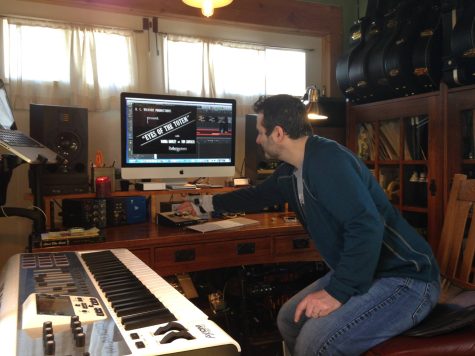
Determining the correct film speed allowed for a key piece to move forward – the creation of a film score. Some silent films had music specifically created to compliment the action, but no score for Eyes of the Totem was known to exist. Thus, Team Totem leaned on composer John Bayman to build one from scratch. “I enjoy composition really for all kinds of mediums,” Bayman remarked, “but films are special…it’s a chance for a composer to tell a story, and to help communicate that story to the audience.”[3] But this was not simply an exercise in adding period music to a period picture. Bayman’s challenge was to learn the film backwards and forwards, creating character themes and connecting music that would not just compliment the onscreen action but bring everything to life. “[I]t’s having some respect for music history,” Bayman remarked of his process, “but I also want to tell the story from the director’s point of view for a modern film audience…” Without Woody Van Dyke standing over his shoulder, however, Bayman was left with scouring Eyes of the Totem for clues about the director’s intentions. “…I’ve seen things [where] I know what W.S. Van Dyke is after…and I’ll look at something that’s in minute 12 of the movie, and I’ll immediately think ‘wait a minute – I need to go back to minute 37 and I need to watch that again’…And I found myself pulling up double copies [of the film] and watching them back-to-back.”[4]

While Bayman’s score and Team Totem’s digital enhancement work continued through the summer of 2015, Lauren Hoogkamer was hard at work organizing details around the film’s re-premiere. This would be no small affair; in fact, her vision wasn’t far from the type of opening that Eyes of the Totem would have received the first time. She secured Tacoma’s Rialto Theatre for the event, the same venue where the Weavers once held a private studio preview of the film back in 1927. Costumes were rented for the Rialto staff, such that they were dressed in period fashion; many patrons on opening night did the same. Hoogkamer reached out to a local automobile club and rented a number of 1920s vehicles, which were brought out and parked in front of the Rialto. Tacoma’s Knights of Pythian Temple, located nearby, had some of its meeting space – once a speakeasy – converted back, where Team Totem held an afterparty for invited guests. (The key to entry: the phrase “H.C. Weaver sent me.”) This party had live music, a gold rush exhibit and, to help remember the evening, a tintype photographer.[5]

If Lauren Hoogkamer’s promotional work wasn’t impressive enough, Team Totem got a boost from two happenstance events. In 2013 Jamie Ford, author of the bestselling novel Hotel on the Corner of Bitter and Sweet, released his newest book, Songs of Willow Frost, set in Depression-era Seattle. Part of the book centers around a fictional Chinese actress who not only performs at the H.C. Weaver Studios but appears in the Golden Dragon cabaret scenes in Eyes of the Totem. This was no accident; Ford’s approach in creating his fictional narratives is to do extensive research, much like a professional historian. In creating the character of Willow Frost, Ford went through the extensive materials at the Tacoma Public Library, learning as much as he could about the Weaver Studios and specifically consulting the many photographic stills taken by art director Gaston Lance. These were invaluable materials that allowed him to provide rich detail in Songs of Willow Frost, which includes a chapter entitled “The Eyes of the Totem.” But although the film inspired part of his novel, it wasn’t a picture Ford thought he’d ever see. “When I found that someone had unearthed a copy of Eyes of the Totem,” he recalled on learning the news, “I mean – all the [Weaver] films were lost, but for them to find the one that was depicted in my [latest] book…that was like fate winking at all of us.”[6]

An even bigger coincidence was finding Joanne Ribail. When her mother, born Peggy Sessums in 1923, passed away in 2002, Ribail was left with a hope chest filled with pictures and old keepsakes. She kept everything packed up for years – Ribail didn’t have the time go through everything. But, following a move years later, she finally began sorting through her mother’s items and made a surprising discovery: unbeknownst to her and her siblings, Peggy Sessums had been a child performer. Sessums, who married Robert Adams in 1941, never mentioned this to anyone. She only acted for a few years, when she was quite young, and probably didn’t think it was important. But tucked away in the hope chest was a stack of old newspaper clippings and photographs, some of which billed Sessums as the “Baby Peggy of the Northwest.” (The reference is to Diana Serra Cary, a child actress in the 1920s who starred in several films as “Baby Peggy.”) Sessums even had a movie credit to her name, having once appeared in a locally-made film – something called The Totem Pole Beggar.

Ribail did a cursory search for information about the picture, but didn’t really find much, since she was using the film’s working title. Still, she mentioned the curious story to a few friends, then forgot about it. But later, when Team Totem began their publicity campaign going in the spring of 2015, one of those friends, who just happened to live in Tacoma, remembered Ribail’s story and began sending her everything they could find. That piqued her interest once again, and now that she was searching under the picture’s release title, Eyes of the Totem, some of the treasures in her mother’s hope chest started to make sense. Eventually she reached out to the Tacoma Historical Society; Ribail was fairly certain that her mother, Peggy Sessums, a woman who spent most of her life as a typist at the Boeing plant in Seattle, played a small part in the film.

Team Totem was notified, but this story seemed too good to be true. Even so, Lauren Hoogkamer and Mick Flaaen agreed to meet with Joanne Ribail to investigate. “It was so outta left field,” Flaaen said in 2021. “I remember when Lauren and I met with her the first time, and we really didn’t think there was any promise to that. But then when we sat down with her and showed her [our photos], and then she brought out pictures, and it’s just like ‘Oh my God, it’s her!’”[7] The opening scenes in Eyes of the Totem, which set up Mariam Hardy’s story, are set in Alaska and Tacoma and include not only the murder of her husband but the beginning of her life as a street beggar. For these sequences, when Betty Hardy (later played by Anne Cornwall) is just an infant, young Peggy Sessums played the role. No one on Team Totem had thought of finding a living connection to the Weaver film – Joanne Ribail just fell into their laps. And it created one of the most moving sections of Mick Flaaen’s documentary A Totem Tale, when he visits Ribail at her home in Bonney Lake. As with their initial meeting, she brings out the stack of her mom’s clippings and photographs, recounting the story of how she and her brothers knew nothing about their mom’s life as an entertainer until well after she passed. It’s at that point that Flaaen takes out an iPad and passes it across the kitchen table, allowing Ribail to see clips of her mother performing, at age three, in Eyes of the Totem. Up until that point she had only seen photographs; this was the first time she saw her mother, on film, as she was almost 90 years previous. Ribail immediately tears up. “Oh my,” she stammers, “I’m overwhelmed – yeah.” Then her emotions got the better of her. “I’m sorry,” Ribail says, barely getting the words out, “I wasn’t going to do this…” Later, around the time Eyes of the Totem (re)debuted in Tacoma, Ribail’s story was profiled in the local Courier-Herald. “‘What a gift to give,’” she told reporter Ray Miller-Still. “‘It’s a really good gift she left us…[it was a] different version of her, but I got to see her again.’”[8]

Eyes of the Totem opened at Tacoma’s Rialto Theatre on Friday, September 18, 2015, with crowd of 2,000 on hand to see history unfold for a second time; the venue then played to packed houses for the remainder of the weekend. It was quite an achievement for Team Totem, whose dogged determination helped bring one of the Weaver films back to Tacoma. “Just seeing how powerful [the film] was to everybody – that was magic,” remarked Lauren Hoogkamer. “This was the merger of history and place…all of it coming together.” She wasn’t the only one moved by the experience. Joanne Ribail, dressed as a flapper, was in the audience, but wasn’t prepared for the emotional experience of seeing her mother, age three, on the big screen. “I bawled,” she admitted to me in 2022.[9] She wasn’t the only one. “There were tears in the eyes of longtime historians who worked so many years to keep Tacoma’s history alive,” Hoogkamer recalled in 2017. “Here was their city, in all its Roaring Twenties glory.”[10] It was, as Michael Sullivan remembered, one of the most important evenings for Tacoma history in a long time – and perhaps ever. “[Eyes of the Totem is] a unique historical document that just gives us the amazing experience of sitting in a theatre and watching our city that we recognize go before our eyes moving with people and streetcars and everything [from] 80 years before. There can’t be more than a handful of people in Tacoma that ever saw that sight during their lifetime that are still alive today and here we are looking at it, so [it’s] just amazing.”[11]

Seeing Eyes of the Totem after almost 90 years is, as Sullivan suggests, an amazing experience. The city of Tacoma doesn’t show as well here as it seems to have in the initial Weaver production, Hearts and Fists, but there are wonderful location shots throughout the picture. The Tacoma totem pole, of course, is the centerpiece, although it only has a small role in the film once the plot has been established. The other exteriors include the space in and around South 10th Street, spots along Pacific Avenue and other downtown streets, as well as the undeveloped land near the Titlow Beach studio, among others. With the exception of these and the mountain scenes shot on Rainier at the beginning of the picture, most of the film was made inside the Weaver Studios.

Although the performances of Wanda Hawley and others were criticized in the motion picture trade press, the breakout star in Eyes of the Totem is art director Gaston Lance. The Weaver pictures were shot on tight budgets, but this film looks fantastic for what they were spending. The Huston estate (the exteriors of which were shot at Thornewood Castle in Lakewood), the nightclub scenes – with minor exceptions these are very well done and a significant boost to the picture. That, coupled with a good selection of exterior shots, helps the film show well, which was a good thing considering how much help the plot needed. Eyes of the Totem does not feel like a film from 1927; instead, it’s a melodrama that feels at least five years older. While the setup, with its Alaskan scenes and totem pole plot device, are indeed unique, there’s little else to distinguish it as a picture. Woody Van Dyke’s direction is capable but not spectacular, though there are some nice touches here and there. Interestingly, the extended (and surprisingly brutal) fight scene between Tom Santschi and Gareth Hughes is the director’s homage to an earlier film. In 1914 Santschi played opposite William Farnum in a version of Rex Beach’s The Spoilers, which climaxed in a lengthy (and allegedly real) fistfight that thrilled audiences and critics. In Eyes of the Totem Van Dyke is clearly drawing on Tom Santschi’s earlier notoriety by staging a lengthy fight sequence (complete with overhead shots and hand-held cameras) that would remind audiences of his earlier work in The Spoilers.

At the end of the day, however, Michael Sullivan of Team Totem got it exactly right. Eyes of the Totem may be a bit clunky, but it’s also a fascinating time capsule of Tacoma’s past. It’s by no means a great silent feature, but it’s a long way from being the worst. Instead, it’s entertaining, sometimes thrilling, and in the Northwest, at least, has a uniquely local angle that keeps the viewer engaged. The plot holes and contrivances can be forgiven – these were common to many silent films. The surviving print aged remarkably well, the film looks great onscreen and is capably acted and directed. John Bayman’s score adds to the fun, with period-style music and sound effects that suggest how movie audiences of the day would have experienced the film. Eyes of the Totem is a fine example of everyday 1920s cinema, the kind of picture that would have been seen at neighborhood movie theatres all over America during any given week. The story and its images may not linger in anyone’s mind, but it’s bright, energetic and entertaining – a movie that allowed audiences to sit with friends and family while enjoying a 90-minute respite from everyday life.[12]

So the rediscovery of Eyes of the Totem was a huge success, but it didn’t close the book on finding the other Weaver pictures. Every so often Lauren Hoogkamer continues her online search of various blogs and message boards, looking for signs of the other two. At one point she had a lead on a second copy of Eyes of the Totem that might be archived in the Netherlands. A copy of The Heart of the Yukon was allegedly sold to a private collector years ago, though Hoogkamer hasn’t been able to verify that claim or identify who the buyer may have been. Yet another tenuous reference was to the possible existence of a copy of Hearts and Fists, with Portuguese intertitles, somewhere in Brazil. She put out a few inquiries about this holding, but it went nowhere; the Brazil reference was quite dated.

Still, there’s hope. After all, lightning struck once. Or twice, if you count Mick Flaaen’s near-miss in 2010.

By Eric L. Flom – November 2025


Notes:

[1] John Miller, as quoted in Mick Flaaen, A Totem Tale, Mariposa Productions – 2018 (https://vimeo.com/252791821), accessed 6 October 2021.
[2] Mick Flaaen, as quoted in A Totem Tale.
[3] John C. Bayman, as quoted in A Totem Tale.
[4] John C. Bayman, as quoted in artTown: Eyes of the Totem (https://www.youtube.com/watch?v=K3Gskx82qfQ), accessed 18 September 2021.
[5] Lauren Hoogkamer, “Rediscovering Eyes of the Totem,” from Blaine Johnson and Brian Kamens, Showtime in Tacoma (Tacoma: Tacoma Historical Society Press – 2017), Page 67.
[6] Jaime Ford, as quoted in A Totem Tale.
[7] Mick Flaaen interview with Eric L. Flom, 30 September 2021. The coincidences got even spookier after Flaaen and Hoogkamer started talking to Joanne Ribail. The three left their meeting in downtown Tacoma for a short walk to see some of the places where the Eyes of the Totem was shot, including the original location for the famed Tacoma totem pole, where her mother shot a few street scenes. Ribail was shocked when they arrived – she had parked her car very near to the site of the pole. “‘It gave me goose bumps,’” she said later. (Joanne Ribail to Ray Miller-Still, in “Bonney Lake Woman Solves Eyes of the Totem Film Star Mystery,” The Courier-Herald [Enumclaw, WA], 23 September 2015 [https://www.courierherald.com/news/bonney-lake-woman-solves-eyes-of-the-totem-film-star-mystery/], accessed 28 October 2021.)
[8] Joanne Ribail, as quoted by Ray Miller-Still.
[9] Joanne Ribail interview with Eric L. Flom, 1 April 2022.
[10] See Lauren Hoogkamer interview with Eric L. Flom, 24 September 2021; and Lauren Hoogkamer, “Rediscovering…”
[11] Michael Sullivan, as quoted in artTown: Eyes of the Totem.
[12] In August 2021 the Tacoma Historical Society made Eyes of the Totem available for streaming on Vimeo (https://vimeo.com/ondemand/eyesofthetotem). Although the film has been shown many times around the Northwest since it’s Tacoma re-premiere, it took about five years for various legal issues to be sorted out before the film could be made available as a DVD or on a streaming service.

Hollywood by the Sea: A New Tacoma, Through the Eyes of H.C. Weaver

Reel 8: A Faded Inspiration

Interestingly, right about the time that Eyes of the Totem was being reintroduced to the city of Tacoma, the totem pole that inspired the film was nearing its curtain call.

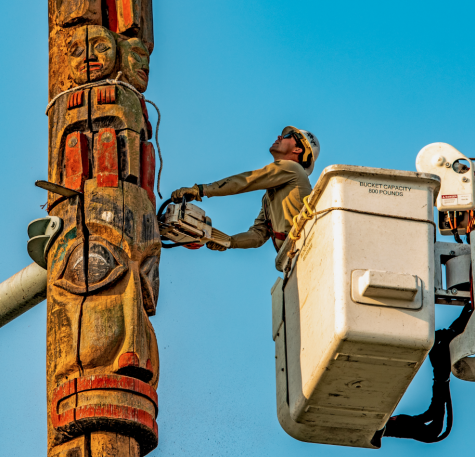
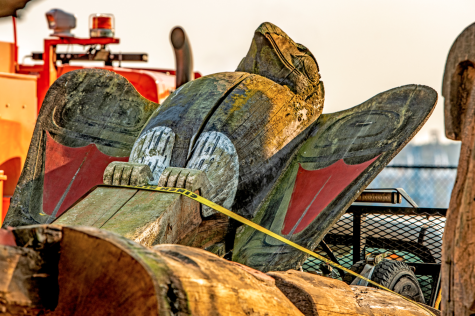
After a starring role in Eyes of the Totem, the Tacoma pole stood at South 10th and A Streets until 1954, when it was moved to a nearby park to make way for some freeway construction. Erected in 1903, its façade had been painted and repainted over the years, though this succession of facelifts only hid the fact that the original cedar was deteriorating. Finally, in the mid-1970s it came down briefly so local artist Douglas Charles Granum could spearhead a restoration, the pole having been ravaged by decades of cold and wet Northwest weather. It went back up a little better, but also about 30 feet shorter, some of the original pole being too far gone to save. But, despite Granum’s work, the elements continued taking their toll. Eventually the wood suffered from weather and termite damage, its multiple paint jobs faded away, and the base was scarred with graffiti. By 2014 the Tacoma totem pole was in such fragile condition that the city discussed taking it down altogether. There was support for doing so, but it eventually got a reprieve, officials choosing to install metal supports to ensure it wouldn’t topple.

That decision just delayed the inevitable. In 2017 writer Jonny Eberly took a closer look at Tacoma’s famed totem pole, which came with a problematic history. Erected, in part, to show up neighboring Seattle, the pole was dedicated just one day before President Theodore Roosevelt visited Tacoma in May 1903. It topped out at 105 feet, which may or may not have included the 15 feet or so buried underground; either way, it was billed as the world’s largest totem pole when it went up. But it wasn’t carved in any local Indian tradition; in fact, the Puyallup Tribe that once called Tacoma home didn’t erect totem poles at all. And this work, allegedly carved on Vashon Island by Alaskan natives, was most likely the work of white men interpreting traditional Indian design, despite claims of authenticity. If it’s inspiration and origins set it outside the norm, the pole’s other features did as well. The totem pole President Roosevelt came to see was brightly painted, with an eagle on top that was ringed with a halo of 18 electric lights – decidedly modern twist to native totem pole carving.[1] Despite this, civic leaders considered the Tacoma totem pole an important feature of the community and a nod to the city’s heritage, even if it didn’t represent local tribes in any way.

Slowly, however, over the course of the next century, the Tacoma totem pole’s story became nearly as concerning as its physical condition. It also set up a historical conundrum. As an object the pole had historical value – by 2021 it had stood in downtown Tacoma for 118 years. But it wasn’t authentic and bore no relation to any local tribe, being closer in style to the poles erected by the Haida/Tlingit tribes in British Columbia. It had long been a source of frustration for the local Puyallup Tribe. “There has been a lot of trauma [about the pole],” remarked Tribal Council Chair Annette Bryan, “and we have to tell the true story to be able to heal.”[2]

Calls to remove the Tacoma totem pole were not new, but things were changing by 2021. That year there was a renewed effort to take the pole down, this time coming not just from the Puyallup Tribe but also from civic groups and private citizens. Hearings indicated that public sentiment had turned – unlike 2014, locals were now in favor of taking the old pole down and replacing it with something more representative of the area’s original inhabitants. Matt Driscoll, a columnist for the Tacoma News Tribune, wrote two articles in support of removal.  Calling it “cartoonish” and likening the Tacoma pole to a cigar store Indian, Driscoll felt the time had come. “Take it down, at long last, and let the annals of history reflect what it has always been: a mistake.”[3]

Many weren’t too concerned with the pole once it was gone, but some wanted to recognize its longtime importance to the city, even if its legacy was flawed. There were, of course, voices that argued against the logic of removing a piece of city history simply because the times had changed. If that was the new standard, who’s to say what other historical artifacts might vanish simply because a future objection was made? One of the loudest came from Douglas Charles Granum, who directed the 1976 restoration. He was incensed that that an object might be lost due to shifting cultural attitudes – the pole was never real, he argued, nor was it intended to be real. It was piece of tourist art whose only requirement was to be tall; it did not, and was never intended to, represent a specific time, place or people. “Weather, winds, rot, fire, a thousand kinds of moisture, sun — all are the curse of precious objects,” Granum wrote. “However none is so dangerous as thoughtless misguided humans. Precious objects have no defense except what someone gives it, and in the case of this innocent tourist artwork, there was no one to protect this classic, old, virgin cedar.”[4] Don Lacky, a former Arts Commissioner for the city of Tacoma, also interceded on the totem pole’s behalf, but knew there wasn’t much he could do. Even he admitted that if he were still a member of the Arts Commission, he’d probably support its removal. “You know our culture has changed and, again, I can understand why the Puyallup Nation finds this offensive. Having some other Native American nation’s pole on their land would be like Russia putting up a monument here in the United States.”[5] Lauren Hoogkamer, who was not directly involved in the totem pole decision, felt similarly – there were valid reasons to take it down, but also valid reasons to keep it as an artifact. “We’re not re-writing history,” she explained in 2021, “but we are re-contextualizing it with new information…The information was [always] there, but we were purposely ignoring it…”[6]

In April 2021 the Tacoma Arts Commission voted to remove the pole from Fireman’s Park, after which it was delisted from landmark status. Preparations continued through the spring and summer until finally, at 7 a.m. on Tuesday, August 3rd, workers from Tacoma Power arrived with cherry-pickers to begin dismantling the city’s iconic landmark.[7] Chainsaws whirred in the crisp morning air, slicing the pole into smaller sections so it could be gently lowered to the ground. Tacoma’s plan is to commission a piece of authentic Coast Salish artwork to replace the old totem pole, something that better represents local tribes like the Puyallup. The original pole was put into storage, with the hope that parts of it would eventually go on display at the Tacoma Historical Society. The plan is to create an exhibit that tells the history of the city’s famous totem pole, while also putting it in the proper historical context.

So Tacoma’s famed totem pole and the movie it inspired, Eyes of the Totem, were both products of the 20th century that had their fates reversed in the 21st. The pole was fixture of downtown Tacoma for nearly 120 years before it came down once and for all; the film, on the other hand, disappeared from public view and many thought it would never be seen again. But thanks to some fine detective work by Lauren Hoogkamer and the collective talent of Team Totem, that which was lost was found again – Eyes of the Totem brought old Tacoma back to life. And yet, at the same time, the totem pole, long part of old Tacoma, was getting ready to draw its last breath.

Neither artifact exists today in its original form – the pole is in storage, in sections, while the public can only view Eyes of the Totem as a digital copy. But both are still here, and both continue to exist, which is sometimes the best that can be hoped for.

By Eric L. Flom – November 2025


Notes:

[1] See Jonny Eberle, “The Strange History of the Tacoma Totem Pole,” Grit City Magazine, 17 December 2017 (https://gritcitymag.com/2017/12/11/the-strange-history-of-the-tacoma-totem-pole/), accessed 21 April 2019.
[2] Annette Bryan, quoted in Matt Driscoll, “It’s time for Tacoma’s ‘cartoonish’ totem pole to be removed from Fireman’s Park,” Tacoma News Tribune, 12 March 2021, Page 4.
[3] Ibid.
[4] See Douglas Charles Granum, “The Destruction of Washington State History,” in Clay Eals, “The Tacoma Totem Pole, 1927,” Seattle Now & Then website (https://pauldorpat.com/2021/09/02/seattle-now-then-tacoma-totem-pole-1927/), accessed 18 September 2021.
[5] Don Lacky, quoted in Clay Eals, “Don Lacky’s Perspective on Aug. 3, 2021, Totem-Tole Removal (https://www.youtube.com/watch?v=ajHkObxzFrQ), accessed 18 September 2021.
[6] Lauren Hoogkamer interview with Eric L. Flom, 30 September 2021.
[7] Clay Eals, “The Tacoma Totem Pole, 1927,” Seattle Now & Then website (https://pauldorpat.com/2021/09/02/seattle-now-then-tacoma-totem-pole-1927/), accessed 18 September 2021.