
All the Comforts of Home: A Collection of Stock Theatre Engagements
All the Comforts of Home:
A Collection of Stock Theatre Engagements
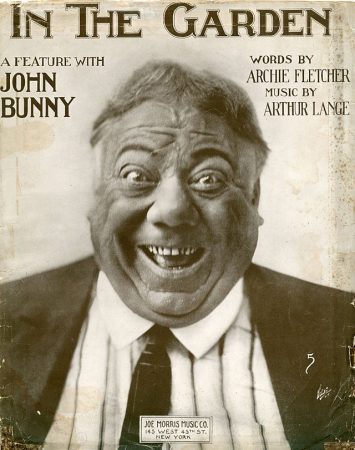
Sheet music for "In the Garden," a song about actor John Bunny, ca. 1914. (Joe Morris Co., publisher)
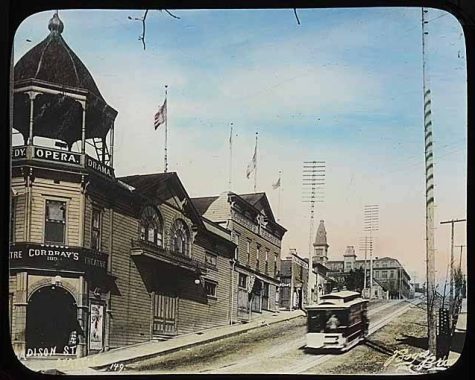
Cordray's Theatre on Third Avenue in Seattle, ca. 1895. (Photo by Boyd & Braas, MOHAI, Image No. 2002.3.416)
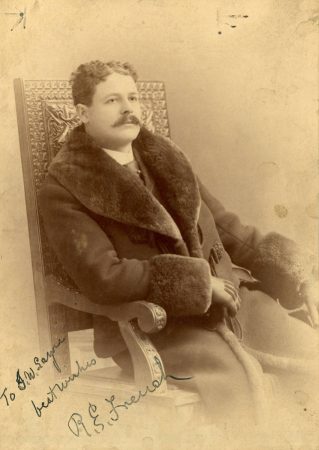
Northwest stock actor R.E. French, ca. 1890. (Photo by La Roche Studios, courtesy University of Washington Special Collections, Order No. JWS18199)
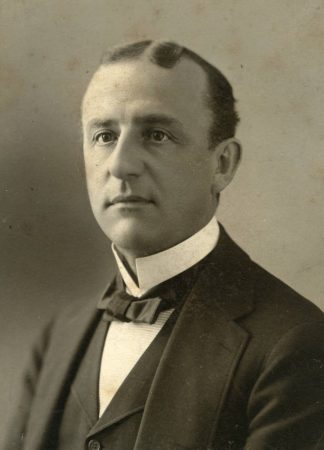
Actor Roland Reed, ca. 1907. (Photo by Bakers Art Gallery, courtesy University of Washington Special Collections, Order No. JWS13735)
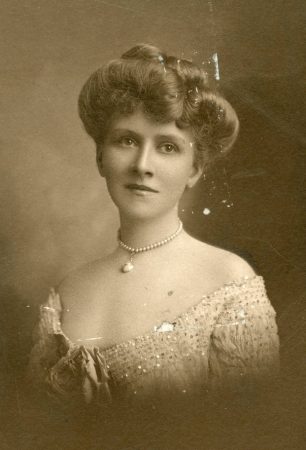
Actress Isadore Rush, "the 20th Century Woman," ca. 1903. (Photo by Marceau Studios, courtesy University of Washington Special Collections, Order No. JWS13000)
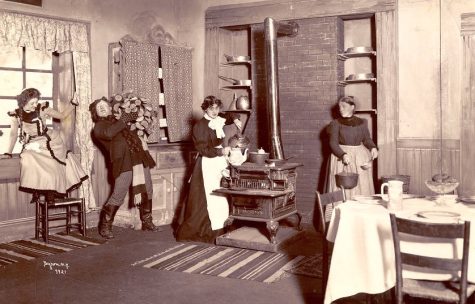
Scene from "Way Down East," ca. 1902. (Photo by Byron Studios, courtesy University of Washington Special Collections, Order No. JWS23710)
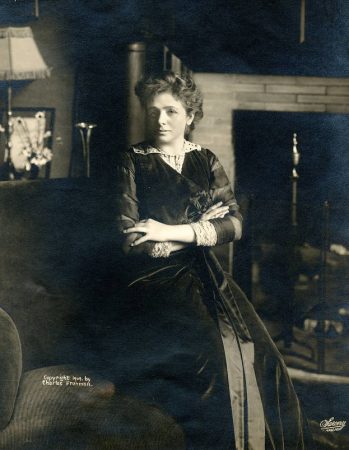
Famed actress Maude Adams, ca. 1909. (Photo by Otto Sarony Co., courtesy University of Washington Special Collections, Order No. 22827)
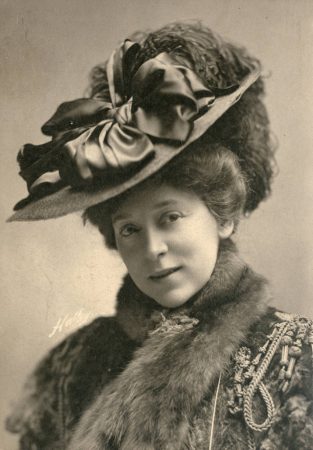
Stage actress Annie Russell, ca. 1909. (Photo by Hall's Studio, courtesy University of Washington Special Collections, Order No. JWS13474)
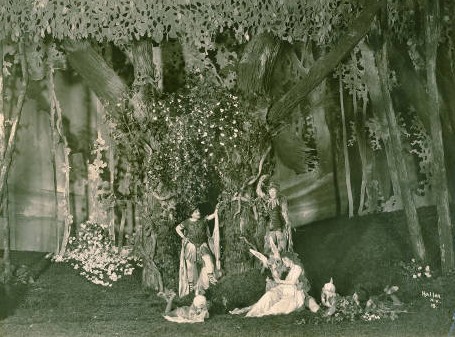
Scene from the Annie Russell production of "A Midsummer Night's Dream," ca. 1907. (Photo by Hallen Studios, courtesy University of Washington Special Collections, Order No. JWS23522)
Act I: John Bunny
Although Seattle was home to some of the early 20th century’s most influential theatrical managers, it was never really known for its cultivation of stage talent. Particularly in stock theatre, where there were lots of performers pounding the boards, few achieved more than regional notoriety. In addition, since Seattle’s more prominent stock companies tended to perform established stage material, few of the city’s aspiring playwrights had local outlets to showcase their work. Whereas Seattle was the starting point for industry leaders such as John Cort, Alexander Pantages, and John Considine, creatively speaking the city’s contribution to the dramatic arts was less.
However, a handful of personalities – some of them eventually linked to the film industry – made more than a simple pass through Seattle during their stage days. Temporarily, at least, these performers called the city home as they pursued their acting careers.
The first of these future film stars to play Seattle – and indeed, one of the first film stars in general – was John Bunny. The son of British émigrés, Bunny – born in Brooklyn, New York, in September 1863 – appeared headed for life as a grocery clerk until he decided to join a small minstrel show at the age of 20. It was a new and demanding career, but Bunny excelled at it, eventually graduating (over the course of his stage career) from small-time minstrelsy to Shakespeare, acting in large productions in addition to stage managing behind the scenes.
Around 1910 he gave up the stage to move into films; he was so enthusiastic about the medium, Walter Kerr has contended, that he abandoned his established stage career for the challenge, accepting a considerable pay cut in the process.[1] If this was true, he probably had little choice. A stage actor of John Bunny’s experience was too expensive for most early motion picture companies to employ for more than a few films at a time, so a permanent engagement meant that he would have accept less than he was capable of earning onstage – the trade-off being the absence of touring. Bunny’s initial salary was $40 dollars per week, but within three years, after he had proven quite popular with the early filmgoing public, it was $1,000 per week, and all the while he was deflecting offers from vaudeville promoters attempting to lure him back into footlights. In his book The Movies in the Age of Innocence, historian Edward Wagenknecht – at one time a professor at the University of Washington in Seattle – noted an interview the comedian once gave in which he explained his love of filmmaking. “This is my work,” Bunny remarked. “Here every day is a first night. It keeps you alive, stimulates your imagination, and compels a constant thinking out of new ideas.”[2] He expressed similar sentiments in a 1914 piece for Photoplay magazine. “I have been a comedian for thirty years,” Bunny wrote. “I have faced a cold and heartless audience that dared me to make it laugh and I have seen 1,200 men and women in a theater lose every thought in their heads except the one delicious, elusive, incredible vision that I had put there…Just the same, I [couldn’t] do it [onscreen] if it weren’t for those years of experience, those years in which I learned my business. When I was twenty-one years old I played forty different roles in one season of stock work. That, and natural aptitude, is the secret.”[3]
John Bunny’s motion picture career came with the Vitagraph Company, where the cherubic comedian (often teamed with the spinsterish Flora Finch) made over 150 comedy shorts before his untimely death in 1915. In the process he became one of the industry’s most recognizable and popular figures, even though Anthony Slide, in his history of Vitagraph, noted a very different side to the man and his work. “He is remembered as a comedian,” Slide wrote, “but those of his films which survive just are not funny, nor would they appear to ever have been funny, or even mildly amusing. His screen personality was that of a jovial fat man, but offscreen, apparently, he was far from jovial. He was pompous, rude, and arrogant, and was actively disliked by his fellow Vitagraphers.”[4]
Bunny and Finch, it is said, for all their onscreen chemistry, had a particularly contentious off-camera relationship. Nonetheless, the public raised John Bunny to stardom, though it helped that Vitagraph – in a significant break from other companies – was one of the first studios to openly publicize the names of their performers, capitalizing on the public’s growing fascination with their favorite picture players. Bunny’s years of stage experience are evident in his surviving films – although specializing in comedic roles, he had little use for the broad slapstick style that Mack Sennett would eventually popularize. “John Bunny’s mastery of screen comedy was the mastery of intricate facial expression and body movement,” Samuel Gill has noted. “The Bunny comedies reflected John’s concern for a natural acting performance and he attacked each one with a believable approach, exercising but a slight touch of exaggeration, and then only for comic effect.”[5] When he died of Bright’s disease in April 1915, it was front page news around the world.
Though John Bunny would play Seattle on several occasions, including engagements in several large road show productions, his first documented appearance in Seattle came as a stock actor in February 1892, almost 10 years after beginning his stage career. For five weeks he appeared in support of R.E. French at Cordray’s Theatre, beginning on February 8th with the production Montezuma.
Although French lead the original stock company at Cordray’s when it opened for business two years earlier, he was actually being reintroduced as head of the venue; owner John Cordray regularly swapped performers between his theatre holdings in other cities to keep the companies fresh. Until the early part of January, French had been the manager of the Portland Park Theatre. The Seattle Press-Times commented on the changes in early February:
The changes in the personnel of Cordray’s dramatic company still continue and old, familiar faces are gradually dropping out to make room for others seeking equal recognition. Among the latter is Mr. R.E. French, a talented leading man already favorably known in Seattle, who will take entire charge of the theater next Monday morning and occupy the very responsible dual position of manager and leading man. As local manager he will have the able assistance of Mr. Joseph Petrich, while the stage will be under Mr. French’s exclusive control. Mr. French is the owner of French’s Park theater, now running in Portland, and has had considerable experience as a business manager. As a leading actor he is favorably known, having played a successful starring tour in the principal cities of the east and the coast.
The same column also carried an announcement regarding one of the new arrivals to Cordray’s Seattle troupe. “Mr. J.B. Bonney [sic], a very clever comedian from Mr. Cordray’s Portland theater, will make his first appearance next Monday evening at Cordray’s as a darkey. Mr. Bunny comes highly recommended.”[6]
Montezuma was a five-act melodrama by Colonel Prentiss Ingraham with more than a few similarities to The Count of Monte Cristo. The leading character, after being imprisoned for 15 years, manages to escape to the island of Montezuma where he has hidden away a cache of treasure, which he then uses to reestablish his life and seek revenge upon his former captors. The production had long been part of R.E. French’s repertoire. Billed a prominent second behind French, John Bunny played Sam, a Negro servant (“a colored gemman, sah” according to one cast list), a part that found him acting in blackface.
The Seattle Post-Intelligencer predicted the show would be generously patronized during its weeklong engagement, as “it has all the qualities that attract and please.” Their review had nary a bad thing to say about the production.
A warm welcome was extended to R. E. French last night on his reappearance at Cordray’s in the leading part of the sensational melodrama Montezuma. The play was artistically mounted and gorgeously costumed, and its enaction was meritorious from many points of view. The imposing stage presence which Mr. French happily possesses peculiarly fits the heroic role assigned him, and he scored several ringing plaudits for spirited acting. At the end of the fourth act he responded to a curtain call. Miss Isabel Morris, as Maysel Elwood, gave an artistic interpretation of a charming character, and Miss Stella Rees drew Felecia Delmayne, the plotter, with realistic boldness. J.H. Bunny, the new comedian of the company, made an excellent impression by his characterization of the colored servant Sam, and raised many a hearty laugh by his antics. David Elmer was a weird, spectral figure as Veronica, the unhappy life prisoner in the castle El Moro, and his lines were uttered in the crushed, forlorn notes of a man who had suffered a thousand deaths in one short life…The scenery is especially fine, and many of the tableaux are set amid scenes of tropical luxuriance and beauty.[7]
The Seattle Press-Times offered a slightly different view of the show. They, too, wholly approved of French’s performance and his staging of the play, but remained generally unimpressed with the supporting cast. Only two were singled out for criticism – John Bunny and Francis Powers, as Don Fernando, both of whom the paper felt were “lame in dialect.” Some of Bunny’s comic antics, however, managed to carry favor with the Press-Times’ nameless reviewer.[8]
Imperfections aside, however, Montezuma was guaranteed patronage in at least one respect: for the week of February 8th, 1892, Cordray’s was the only legitimate theatre in Seattle open for business. And despite a less-than-stellar reaction to his first Seattle performance, on the following Sunday the Press-Times expressed confidence in John Bunny’s potential with the troupe. “Mr. J.H. Bunny,” their columnist noted, “the new comedian at Cordray’s, made a hit as Sam, in Montezuma, and gave evidence of possessing comedy talent that will soon establish him [as] a favorite with the public. Mr. Bunny will be seen to better advantage next week.”[9]
That better advantage was to come in yet another melodrama, this one called The Imposter. It was the story of an English nobleman, Cuthbert Fielding, who had traveled the globe for years in search of adventure. On one such journey he meets a formerly aristocratic American Southerner, Lucian Glyre; the two befriend each other, although tragedy strikes when the Englishman falls victim to a deadly disease in the Australian Outback. As he prepares to die, Fielding presents to the American the deed to his English manor, along with several other personal items, instructing him to return the articles to his family, whom he has not seen in years.
Glyre, however, seizes the opportunity to regain the wealth and nobility stripped from his own family during the Civil War. Leaving Fielding for dead, he promptly sails for England and assumes the identity of the Englishman, duping family members who would have barely recognized him. The Southerner’s plan is almost foolproof, until Fielding himself – cured of the disease that nearly took his life – arrives in England and exposes the deceitful American. The play was based on an actual occurrence: the Tichborne case, which scandalized English society in 1868. R.E. French assumed the role of Lucian Glyre, the scheming American, while John Bunny played an Englishman named Abercrombie Courtwell.[10]
The Press-Times was quite impressed with the production. “The Imposter was played to a well-pleased audience at Cordray’s last night. It fully bore out the advance notices on its merits, and will prove one of the most popular domestic dramas staged in this city for some time. The observant auditor was impressed by the attention paid to details in the scenery and properties, and the painstaking and care of Manager French was readily apparent.”[11] The Seattle Post-Intelligencer had similar comments. “As the curtain rose on the first scene in The Imposter, at Cordray’s last night, there was a burst of applause, evoked by the realism of the setting. As the play proceeded the audience warmed up to a pitch of enthusiasm that has rarely been excelled in the history of the house, and expressive approval was accorded the performers in all the strongest situations.”[12] John Bunny, too, met with favor. “J.H. Bunny made a hit in the comedy role of Abercrombie Courtwell,” they added, “and his efforts raised repeated rounds of merriment.”
The Press-Times, which made no personal mention of Bunny in their actual review for The Imposter, held their commentary on his work (as well as the work of other supporting players in the Cordray troupe) until the following Sunday’s theatrical column. “Mr. Bunny had a part this week better suited to his talent and one which gave him an opportunity of showing that he is equally at home in genteel as in low comedy. A negro part, such as Mr. Bunny opened in, should never be played by any except a minstrel or a variety actor; it does not belong to the legitimate.”[13] (An interesting comment, given John Bunny’s prior stage experience in minstrelsy.) As was the case with Montezuma, The Imposter was the only theatrical attraction in Seattle during its weeklong run.
For the following week, beginning February 21, the Cordray stock company not only added a new leading lady to the troupe, Beatrice Lieb, but changed gears by producing a comedy/drama rather than a straight melodrama. The offering was His Natural Life, a particular success for R.E. French when he presented it in Portland some months previous. However, with most of the attention focused on the company’s new leading lady (Lieb arrived in Seattle directly from New York), an actual plot description for the play went missing from advance notices, though the Press- Times did offer that “in addition to vivacious and racy humor, the piece has a fine vein of pathos pervading it.”[14]
As the troupe’s newcomer, reviews naturally gravitated toward Lieb, who essayed the role of Helen Lyons. Both she and the play were immediate hits. The Press-Times was particularly pleased with the new actress, noting that she was “a decided improvement on all former leading ladies” who had played with the Cordray troupe. John Bunny also earned plaudits for his work as Frank Heyden, though the paper’s review was actually quite bland. The Post-Intelligencer gave a far better description of the opening performance.
Miss Beatrice Lieb, the new leading lady at Cordray’s, has certainly no reason to complain of the reception given her last night. She impressed the audience favorably when she first appeared on the stage, and she won her way to their hearts by her pathetic, womanly acting and graceful and easy bearing. The part of Helen Lyons was exceedingly well portrayed by her. The emotional scenes were not overdrawn, but were invested with that telling pathos which always awakens a responsive thrill in the minds of the audience. Miss Lieb’s stage presence is striking and strongly in her favor… A curtain call was given at the end of the second act, in which Miss Lieb, R.E. French, Francis Powers and Lorrimer Johnstone all participated and J.H. Bunny created constant merriment in the role of Frank Heyden. In the second scene of the second act he and Miss Eva Earle French, who took the soubrette part of Bertie Courtright, were encored three times in a characteristic duet…The performance as a whole is highly meritous. The scenery is beautiful, and, indeed, all the stage accessories are perfect. Mr. Bray’s orchestra rendered a charming program that contributed in no small degree to the pleasure of the evening.[15]
The week of March 1, 1892, saw the R.E. French’s company perform In His Power, a melodrama set in 1870s Paris. The action concerned an amoral Frenchman named Eugene Lyon, who is not only betraying his homeland as an agent for the German government, but who is also a bigamist. One of his “conquests,” albeit a former one, is Marie, who’s become the wife of an Englishman serving in the French Army. When Lyon discovers some key intelligence is about to be transmitted to the officer, he sets his sights on Marie once again as a way to obtain the information.
Unwisely, it seems, Marie has kept her former relationship with Lyon from Hastings, her current husband, and thus becomes a target for blackmail. She helps Lyon obtain his desired papers, although Hastings ultimately discovers the treachery. Lyon betrays Marie’s previous relationship, and while Hastings is quick to drop his wife, subsequent events (unmentioned in accounts of the play but likely relating to the Frenchman’s other marriages) attest to Lyon’s unsavory character and Marie’s innocence. At the close, Hastings and Marie are reconciled.
“A cordial reception was awarded the Cordray company in their first performance of In His Power last night,” reported the Post-Intelligencer. “The production can favorably bear intelligent criticism because of the art and talent displayed by the performers, and the mounting was excellent. Miss Beatrice Lieb, though suffering from temporary indisposition, gave a talented characterization of Marie. This lady fully sustains the flattering press comments given her in the East as a gifted emotional actress, and her role last night called for a forcible, nervous, impassioned enaction.”[16] The nature of Miss Lieb’s malady was undisclosed, although she and her fellow performers were uniformly praised; John Bunny, according to the paper, “realized all that the part of Mr. Walker permitted.” Unfortunately, it does not appear that a copy now exists of the Seattle Press-Times issue containing a review of In His Power.
The following week, beginning March 8, John Bunny enacted the role of Mr. Puffy in the Cordray version of The Streets of New York. The play centered upon New York banker, Gideon Bloodgood, who is preparing to escape to Europe with his daughter, taking enough of the faltering bank’s money to ensure them a life without want. But just prior to leaving, a Captain Fairweather arrives looking to deposit a sizable sum for his wife and children, which Bloodgood accepts with the intention of bolstering his take. Yet soon after, Captain Fairweather returns to demand his money back, as he’s heard the bank is unstable and could fold at any moment. Bloodgood refuses to return the man’s money, and in the ensuing argument the Captain suddenly up and dies. Late that night the body is moved to deserted alley and stripped of any connection to the bank.
The play then moves ahead 20 years, when Gideon Bloodgood and his daughter have abandoned Europe to take a place amongst New York’s social elite, while the Captain’s widow, Mrs. Fairweather, and her children Lucy and Paul live in poverty. As was typical of period melodrama, however, all is righted in the final act, as was duly noted in the Post-Intelligencer. “Time, the revealer of all secrets,” they concluded in their pre-engagement notice, “leads to the discovery of Bloodgood’s fraud, and the widow and her children are restored to affluence and happiness.”
The Streets of New York was an exceedingly popular play in the late 19th century and found a home in the repertoires of many companies, almost always drawing big crowds. Surprisingly, John Bunny himself was criticized by the Post-Intelligencer, who found his efforts as Mr. Puffy as being “scarcely up to the standard of his former work.” Yet even though Bunny was the only actor in the company singled out as a problem, the paper was also lukewarm toward the production as a whole. Only Margaret Marshall, cast as Bunny’s stage wife, Mrs. Puffy, received glowing notices. “A fashionable audience turned out to see the first performance at Cordray’s of The Streets of New York,” wrote the Post-Intelligencer. “The scenic display was in harmonious accord with the requirements of the play, and in many scenes elicited warm applause as they unfolded. Mr. Bray’s well-trained orchestra rendered a skillfully selected program with admirable art, the number ‘The Mill in the Forest,’ played by special request, being loudly encored.”[17] Yet even though some of the accompanying aspects seemed to have went over well in the reviewer’s mind, a good one-third of the Post-Intelligencer review focused not on the play itself but on the stage entertainment offered at the adjoining Cordray Auditorium, where variety acts were presented prior to the actual stage presentation.
For its own part, the Press-Times offered a brief but undescriptive view of The Streets of New York, providing nothing on Bunny’s work as Mr. Puffy, although Margaret Marshall was again praised for her efforts. The play, in their assessment, was “performed creditably.”[18]
Unfortunately, John Bunny would have to wait several years before redeeming himself after The Streets of New York, for he departed Seattle shortly after the Cordray troupe’s final performance. The news was announced in the Sunday theatrical section of the Post-Intelligencer. “Seattle theater-goers will be sorry to learn that J.H. Bunny, the popular comedian at Cordray’s, will conclude his engagement tonight. Mr. Bunny has contributed largely to the delight and amusement of the patrons of Cordray’s theater during his stay, and he takes with him the good wishes of many admires [sic]. He will leave for New York tomorrow morning to fill an engagement there.” The Press-Times carried a similar announcement the day before, noting that Sam Morris, whom Bunny replaced as the troupe’s primary comedian, would be resuming his old duties.[19] The question of whether John Bunny actually had another engagement back East, was unhappy, or was forced out of the Cordray company (if accounts of his difficult personality are correct) is one of conjecture.
Regardless, his departure from the Cordray Theatre in 1892 was not the last of the actor’s visits to the city, though it would be his only extended stint in Seattle. Four years later, in 1896, Bunny returned while touring in support of comedian Roland Reed.
Reed had gained a considerable reputation in the East as an eccentric light comedian. Born into an acting family, as a young man he managed to get a job behind-the-scenes in Philadelphia’s Arch Street Theatre, where he worked with Mrs. John Drew, grandmother of the Barrymore children, Lionel, Ethel and John. Over time he put in appearances with several eastern stock and touring companies, most often appearing in comedic parts – helped no little by the size of his nose. Although successful in a number of stage comedies, Reed’s characterizations apparently differed little from his own personality. “On the stage he is never anything but Ronald Reed,” Lewis Strang wrote of the actor in 1900, “and for the time being no one wants him to be anything else.”[20] Reed’s troupe took over from a very successful two-day engagement of Pudd’nhead Wilson starring Frank Campeau, which had played to enthusiastic crowds at the Seattle Theatre. Pre-engagement announcements called Roland Reed “fun personified.”
The highlight of the brief two-day visit was the opening night production of The Politician, an old farce comedy by David Dudley Lloyd. The play had been updated by Sydney Rosenfeld, who added a subtitle, The Woman’s Plank, and integrated material on the growing women’s movement in social and political circles. The play centered on a powerful backroom politician and his efforts to get a candidate nominated for Congress, although his scheming is complicated by an educated young woman bent on asserting herself in a traditionally male forum.
Roland Reed played leading man while John Bunny appeared as a servant named Mike. But it was Reed’s main counterpart, Isadore Rush, who billed herself as “the original Twentieth Century Woman,” around whom the play centered.[21] She was not a suffragette in the stereotypical sense, however. “In these days when the severe style of mannish dress is so worn and advocated by women,” went one publicity notice, “one rarely ever sees anything so masculine yet so daintily feminine as the costumes which Miss Isadore Rush wears as the Twentieth Century Girl. There is nothing bold or swaggering about either the manner or appearance of this little ‘new woman,’ but a natural, unaffected womanliness which cannot fail to charm those most opposed to all fin de siècle notions.”[22]
The stage had seen an explosion of politically themed plays toward the end of the 19th century, and although the Post-Intelligencer praised The Politician for its focus on a backroom figure rather than on an actual candidate, they still found many of the situations familiar. The addition of The Woman’s Plank, in fact, seemed more of a sham than an actual enlargement of the play’s themes, so little did issues of the “new woman” figure into the plot. Even so, both Reed and Rush earned plaudits for their work. “Mr. Reed eminently maintained the high reputation he carried with him,” noted the Post-Intelligencer. “Sheridan Tupper’s clever characterization of the candidate was a studied success. William Bernard and John H. Bunny showed themselves to be clever comedians. Miss Maude White was an exceedingly winsome soubrette, and as for Miss Rush why Seattle would be a solid delegation for her election to ‘the highest gift in the hands of the people’ in the interest of ‘pure politics.’”[23]
The Daily Times had little to say about the production – most of their commentary was reserved for Isadore Rush’s wardrobe. The character of Cleopatra Sturges, it seems, was a sort of Diane Keaton prototype – Rush wore male hats, jackets, ties and waistcoats above the waist, but skirts and petticoats below. “The best dressed man in town is a woman,” declared the Times in the opening of their review. “At least in the matter of wearing men’s clothes she is the best dressed, for her collars, cuffs, hats, coats, vests, shirts and ties are immaculate…In The Politician Miss Rush wears six or eight different coats, vests and skirts, and in none of them can a single wrinkle be detected. The fit is absolutely perfect. Off the stage she does not affect the mannish costume to any great extent, as many suppose, but is a woman, with all a woman’s foibles, but the fit is still there. Her dresses are invariably striking, but never out of taste, and are beautiful examples of the tailoring art.”[24] The Times was so mesmerized by Isadore Rush that it was almost an afterthought when they ended their review by noting “Mr. Reed is as funny as only he can be.”
The Politician played to a packed house at the Seattle Theatre, and although notices indicate that the production was a decided success, their follow-up show the next evening, Lend Me Your Wife, another old farce comedy, proved a disappointment. The play focused on a young schemer leaning on his wealthy uncle for a monthly allowance. But when debts mount despite his uncle’s generosity, he takes to convincing the old man that he has a family to support, therefore requiring a bit extra. The ruse works until his uncle decides to pay a visit, sending the young man into a panic as he attempts to locate a temporary wife and child to maintain appearances.
While The Politician was greeted with genuine praise, the notice for the Post-Intelligencer (the Daily Times did not review Lend Me Your Wife) greeted Reed’s second production differently. Luckily, John Bunny, who enacted the role of Alexander Stirrup, wasn’t singled out as one of the problems. Whereas in The Politician Roland Reed “maintained his high reputation,” the Post-Intelligencer was deeply disappointed with the actor’s work in Lend Me Your Wife.
No portion of the mantle of the late lamented John T. Raymond, which Mr. Roland Reed is popularly supposed to have fallen heir to, was in evidence last night when Mr. Reed closed his engagement at the Seattle theater with a production of Boucicault and Rosenfeld’s farce comedy, Lend Me Your Wife, which is an adaptation of one of the comedies of the at-one-time popular French school. Just why Lend Me Your Wife is not as good as the Politician, both being old, does not appear, unless the opportunity for Miss Rush to introduce her new school of acting was lacking. Miss Rush, who is altogether charming and delightful as the new woman, falls short in her estimate of thorough womanly charms; hence the disappointment in her interpretation of the character of Beatrice Bunting. Mr. Reed is a capable actor, but it is high time for him to bring out something new. The supporting company was not as good as on the previous evening, and while some of the situations were ludicrous and sometimes suggestive, there was a sympathy lacking between audience and players. Lend Me Your Wife might have been redeemed if Mr. Reed finished his midway plaisance dance, begun in the production of the Politician, which was vociferously encored.[25]
The notices improved measurably for the next show that brought John Bunny to Seattle, in early 1901. He was touring at the time with one of the season’s most celebrated shows: William A. Brady’s production of Way Down East, a play that had proved a sensation almost everywhere, despite several false starts and rewrites before becoming a hit. Not only would it become a durable fixture of the American stage over the next two decades but would eventually become one of D.W. Griffith’s greatest commercial successes as a motion picture.[26]
It was the first time the stage version of Lottie Blair Parker’s story had made an appearance in Seattle. The play centered upon an innocent young girl, Anna Moore, who is tricked into a false marriage by the villain, Lenox Sanderson, who eventually abandons her. Anna, pregnant from their brief union, endures first the death of her mother, then the death of her newborn child. She escapes the city and her past by taking a housekeeping job in the rural New England home of Squire Bartlett, where she eventually falls in love with his son David.
Yet the tranquil setting is broken when Sanderson makes an unexpected appearance at the Bartlett home and Anna’s past is revealed. Squire Bartlett, a pious country gentleman, is shocked by what he learns, and orders Anna from the house in the middle of a raging snowstorm, though she is pursued the compassionate David, who himself has fallen for Anna, and who barely rescues her from death’s door. “Of course the heroine has been far more sinned against than sinning,” noted the Daily Times during a later Seattle engagement, “and all the crinkles are so straightened out that there is a happy ending.”[27] The William A. Brady version was the official touring company, with John Bunny essaying the role of Seth Holcomb. He also performed duties behind the scenes as the stage manager for the production.
The play was a highly anticipated engagement and did not disappoint eager patrons at the Seattle Theatre, where it turned up for three days beginning Thursday, February 14, 1901. Bunny’s Holcomb earned only passing praise, and although Way Down East was impressively acted and staged, it didn’t come off as a bit of a letdown, given the hype that had preceded the play’s arrival. To the anonymous reviewer at the Seattle Daily Times, Way Down East employed classic themes and devices from stage melodrama, unoriginal though apparently well done.
Owing to the fact that Way Down East is the best advertised show traveling in America this season, its opening performance at the Seattle last evening drew a record-breaking house, with every prospect of standing room at the remaining three performances. The great audience of last evening, clad largely in evening dress, was composed of Seattle’s best and most critical theatregoers. The fact that the players were able to arouse at times great enthusiasm is a frank compliment to their handling of what is best a commonplace, rustic melodrama. Its lines and situations are stereotyped. The New England kitchen has been so well done in The Old Homestead and the New England supper made so realistic in Shore Acres, and the New England sitting room so cleverly worked out in Old Jed Prouty that their introduction in Way Down East is no novelty. The best parts of the latter drama, in fact, are those in which it most closely follows the lines of its great predecessors. And the great moral lesson of Way Down East is not apparent. The heroine is a ruined woman. The wrong is not righted and in the last act the villain strides way laughing. It is unlikely that any Seattle clergyman will sit down and write [an] endorsement of its moral value.[28]
That the reviewer for the Daily Times found the moral implications of the play a bit dubious is interesting, seeing as his colleague over at the Seattle Star, Edward Erasmus, found the same aspect of play quite satisfying. “Among the plays that have visited Seattle this season,” Erasmus noted in his review, “there has been no greater moral educator and no more highly appreciated production than Way Down East. The mingled sentiments of mirth and pathos are so harmoniously and artistically blended as to hold the audience in close attention from the rise to the fall of each curtain. It is such productions as this that lend enchantment to life and make lasting impressions for the betterment of morals.”[29] Erasmus also found the bulk of the cast well suited for their roles, save for Earl Ryder, cast as the villain. “Earl Ryder, as Lenox Sanderson, might possibly be worse, but it is hardly probable. Mr. Ryder won’t do; he wouldn’t do in a third-rate amateur performance and the quicker this dawns on the management the better.”
Like the Daily Times, the Post-Intelligencer was also enthusiastic about the performances and production values of Way Down East, although it quibbled with the close of the third act when Anna Moore is cast out of Squire Bartlett’s house into the freezing snow.
It seems a pity though that an act should be almost ruined, as the third act was, by thoughtlessness, for it appears to be more than anything else. The audience is worked up to a clever finale in this act when the unfortunate heroine is driven out of the honest old farmer’s house in a blinding blizzard, where she is followed by the farmer’s son, she leaving with the remark that she never wanted to see their faces again, and the curtain falls. Then when the audience applauds both the characters appear again on the stage, bowing and smiling as though the blizzard was a thing that one really enjoys, especially so the heroine, who wears a light cloak and thin shoes.
Why could they not leave the picture in the minds of the audience as it was when the curtain fell? There seems little use to go to the trouble of producing a play that is perfect in every detail and then have the people in front receive this evidence of being only acting after all.
It is to be hoped that this return can be eliminated, and it is safe to say the house will be better pleased.[30]
The snowstorm scene is interesting. It was a mechanical effect devised by theatrical actor/manager Joseph R. Grismer, who originally worked with William A. Brady and Lottie Blair Parker on developing the play, and who took the part of Lenox Sanderson in early productions.[31] It apparently required six different machines to produce, all of which gave a fairly credible simulation of blizzard conditions. The effect, apparently run by electricity, was described in The Argus: “About ten feet above the floor and just at the stage right of the [kitchen] door are erected appliances so placed that the wind causes the air to take a sort of whirligig course down past the door and the window. The papers are dropped out of a box, while salt goes from cylinders into this wind. The beautiful snow beats against the window and when the door is opened the wind and the snow whistles chill in the doorway.”[32] Grismer must have been quite proud of the effect, for the Seattle Theatre program carried the following exclamation: “Note: The snow storm effect in Act III is the invention of Mr. Jos. R. Grismer and is fully protected by United States and foreign patents.”[33] Grismer’s claim was probably more fiction than fact – an attempt to discourage other companies from appropriating or imitating the snowstorm effects in Way Down East.
While some viewed the plot as creaky at best, William A. Brady’s version of the play managed to excite audiences from coast to coast, and throughout its travels the production did brisk business at almost every stop. The company, in fact, came back to Seattle for a return engagement some 14 months later, in April 1902. Again, the play won praise for its staging and drew enthusiastic crowds, although John Bunny seems to have moved on to other endeavors, having surrendered both the role of Seth Holcomb and position of stage manager to John C. Hickey.
Even though it was received enthusiastically during his lone appearance with the play, Way Down East wouldn’t mark the biggest production in which Bunny appeared on the stages of Seattle. (Though both of his later engagements made specific mention of his work as Seth Holcomb, as opposed to his stint with the Cordray stock company a decade before.) The most heralded production that Bunny toured with was his next visit, beginning on June 24, 1904, at the Grand Opera House, when he arrived supporting Maude Adams in J.M. Barrie’s The Little Minister, the production that vaulted her to popular success.
Born in 1872, Maude Adams began her stage career as a child actress in Salt Lake City. By the age of five, Adams had moved to San Francisco where she played in stage productions alongside a young David Belasco and later found herself opposite E.H. Sothern while still only a teenager. In 1892 Charles Frohman, soon to become her longtime manager, selected Adams to play leading roles opposite John Drew, after which she launched her own career as a headliner. At the height of her stage popularity her appeal to audiences was virtually unparalleled, particularly in J.M. Barrie vehicles such as The Little Minister and Peter Pan. After Charles Frohman perished on the Lusitania in 1917, Adams gave up her formal stage career, performing only intermittently over the next few decades. Maude Adams died in July 1953, her last years spent as a drama professor at a small college in Missouri.
Adams arrived in Seattle as one of the most acclaimed stage figures of her time, and her two-day engagement in Barrie’s The Little Minister – which focused on the romance between an impetuous young woman (nicknamed Babbie) and a reverend in a small Scottish town – was being hailed as the theatrical event of the 1903-04 season. The clamor for seats was exceptionally large, despite the fact that The Little Minister was by no means a new play to Seattle audiences, having been performed there on at least four previous occasions.[34] Even so, none of those earlier productions featured Maude Adams, whom the Daily Times proclaimed in a headline as “the only ‘Babbie.’”
For her first appearance in Seattle after achieving international acclaim, Adams arrived on the morning of her opening performance and planned, it was reported, to spend the afternoon motoring around Seattle and possibly do some horseback riding.[35] She certainly allotted plenty of time for leisure during her Seattle stay: although her final performance at the Grand was to be on a Saturday evening, Adams wasn’t scheduled to depart until late Sunday night for her Monday opening in Spokane.[36]
Both performances of The Little Minister were standing room only and no one left disappointed, for Adams and her company won near-universal raves. The Seattle Star, which, curiously, called J.M. Barrie’s play “impossible,” was full of praise, almost all of it for Adams; “all that could be desired” was their collective assessment of her supporting cast. “Whether as the ‘Fair Egyptian’ or as Lady Babbie, Miss Adams lives her part and plainly, sweetly depicts a number of episodes of life in Scotland in an intensely dramatic way,” they observed, “making the production a rare and enjoyable combination of a new school actress playing an old school drama.”[37]
The Daily Times felt similarly:
No more sweet, blithesome play has ever been in Seattle than The Little Minister, and surely no more dainty and winsome woman ever charmed a Seattle audience than Maude Adams. The play has been seen here before, several times, with the part of Babbie in capable hands, and with support almost, if not quite, as good as that which appeared at the Grand last night – but not without Maude Adams. And not to have seen Maude Adams as Babbie is to have missed, by a long way, the opportunity for the highest and most heartfelt appreciation of Barrie’s little Scotch idyll.
Perhaps not more than a tenth part of last night’s audience had not seen and enjoyed The Little Minister before. Between acts one could distinguish amid the buzz of conversation all around the outlines of the scenes yet to come. Even those who had not seen the play had read the story and pleasurably anticipated the happy denouement.
But with every entrance of Babbie of last night came a series of delightful surprises, unexpected movements, quaint gestures, swift transitions from gaiety to tenderness, and the thousand little artifices so fitting to the part by which Miss Adams has placed it beyond hope of imitation. All else is lost to sight and hearing while she is on the stage in watching and listening for what she will do and say next.[38]
The same notice singled out John Bunny, who played Snecky Hobart in the production, along with the church elders for their excellent character acting.
The engagement was an overwhelming success from most, but not all standpoints. Only the production’s musical accompaniment received strong condemnation, and not from one but two Seattle dailies. The unidentified critic for the Times was the most vocal in this respect, despite the fact that the orchestra played the original score, traditionally used when presenting Barrie’s play.[39]
The one inharmonious feature of the production is the music, which runs without ceasing, through and between the acts. It is the music written for the original production, if memory serves, by William Feurst, and used by Miss Adams and all others who have given the play ever since.
How composer, player or manager can conceive that this music enhances the pleasure of the production or even blends with the spirit of the play is incomprehensible. The waits are made tedious to the point of intolerance by the dolorous strains gone over and over again in seemingly endless iteration and constant orchestral drooling during the acts is unrelieved by a single bright tone, unless one may except the ever-recurring theme, cribbed from an old melody, that marks each movement by the Lady Barbara.
The absurdity of it all is topped off at the close of the last act when the staid elders and members of the congregation, striving to peep through the window and door of the manse at the happiness within, are made to prance and caper to a specially prepared dose in which the pianist runs the back of his thumb down the keyboard. One unconsciously waits for the clatter of the slapsticks, a funny fall and a clout on the big drum.[40]
The Post-Intelligencer was also critical of the musical portion of The Little Minister, though not enough to devote three paragraphs of their review to it. “Too strong condemnation, however, cannot be passed upon the introduction of music by the orchestra,” they wrote after praising the show as a whole, “sometimes slow and ‘weepy,’ sometimes gay, during the playing. That abominable trick ought to be left to ‘Uncle Tom’ shows and the me-che-ild melodramas.”[41]
John Bunny’s final Seattle engagement was also in a big production, for three days in June 1907 playing Bottom to Annie Russell’s Puck in A Midsummer Night’s Dream. A lavish production, the company featured, according to advance publicity, a cast of 100 individual performers, including a ballet of 40. The dance was of particular note – these “Flying Fairies,” as they were called, moved through the air via wires propelling them about the stage, while special electrical effects (including glowing flowers and an owl with “blinking electric eyes”) were employed to enhance the stage settings.
The revival of Shakespeare’s classic was a stateside version of a show Annie Russell had played to great acclaim in Berlin and other cities in Europe; it was very unusual at the time for the character of Puck to be interpreted by a woman.[42] “The Puck of Miss Russell has established an entirely new standard,” went an advance notice that ran in The Argus, “for she invents the part with a dash of sheer deviltry and a spice of demoniac abandon that typifies perfectly the mischievous sprite that Shakespeare drew.”[43]
The play had been so successful, in fact, that on the day of the Seattle opening the show’s publicity noted that an English publishing house was set to release the “Annie Russell Version” of A Midsummer Night’s Dream. This new print edition came complete with her facsimile signature and conformed to changes her production made to the Bard’s original text, particularly ones that emphasized Puck as the main character. Additionally, the margins were to include Russell’s own scribblings on how she interpreted and staged her production, which, after deletions and rearranging, brought the total running time of the comedy to approximately three hours.[44]
Part of the advance publicity for the show included an article covering the origins of the fairy legends, marking them as the inspiration not only for Shakespeare’s famed character but also Rudyard Kipling’s recently published Puck of Pook’s Hill (1905). The article featured Annie Russell’s thoughts about playing the role, which was a difficult turn considering that the society types she was accustomed to playing could be so readily observed in the salons and parlors of the East. Not so for a fairy, so she took inspiration for the character from various woodland creatures. “A turn of head, a quick glint of the eye, a trick of the paw,” she spoke of her preparation, “all these I tried to catch and reproduce. Then I studied pictures of gnomes and underlings, always searching for the elemental earthly expression…I love Puck, and playing a roguish fay is exhilarating. I have been conventional for so long, and this is such a delightful escape.”[45]
The play was a sensation in Seattle, although the Daily Times called into question the promotional efforts of Charles Hemstreet, pressman for Wagenhals & Kemper, the show’s producers. Despite the claim of well over 100 performers as part of the presentation, their reviewer counted no more than 35 individuals onstage at any one time and openly accused Hemstreet of exaggerating his numbers. Otherwise the show was excellent in almost every respect, particularly the backdrops, electrical effects and flying sequences; the Daily Times, in fact, thought Russell’s version of A Midsummer Night’s Dream would “rank high as a spectacle.” Nearly everyone earned raves. Bunny, as the comical Bottom, was “a tower of strength” in the eyes of the Daily Times, but the lion’s share of credit went to Russell, who received an impressive eight curtain calls at the end of the third act.
As Puck Miss Russell is the personification of lightness, volatility and fantasy. Whether flying in the air or darting about the stage, she maintained the graceful, poetic movement, the whimsical comedy and the exuberant vitality of one of Shakespeare’s most complex but delightful char- acters. It is a stage achievement of a decade to so thoroughly realize any great part as Annie Russell has realized in Puck…
A Midsummer Night’s Dream is to remain for but two nights more, with a matinee on Wednesday. It should be and will be seen by all who care for the higher things of the drama, or as David Belasco himself might put it, artistic commercialism.[46]
The Post-Intelligencer also felt the show phenomenal, particularly its lavish scale and the excellent use of technical effects to enhance the fantasy elements of the play. But their reviewer was especially impressed with the effort to make Puck the central character.
Hitherto productions of A Midsummer Night’s Dream have fixed the stellar interest in the person of Hermia, or, as later placed in a New York display of the comedy, in Bottom, assumed by Nat Goodwin, who talked of it when he was here a few weeks ago. Puck has always (?) been played by a boy, and the removal of central interest from some other character to the mischievous elf advances the importance of the character, bringing its comedy up on a higher plane.
It is not difficult to understand how the parts of Hermia, Helena and Bottom have been chosen by other stars and managers as the central figure, and for that reason credit is due Miss Russell for her capacity to make the character one of genuine and artistic success. The company supporting her is one of balance and efficiency. First in importance, in bringing out the many points of comedy, is John Bunny, dear to remembrance as the creator of a part in Way Down East and of his ‘long life bitters.’ As Bottom, Mr. Bunny tempered [the role’s] absurdities with artistic skill, and the other members of the Athenian dramatic stock company did a great deal to help things along.[47]
Only the Seattle Star felt differently about the production. Although Russell’s support was excellent and the costumes, staging, and mechanical effects first rate, such attributes (in their opinion) could not make up for the lack of spark in the central role. “Annie Russell in the part of Puck is delightful, to the extent that her opportunities afford. This part does not seem well fitted for a woman, and there is something unsatisfactory in its being interpreted by such, even though the actress is one of rare ability. Miss Russell has long starred in distinctly feminine roles and in such she appears at her best, rather than in such parts as that of the elf, Puck.”[48]
The engagement was a good note for John Bunny to go out on, being his last known appearance on the stages of Seattle. Within three years of the Midsummer engagement he left the stage altogether for the movies, where he eventually appeared in such early Vitagraph hits as A Cure for Pokeritis (1912) and The Pickwick Papers (1913). Although his tenure as a screen artist was brief (four years in all), it was long enough for him to cement his name as one of early cinema’s most recognizable early talents.
By Eric L. Flom – January 2026
Notes:
[1] Walter Kerr, The Silent Clowns (New York: Alfred A. Knopf, 1975), Page 56.
[2] Quote by John Bunny from Edward Wagenknecht, The Movies in the Age of Innocence (Norman, Oklahoma: The University of Oklahoma Press, 1962), Page 42. Wagenknecht provides no source for Bunny’s quote.
[3] John Bunny, “How it Feels to be a Comedian,” Photoplay (October 1914), Page 113.
[4] Anthony Slide, The Big V: A History of the Vitagraph Company (Metuchen, New Jersey: The Scarecrow Press, 1976), Page 41.
[5] Samuel Gill, “John Bunny,” excerpted from Richard Dyer MacCann (editor), The Silent Comedians (Metuchen, New Jersey: The Scarecrow Press, 1993), Page 29. Gill’s essay originally appeared in Kalton C. Lahue and Samuel Gill, Clown Princes and Court Jesters (Cranbury, New Jersey: A.S. Barnes & Co., 1970).
[6] “The Player’s Corner,” Seattle Press-Times, 6 February 1892, Page 10.
[7] “Montezuma at Cordray’s,” Seattle Post-Intelligencer, 9 February 1892, Page 8.
[8] “Montezuma,” Seattle Press-Times, 9 February 1892, Page 4.
[9] “Dramatic Personals,” Seattle Press-Times, 13 February 1892, Page 9.
[10] Roger Charles Tichborne (1829–1854) was a wealthy young Englishman who, following a disappointing period of military service, embarked on an adventurous round-the-world tour. In 1854, after crossing the Andes in South America, Tichborne sailed from Rio de Janeiro on the ship Bella, which was lost at sea with everyone aboard. However his mother, Lady Tichborne, refused to believe that her son was dead, and spent the better part of a decade making inquiries and conducting an extensive search to locate his whereabouts. In 1865 she was alerted to an individual in Sydney, Australia, who vaguely met the description of her lost son. This man, Arthur Orton, recognizing the considerable wealth that could be his, began corresponding with Lady Tichborne and though he claimed to recall little of his upbringing and was clearly less educated than Roger Charles Tichborne, he was nonetheless summoned to England. Upon arrival, Orton quickly obtained any information he could on the dead man, learning his ways and managing to fool a great many people. But while old friends and several family members were convinced that Orton was a genuine Tichborne, others were not, and subsequent investigations indicated that the Australian merely had a South American experience similar to that of their blood relative, which allowed Orton to provide specific detail to his story. In 1871 the evidence was substantial enough to put Orton on trial for his deception, a contentious and highly publicized event that resulted in his conviction. In 1874 Arthur Orton was sentenced to 14 years in jail, but served only 10 before being released. He died in 1898.
[11] “A Popular Domestic Drama,” Seattle Press-Times, 6 February 1892, Page 8.
[12] “The Impostor,” Seattle Post-Intelligencer, 16 February 1892, Page 5.
[13] “Plays and Players,” Seattle Press-Times, 21 February 1892, Page 10.
[14] According to the “Play Index” of the J. Willis Sayre Collection, His Natural Life was performed on only one other occasion in Seattle, at Frye’s Opera House in November 1888. For that engagement, as well, it appears that no plot synopsis was given.
[15] “His Natural Life,” Seattle Post-Intelligencer, 23 February 1892, Page 5.
[16] “In His Power at Cordray’s,” Seattle Post-Intelligencer, 1 March 1892, Page 8.
[17] “Streets of New York,” Seattle Post-Intelligencer, 8 March 1892, Page 5.
[18] “Streets of New York,” Seattle Press-Times, 8 March 1892, Page 3.
[19] “Dramatic Notes,” Seattle Post-Intelligencer, 13 March 1892, Page 13; see also “Dramatic Notes,” Seattle Press-Times, 12 March 1892, Page 2.
[20] Lewis C. Strang, Famous Actors of the Day in America (Boston: L.C. Pope and Company, Incorporated, 1900), Page 298.
[21] See program, Seattle Theatre (11 May 1896), J. Willis Sayre Collection.
[22] “Puddn’head Wilson,” Seattle Post-Intelligencer, 10 May 1896, Page 11.
[23] “Roland Reed’s Success,” Seattle Post-Intelligencer, 12 May 1896, Page 3.
[24] “Amusements,” Seattle Daily Times, 12 May 1896, Page 8.
[25] “Lend Me Your Wife,” Seattle Post-Intelligencer, 13 May 1896, Page 8. The Midway Plaisance was the amusement quarter of the 1893 Chicago World’s Fair, which featured dancing in addition other, more exotic entertainments from around the world.
[26] One of Seattle’s last successful stock companies, the Wilkes Company, produced a version of Way Down East in 1921, the sixth version presented in the city and well after D.W. Griffith’s film had immortalized Lottie Blair Parker’s rural melodrama (albeit in altered form).
[27] “Plays and Players in Seattle Playhouses,” Seattle Daily Times, 6 April 1902, Magazine Section, Page 12.
[28] “Way Down East,” Seattle Daily Times, 15 February 1901, Page 7.
[29] Edward Erasmus, “Way Down East,” Seattle Star, 15 February 1901, Page 3.
[30] “Way Down East at the Seattle,” Seattle Post-Intelligencer, 15 February 1901, Page 6.
[31] Joseph R. Grismer also penned a novelized version of the story in 1900, which was eventually revised and re-issued as the official “photoplay edition” (with production stills) when D.W. Griffith released his film version in 1920. Lottie Blair Parker’s name is mentioned only on the title page, as author of the play on which Griffith’s film and Grismer’s novel was based. (See Joseph R. Grismer, Way Down East [New York: Grosset & Dunlap, 1900]).
[32] “Way Down East,” The Argus, 5 April 1902, Page 8.
[33] Program, Seattle Theatre (14 February 1901), J. Willis Sayre Collection.
[34] “Play Index,” J. Willis Sayre Collection.
[35] The first known engagement in Seattle by Maude Adams was as a child actress, dating to May 1880 when she played Little Adrienne in the prologue to A Celebrated Case, put on by the Newmarket Theatre Company out of Portland. (See program, Squire’s Opera House [19 May 1880], J. Willis Sayre Collection. In the absence of an actual program, J. Willis Sayre typed the cast list from an unknown source.) Over the course of her career, Adams visited Seattle on no less than 13 occasions, the last coming in 1939.
[36] “Maude Adams Arrives in Seattle Tomorrow Morning,” Seattle Daily Times, 23 June 1904, Page 5.
[37] “The Little Minister,” Seattle Star, 25 June 1904, Page 7.
[38] “Maude Adams the Only ‘Babbie,’” Seattle Daily Times, 25 June 1904, Page 3.
[39] Musical notations for “Babbie Waltzes” formed a prominent part of the Grand program for the engagement. See program, Grand Opera House (24 June 1904), J. Willis Sayre Collection.
[40] “Maude Adams the Only ‘Babbie,’” Seattle Daily Times, 25 June 1904, Page 3. Music for The Little Minister was actually composed by William Furst, then musical director for the Empire Theatre in New York.
[41] “Lady Babbie is Charming as Ever,” Seattle Post-Intelligencer, 25 June 1904, Page 11.
[42] In Trouping in the Oregon Country, Alice Henson Ernst notes that in 1860 an actress by the name of Mrs. W.C. Forbes toured the Willamette Valley in Oregon with a regular repertoire of established plays, including Shakespearian selections, in which she herself essayed the leading roles – Hamlet seems to have been her specialty. “By a strange reversal of custom from Shakespeare’s own day,” Ernst writes, “many of his most demanding roles, including that of the melancholy Dane, were commonly essayed by women. They were also nibbled at by child prodigies. Notable was Maria Quinn, Hamlet at age six.” (Alice Henson Ernst, Trouping in the Oregon Country: A History of Frontier Theatre [Portland, Oregon: Oregon Historical Society, 1961], Page 24.) In the span of a half-century, it seems, Annie Russell’s take on Shakespeare – at least in the Pacific Northwest – went from commonplace to completely novel.
[43] “Dramatic,” The Argus, 23 May 1907, Page 7.
[44] “Annie Russell at the Grand Tonight,” Seattle Post-Intelligencer, 3 June 1907, Page 7; see also “A Midsummer Night’s Dream,” Seattle Post-Intelligencer, 2 June 1907, Magazine Section II, Page 3.
[45] “Annie Russell as Puck,” Seattle Daily Times, 2 June 1907, Magazine Section, Page 2.
[46] “Classic Revival is Success,” Seattle Daily Times, 4 June 1907, Page 4.
[47] “Annie Russell in a Comedy Classic,” Seattle Post-Intelligencer, 4 June 1907, Page 7. “Long life bitters” was an alcohol reference used by John Bunny’s stage character in Way Down East, Seth Holcomb.
[48] “Annie Russell,” Seattle Star, 4 June 1907, Page 3.
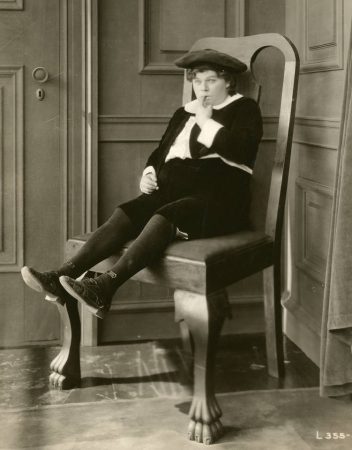
Undated promotional photo of Roscoe Arbuckle. (Courtesy University of Washington Special Collections, Order No. 17740)
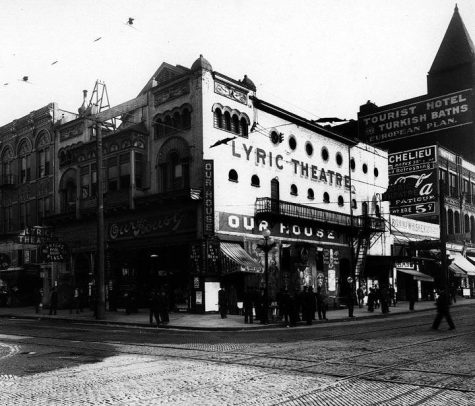
Seattle's Lyric Theatre, at the corner of S. Washington and Occidental, ca. 1912. (Photo by Asahel Curtis, courtesy University of Washington Special Collections, Order No. CUR993)
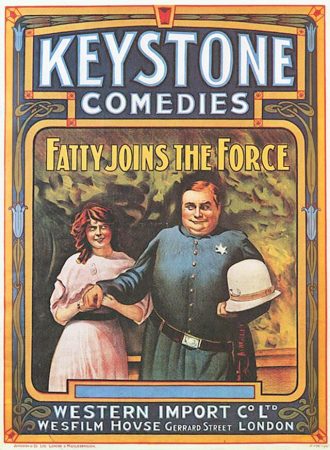
Poster for the comedy "Fatty Joins the Force" (Keystone, 1913).
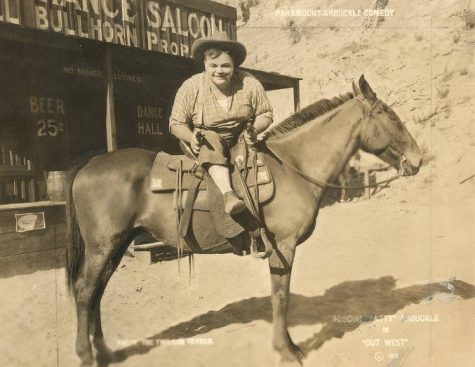
Roscoe "Fatty" Arbuckle in the two-reel comedy "Out West" (Paramount, 1919). (Courtesy University of Washington Special Collections, Order No. JWS24692)
All the Comforts of Home: A Collection of Stock Theatre Engagements
Act II: Roscoe "Fatty" Arbuckle
Like John Bunny, another future screen comic who had an extended theatrical run in Seattle was Roscoe “Fatty” Arbuckle, who in 1907 arrived in a show called Posty’s Oriental Burlesquers, a troupe playing the newly refurbished Lyric Theater beginning December 24th. Originally slated for a four-day engagement, the company’s immediate success with local audiences found them earning an extended stay at the venue.
Born Roscoe Conkling Arbuckle in Smith Center, Kansas, on March 24, 1887, the comedian’s family moved west to California when he was barely a year old. In 1895 he scored his first professional stage engagement, playing a child role with a small stock company. After briefly apprenticing as a plumber, in 1902 Arbuckle began a formal career in show business at age 15 with a job singing in a San Francisco café owned by Alexander Pantages.[1] Then, for much of the next decade, prior to joining Mack Sennett’s Keystone studios, he would tour up and down the West Coast with various stock companies, in addition to stints in both vaudeville and burlesque. It was the latter arena – burlesque – that brought the comedian to the Lyric, in the Pioneer Square section of downtown Seattle, in 1907.
Local real estate developer Henry Broderick recalled the atmosphere of the Lyric, though his description seems to be from a slightly earlier era, when the venue was closer to a box-house than a legitimate theatre.[2] At that point the Lyric catered to rough and rowdy clientele – which was probably still the case, to a degree, during Arbuckle’s engagement:
And then there was the Lyric Theatre at Occidental and Washington Street, the home of below-the-belt burlesque, located on the second floor over “Our House,” a saloon which was both an oasis and a safe depository for loggers. The Lyric was a rendezvous for robust rowdies of both sexes. The stage show was more or less a blind for the real curriculum of boy meets girl. Overlooking the stage at the rear of the balcony were a series of loggias, each equipped with chaise lounge and opaque curtains where waitresses offered shenanigans at market prices…The elite of town were seen there occasionally on slumming tours in order to get a glimpse of authentic underworld. It was a good place to keep one’s eyes and ears open and one’s mouth shut.[3]
Broderick’s recollection of the Lyric, which had just reopened after an extended period, runs directly counter to the image the venue was attempting to portray at the time of Roscoe Arbuckle’s engagement. “Patrons will confer favor upon the management by reporting any inattention or incivility on the part of the employees,” one of their programs noted. “Ladies parlors to the right of the entrance. Articles found in the theatre should be left in the manager’s office where owners can procure them. Positively no whistling permitted. Ladies and Gentlemen will kindly remove their hats. No objectionable characters will be permitted to any part of this theatre.”[4] J. Willis Sayre, writing one of his first dramatic columns during his stint with The Argus, had a take similar to Broderick’s on the atmosphere of the refurbished Lyric, though he was optimistic about what the house was attempting to accomplish. “The Lyric seems to be having a checkered career,” Sayre noted in a column from December 1907, referring to the several failed theatrical companies that had already been in and out of the venue during its first few months of operation. “Still, burlesque ought to pay down there if anything will. Permission to smoke in any part of the house, as was the case at the old Orpheum and Trivoli in San Francisco, may also help some.”[5]
So to this (apparent) den of sin came Posty’s Oriental Burlesquers, a variety show anchored by a pair of musical sketches. These comedy skits were usually the bulk of each show, separated by demonstrations or specialty acts. The start of the second act, interestingly, was always highlighted by a series of “Living Pictures,” presented by a Mr. and Mrs. Bernard, featuring members of the Posty’s troupe posing in recreations of well-known paintings or sculptures. These creations seem to have been still-posed and enhanced by some sort of frame-like structure around the performers, thereby giving an audience the illusion of viewing a large painting. Their six subjects for their initial engagement, according to the program, where recreations of The Fates, Odalisque, Thumbs Down, Springtime, The Discus, and The Captive.
Soon to become a popular feature for every Posty show, the Living Pictures were created, it seems, with a fair eye for realism. J. Willis Sayre reported in The Argus at one point that staging the average set of Living Pictures cost $1.85 per week, but he had to correct that figure in a subsequent issue. “On the threat that he will stop his hitherto unpaid subscription,” Sayre noted, “Manager S.H. Friedlander of the Lyric compels us to retract the statement printed on this page last week that the costumes for his living pictures cost an average of $1.85 per week. The real cost, it seems, is only $1.39 per week.”[6] It’s unknown whether Roscoe Arbuckle took part in any of these presentations; he may not, since it appears that the Posty’s members appearing in the Living Pictures were typically extras and performers in minor roles.
When the troupe opened at the Lyric on December 24, 1907, 20-year-old Roscoe Arbuckle first appeared as Duke Mixture in the sketch The Isle of Ya Ya (“a curious mélange of nonsense, mirth and music,” according to the program), then supported others by playing chorus and background parts before returning in the second half of the show to play Johnny Mulligan in the burlesque play The Diamond Palace. Perhaps due to the sketch format, detailed plot accounts of these playlets were never given throughout the company’s run at the Lyric. Although the comedy sketches also contained musical numbers, random songs were interspersed in between. Arbuckle, who frequently utilized his musical talents during his stage days, was featured in a rendition of the song “Bullfrog” on the opening bill, supported by other members of the company. The number formed part of the sketch The Isle of Ya Ya.
Posty’s Oriental Burlesquers constituted the entire show at the Lyric, although the bill apparently concluded with a short presentation of motion pictures, unidentified in the programs or publicity material.
For some reason the Daily Times, perhaps responding to the (slightly) seedy atmosphere of the Lyric, rarely covered the venue in its overview of the week’s stage bills; this may have been tit for tat, since the venue wasn’t advertising in the Times. Thus, most of what can be learned about Arbuckle’s work with the Posty troupe comes from the Post-Intelligencer, the Star, and the occasional notice in The Argus. Yet even this material is highly suspect, since nearly all of the “reviews” (most of which ran in the Post-Intelligencer) appear to have been provided by the Lyric itself – a truly independent account of the troupe’s work is difficult to find. Interestingly, either Lyric pressmen were quite sloppy or the Post-Intelligencer quite careless in dealing with the venue’s advance material, for in some cases these so-called reviews ran prior to when the show was to have been presented. In other cases, the dailies made no effort to adapt the material, such that the same “review” ran in different papers. Credit should go to the Seattle Star who, while printing abbreviated versions of these releases, at least took the time to edit them. Even so, due to the brevity of the Star’s notices, their printed information affords little insight into the Arbuckle engagement.
The Lyric itself proudly trumpeted their new attraction. “The organization of one of merit,” went a notice on the opening performance from the Daily Times, one of only a handful to address the Posty troupe during their entire engagement. “[T]he costumes are strikingly handsome and the scenic and lighting effects excel those of many more pretentious productions…One of the most beautiful features was the series of ‘living pictures’ between the first and second acts. Six subjects taken from famous painters and sculptors were exhibited in a frame about 18 by 30 feet, and the light effects and models were almost perfection. There was a special sketch entitled The Diamond Palace, in which John F. Burke appeared that was excruciatingly funny. It served to round out an entirely pleasant entertainment.”[7] The Post-Intelligencer, in an account which ran two days later, noted that the show (and particularly the Living Pictures) was making a favorable impression on audiences. They also observed that the Lyric was also doing “capacity business.”[8] Roscoe Arbuckle went unmentioned in both papers.
It seems that the return of burlesque to the Lyric was a much-welcomed one, for Posty’s Oriental Burlesquers were engaged to stay longer than the originally-scheduled four days. For a full week beginning December 29, their featured playlet was The Seminary Girls, a burlesque skit that had proved popular in the East, with Roscoe Arbuckle playing the role of Jasper the Janitor. A new series of Living Pictures was also presented, including Happiness, Psyche at the Bath, Summer Time, The Fairy of the Moon, The Prayer of Isis, Love’s Weapon, and The Bashful Maid. As with the week prior, a second comedy sketch was the featured attraction of the second act, with various songs scattered throughout the performance. Arbuckle enacted his role in The Seminary Girls, which also allowed him to sing an unidentified solo, then returned as Mr. Mortimer in the second burlesque skit, Casey and the Comanches.
The Post-Intelligencer again offered a favorable impression of the show.
Posty’s Oriental Burlesquers were seen in The Seminary Girls, at the Lyric theater, yesterday afternoon, and the burlesque went with a swish and whirl. It is full of snap and ginger. The comedians, Ed Harrington, John F. Burke and Roscoe Arbuckle, all played delightfully interesting parts and kept their audience in roars of laughter. In the opening olio, Miss Irma Clifford, assisted by the seminary, sang a French song delightfully. Madge Schuler sang the familiar “Cheer Up, Mary,” and did a neat dance. Helen Vail contributed a song and dance which was as clever as her “Fishing” song last week. In the second act Janet Bernard executed an Oriental dance that proved a sensation. She is one of the well known Oriental dancers and has appeared in all the leading cities of America. The Emerald quartet introduced some of their songs and the scenery and costumes were elaborate. Casey’s Comanches, a burlesque farce, proved extremely funny, and the series of “living pictures” excelled those shown last week.[9]
The troupe began its third week at the Lyric on January 5th, 1908. “The Posty Oriental Burlesquers at the Lyric theater are doing their best to make people forget their troubles,” noted the Post-Intelligencer’s Sunday edition, “and continue to draw large and pleased audiences at every performance…”[10] The featured playlet was The Gezeka, another hit with Eastern audiences, with Arbuckle playing a millionaire under the hybrid name Mr. Astorbilt. The second act presented the baseball-themed skit The Foul Tip, with Arbuckle as Alkali Ike, and featured him singing “San Antonio” with support from the Posty chorus. The comic sketches were separated by a new presentation of the ever-popular Living Pictures. “An augmented chorus,” noted the Post-Intelligencer, “[with] the addition of Luella Temple, the clever little soubrette, and J.W. Clifford and Alf Bonner, did much to make an excellent burlesque show at the Lyric theater yesterday afternoon. The house was crowded and many [were] turned away. New costumes and stage effects were added and several new song numbers introduced. Luella Temple gave a bright song and dance in the opening act of The Gezeka, which burlesque, by the way, kept the house in roars of laughter. Jon [sic] Burke and Roscoe Arbuckle had specialties that were encored repeatedly…The second burlesque, The Foul Tip, in which baseball players are introduced, went with a dash. There are many funny scenes in the play.”[11]
Roscoe Arbuckle would have one final engagement at the Lyric with the Posty troupe beginning January 12th. The two skits were The Female Shoplifter and The Battle of Manila, with Arbuckle playing Little Willie Wilkinson and Private Roundhouse respectively.[12] Arbuckle’s only song came from The Battle of Manila, in which he performed “Come Back to California.” Living Pictures were again a prominent feature, this time presenting The Nymph of Roses, The Favorite of the Harem, The Diver, and The Ballet Girl, among others. And, not surprisingly, considering the management themselves were penning their own critical notices, the Posty troupe was once again lauded in the Post-Intelligencer.
The Posty Oriental Burlesquers at the Lyric theater did a fine business yesterday, the organization providing a lot of pretty girls who sang and acted well, several clever comedians, and enough other capable people to present the best double bill that has been offered since the change to burlesque. There was a riot of fun of the right kind without the slightest suggestion of anything that might border on coarseness, and there was plenty of novelty to arouse additional interest. The costuming was attractive, which also added much to the entertainment of yesterday. The first burlesque is The Female Shoplifter, and it is so filled with scenes of a humorous character and climaxes that the play kept the house in roars of laughter throughout. The second was titled The Battle of Manila, a musical farce full of comical situations and specialty numbers. The new series of living pictures, shown between the first and second acts excelled any yet exhibited since they were first put on at the Lyric…All of the characters were well taken by the several members of the company and the chorus is making great strides since the opening night.[13]
A condensed version of the same “review” also ran in the Daily Times, one of the few instances (other than in the troupe’s opening week at the Lyric) that the paper printed anything about the venue.[14]
Yet although Posty’s Oriental Burlesquers seemed to be meeting with success at the Lyric (at least judging from its own press accounts), apparently all was not well within the troupe. Despite adding chorus members to the company throughout its first few weeks (not to mention additional matinee performances), beginning the week of January 19th Posty’s opened with a full two-act musical comedy called The Real Estate Brokers which did not feature Arbuckle or several other prominent cast members. In fact, most of the troupe had been sacked – of the principal players, only Irma Clifford remained. “There is to be an almost entirely new company at the Lyric theater, commencing this (Sunday) afternoon,” went an announcement in the Post-Intelligencer, “and a new play [has been] written expressly for the present burlesquers by H. Edward Whitney, who arrived here a few days ago from San Francisco and who will also assume the stage management. Mr. Whitney comes highly recommended, both as a writer and a producer, so that the patrons of the Lyric theater may look now for really well-staged performances. Manager Posty states that now he has secured reliable and more capable people, his show will be the equal of any yet offered at the Lyric…”[15] There are indications that the change in troupes was made with some haste; The Argus, a weekly paper, noted in its column that the burlesque skits for the week of January 19 were to have been The Hello Girls and The Minstrel Maids, the likely offerings had the original Posty’s troupe been retained. The paper made no reference to a change in companies at the Lyric, in fact, until their January 25th edition.[16]
Accounts of the new Posty’s troupe tended to substantiate their manager’s claim; a notice from the Post-Intelligencer trumpeted both the cast and chorus work as being much improved. But it still wasn’t enough to rescue the company altogether. The arrival of the “new” Posty’s Oriental Burlesquers also saw the arrival of new management at the Lyric, and one of their first decisions was to book a new act for the following week: Beginning January 26, 1908, Harry Montague and the New Lyric Stock Company began an engagement of several weeks. This too was a short-lived change – by May 1908 Montague was out and a new burlesque troupe was in. In fact, the only thing to survive the various upheavals at the Lyric were the Living Pictures, which continued to find a place somewhere on the bills of most engagements.
Just where Roscoe Arbuckle and the remainder of the original Posty troupe departed for isn’t documented, though being stranded in an unfamiliar city was a common occupational hazard for touring actors in this era, Arbuckle, who in his early stage career played with troupes up and down the West Coast, most likely made his way to San Francisco in order to hook up with another stage organization.
Even so, the actor is not known to have played additional Seattle engagements between his stint at the Lyric and his arrival at Keystone Studios six years later, where he would become one of Mack Sennett’s top film comedians.[17] Interestingly, Roscoe Arbuckle’s talents were almost missed at Keystone. Sennett apparently wasn’t taken with the young man’s talent and it was only through the insistence of fellow Keystoner Mabel Normand, Sennett’s girlfriend, that Arbuckle was featured in the studio’s releases. Sennett wasn’t the first to have overlooked Roscoe Arbuckle’s talents – earlier, in 1909, the comedian had a false start in the film industry with the Selig Company, picking up money playing extra roles while continuing to perform onstage. (Later, Arbuckle also put in time with Nestor and Universal.) Early on, at least, his forays into film acting never developed into much, so Arbuckle continued to fall back on stage work to support himself. It wouldn’t be until 1913, after signing with Keystone, that he would emerge as one of the industry’s top box office draws – celebrity that would set him on the path to his own destruction in the 1920s, as part of Hollywood’s earliest scandals.
By Eric L. Flom – January 2026
Notes:
[1] Simon Louvish, Keystone: The Life and Clowns of Mack Sennett (New York: Faber and Faber, Inc. – 2003), Page 78.
[2] In a previous incarnation the Lyric was John Cort’s fourth Standard Theater, erected shortly after the Seattle fire of 1889. This version of the Standard, long Seattle’s most prosperous box-house, closed in the mid-1890s after John Cort briefly left the city, and was used for non-theatrical purposes until it reopened as the Lyric in 1907. The venue continued to operate in the Pioneer Square section of Seattle until 1925. Interestingly, the opening of the (somewhat notorious) Lyric was engineered by William “Pops” Russell and Edward Drew, who at the time also ran the Third Avenue Theatre, which liked to advertise itself as Seattle’s home of family entertainment. It doesn’t appear that either Russell or Drew figured in the day-to-day operations of the Lyric, which was leased to various other theatrical groups.
[3] Henry Broderick, Early Stages of Seattle (Seattle, Washington: Dogwood Press – 1964), Page 9.
[4] Program, Lyric Theatre (24 December 1907), J. Willis Sayre Collection.
[5] J. Willis Sayre, “Dramatic Notes,” The Argus, 28 December 1907, Page 7.
[6] J. Willis Sayre, “Retraction Note,” The Argus, 25 January 1908, Page 6.
[7] “The Lyric Theatre Open,” Seattle Daily Times, 25 December 1907, Page 14.
[8] “Lyric Theater,” Seattle Post-Intelligencer, 27 December 1907, Page 7.
[9] “Burlesque at the Lyric,” Seattle Post-Intelligencer, 30 December 1907, Page 5.
[10] “Burlesque at Lyric,” Seattle Post-Intelligencer, 5 January 1908, Magazine Section II, Page 7.
[11] “Bright Burlesque at Lyric,” Seattle Post-Intelligencer, 6 January 1908, Page 12.
[12] “(W)hile the names don’t mean so much,” the Star sarcastically wrote in one of their edited versions of the Lyric press releases, “[the playlets] might as well have those names as any others.” (“Burlesque at the Lyric,” Seattle Star, 13 January 1908, Page 3.)
[13] “Burlesque at the Lyric,” Seattle Post-Intelligencer, 13 January 1908, Page 5.
[14] “At the Lyric,” Seattle Daily Times, 13 January 1908, Page 8.
[15] “Burlesque at Lyric,” Seattle Post-Intelligencer, 19 January 1908, Magazine Section II, Page 7.
[16] See J. Willis Sayre, “This Week’s Playbills,” The Argus, 25 January 1908, Page 6.
[17] Although it is known that Mack Sennett (under his birth name, Michael Sinnott) toured with many stage productions during his early years, the J. Willis Sayre Collection isn’t detailed enough to place him in Seattle. At the time Sennett’s stage work was limited to appearing in choruses and ensembles – parts that often wouldn’t earn him mention in the program, let alone any critical notice. For example, in 1902 Sennett is said to have toured with Raymond Hitchcock in King Dodo, which turned up at Seattle’s Grand Opera House for a week beginning October 5th. However, because the Grand program listed only the principal characters, it cannot be known whether Sennett was part of the larger cast during that engagement. (See program, Grand Opera House [5 October 1902], J. Willis Sayre Collection.)
Other Seattle engagements that may have included Mack Sennett include A Chinese Honeymoon (three nights at the Grand beginning December 22, 1904), Piff! Paff! Poof! (four nights at the Grand beginning March 14, 1906, in a show that included future Sennett comedian Fred Mace as Peter Pouffle), and a role supporting Fritzi Scheff in M’lle Modiste (four nights at the Grand beginning December 19, 1907). If Mack Sennett did appear as part of the Fritzi Scheff engagement, that meant he was ending a run at the Grand Opera House while his future comedic star, Roscoe Arbuckle, was starting his own at the Lyric, located just a few blocks away.
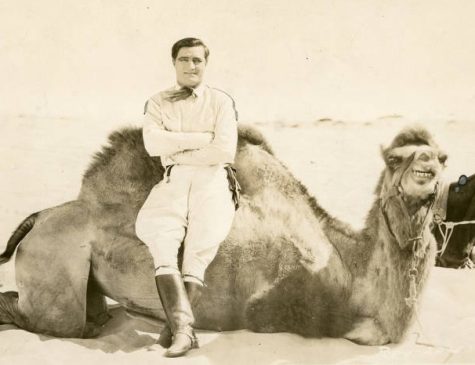
Tom Mix, ca. 1923. His famous steed, Tony the Wonder Horse, has looked better. (Courtesy University of Washington Special Collections, Order No. JWS25624)
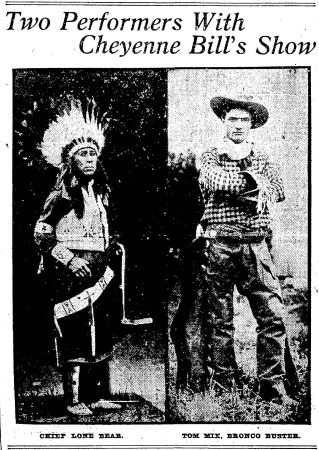
Tom Mix as he appeared in "Cheyenne Bill's Wild West Show," July 1909. (Seattle Daily Times, 14 July 909, Page 8)
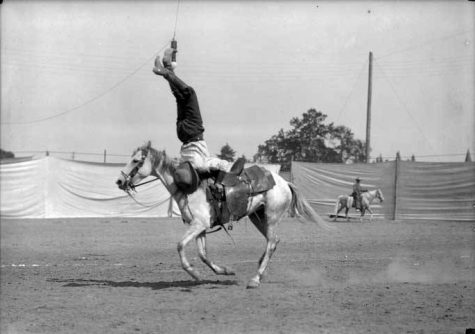
Trick rider with "Cheyene Bill's Wild West Show," July 1909. (Photo by Webster & Stevens, MOHAI, Image No. 1983.10.8328.1)
Frederick Remington's "The Fight for the Water Hole" (1903).
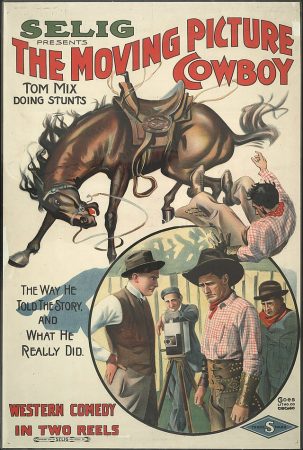
Poster for the Selig western "The Moving Picture Cowboy" (Selig, 1914), featuring Tom Mix.
All the Comforts of Home: A Collection of Stock Theatre Engagements
Act III: Tom Mix
While William S. Hart was unquestionably the silent screen’s premier western actor through World War I, Hart’s cerebral take on the Old West generally fell out of favor in the early 1920s, when audiences abandoned realism for the sake of pure entertainment. There were plenty of cowboy heroes to take his place, including performers such as Harry Carey, Hoot Gibson and Fred Thompson, but clearly the top cowboy draw of the 1920s was Tom Mix. Though he’d been in the movie business for some time, Mix had an entirely different take on the western genre – one more attuned to the tastes of Jazz Age audiences. Rather than present western dramas with more sophisticated, adult themes, Mix pictures emphasized flash and showmanship. With his exaggerated style of dress, complete with one of the largest 10-gallon hats in all Hollywood, Tom Mix looked more like a comic book character than a true vestige of the Old West. His pictures in this era stuck to the basics – simple plots, clearly defined protagonists, a generous helping of comic relief and lots of action. While rarely sophisticated, Tom Mix’s films appealed to a new generation of moviegoers who helped keep the western genre profitable during the post-World War I period. Adults may not have always been Tom Mix’s core audience, but his films were hugely popular and made him a considerable box-office draw.
Ironically, Tom Mix’s success as a screen actor was a long time coming. And, as the case with Theda Bara, studio publicists re-wrote his personal history so often that it’s now somewhat difficult to separate the facts of his life from the fiction. (Perhaps no coincidence, considering both performers spent the bulk of their careers with Fox Studios.)
What’s known is that Tom Mix was born in Mix Run, Pennsylvania, on January 6, 1880, and from an early age displayed a talent for horseback riding. While only a teenager, he enlisted in the Army and served in Cuba during the Spanish-American War. Mix was assigned to the cavalry unit of Major General Joseph E. Wheeler, a former Confederate officer in the Civil War, and eventually rose to become Wheeler’s personal assistant. Mix brought his horsemanship skills to several battlefield skirmishes, including ones that put him alongside Teddy Roosevelt’s Rough Riders.
Following the campaign in Cuba, Tom Mix is said to have toured the world in uniform, and there are accounts that place him at nearly all the hotspots around the globe at the turn of the century. Like J. Willis Sayre, for instance, Mix was reportedly off to the Philippines shortly after the Cuban campaign to help put down the insurrectionist movement there, followed by a tour of duty in China during the Boxer Rebellion. When Mix finally returned to the United States, it was reportedly a short-lived homecoming; after helping break horses destined for South Africa and the Boer War, he is supposed to have traveled there himself to aid British cavalry units.
Much of this was a wild concoction, but the fact remains that Tom Mix’s horsemanship earned him a living, both in and out of the Army. He served as a cowpuncher variously in Texas, Oklahoma and Kansas, eventually joining the famous Miller Brothers 101 Ranch as a livestock foreman. The Millers, who also operated one of the largest and most popular Wild West shows in the country, soon promoted Mix from ranch hand to full-fledged member of the show, where he perfected his skills at trick riding and roping.
It was in that capacity that Tom Mix made his first known appearance in Seattle, arriving in the summer of 1909 with a different western outfit, Cheyenne Bill’s Wild West and Congress of Rough Riders.
Although the big attraction in Seattle that year was the Alaska-Yukon-Pacific Exposition, taking place on the University of Washington campus, Cheyenne Bill’s outfit set up shop a short distance away, in the current Madison Park area, for a two-week run at the Western Washington Fairgrounds.[1] Opening on July 17, 1909, the show was a large one, boasting over 30 Ogallala, Cheyenne and Sioux Indians (“each a chief in his own right,” according to the show’s publicity) plus their families, a total of 21 experienced cowpunchers, two sharpshooters, a 12-piece cowboy band, a vintage stagecoach and over 60 horses. Although not formally part of the Exposition attractions, their appearance was an attempt to capitalize on its popularity and siphon off the summertime crowds.
One of the company’s advance notices provided a detailed look at the show’s acts, which included some interesting features. The show began with a grand review of all performers, who rode horseback into the canvas-lined arena to the cheers of the crowd. Following introductions, the first formal act was a Tom Mix specialty, a reenactment of the Pony Express mail service. This was followed, in order, by a mock attack on a wagon train; a trick roping exhibition; a demonstration of various Indian dances; something called the “potato race,” a competition between the cowpunchers and the Indian performers; a display of fancy horsemanship; another riding competition, this one between the young Indian boys and girls of the company; a dramatic reenactment of Frederick Remington’s painting The Fight For the Water Hole (1903); trick riding; a sharpshooting demonstration; several cowboys on bucking broncos; the mock hanging of a horse thief; and, as a finale, a historical recreation of the famous Mountain Meadows Massacre of 1857, which involved the talents of the entire company.
This elaborate production was organized by Cheyenne Bill, whose real name was William J. Gabriel. Gabriel had long been a scout for the United States Army, serving under many well-known military figures during the country’s efforts to contain and control the Native American population in the West. His most notable assignment came in December 1890, while serving as chief scout for General Nelson A. Miles during the massacre at Wounded Knee Creek, where nearly 300 Indians were killed. Part of the show’s publicity, in fact, included the reproduction of a letter written by then-Lieutenant General Miles in 1905. “I take pleasure in stating that the bearer of this, William J. Gabriel, was employed by the United States Government during the Wounded Knee Campaign, carried dispatches for me, and helped move the Cheyenne Indians under Little Chief to their reservation at Lone Deer, on the Yellowstone, during the winter of 1890-1891.”[2]
William J. Gabriel later won fame for his long-distance travels on behalf of the U.S. government, made to showcase the durability of the American range horse for European cavalry service. In 1897, for instance, Gabriel rode from Fort Sheridan, Wyoming, to Chicago via Canada, a journey that took him 85 days and an estimated 3,500 miles. The notoriety led him to become a featured performer in Buffalo Bill’s Wild West shows, in which Gabriel played for several seasons before striking out on his own.
In one of the earliest of Cheyenne Bill’s publicity pieces on the show, several of the company’s other performers were highlighted, including roughrider “Buffalo” Vernon, Charley Tipton, Win Mace, and bronco-buster Lulu Parr. Tom Mix, for his part, was identified as “a famous rider,” while his wife at the time, Olive Mix, appears to have been one six female roughriders performing as part of the show, which included William J. Gabriel’s teenage daughter.[3]
Cheyenne Bill’s Wild West and Congress of Rough Riders arrived in Seattle at least a full week in advance of their first shows and encamped in and around the Western Washington Fairgrounds. While the troupe itself appears to have spent the week rehearsing and setting up for the show (the grandstand area at Madison Park, which seated almost 5,000, was specially adapted to showcase the company), Cheyenne Bill’s publicity team went to work getting the word out. Virtually every day during the week prior to the opening large advertisements ran in all three of the city’s daily newspapers promising a program that depicted “the wild, lawless life of Frontier Days.”[4] Tickets were 50 cents per person (25 cents for children) and could be purchased either at the Fairgrounds or at Shaw’s Drugstore, located at Second and Marion downtown. Two performances were given daily – a matinee at 2:00 p.m., followed by an evening performance at 8:00 p.m. Advertisements were quick to point out that one could take the Madison Street cable car from downtown Seattle to catch the afternoon performance, walk three minutes down to the wharf at Madison Park, then take a steamer over to the Alaska-Yukon-Pacific Exposition grounds, a mere 15-minute boat ride away.
More than simple advertisements, however, Cheyenne Bill’s publicity team generated an unending stream of press material during its first two weeks in Seattle, and the city’s dailies were overly accommodating in their coverage. Just two days after the announcement of their arrival, for instance, the Daily Times ran an article on the Indian village that had sprung up outside the grandstand area, where the curious were invited prior to each show.[5] This was just one of several articles to detail either the show or the performers themselves – great fascination was extended to Cheyenne Bill’s Indian contingent, who were largely used as the requisite “savages” during performances but provided one of the more colorful aspects of the show, at least from the spectator’s perspective. At one point the troupe even reported that four of the company – Chiefs Setting Eagle, Bear Shield, Lays Plenty, and Kills Come Back – had fought in the battle at the Little Bighorn, and “are able to give vivid descriptions of the famous massacre of [General George Armstrong] Custer and his entire command.”[6]
On Wednesday, July 14, three days before the engagement was to begin, Tom Mix was a featured performer in the troupe’s publicity material, his photograph appearing in the Daily Times alongside that of Chief Lone Bear, whose tribe was not given. Mix, identified as a “bronco buster” in the photo caption, stands defiantly before the camera, arms crossed, wearing chaps, a checkered shirt, a light-colored bandana around his neck and a wide-brimmed hat – details that were probably common for Wild West performers, but also had him looking very much like the Tom Mix of later movie fame.
Although the article itself mentioned him only in passing (Mix being one of several performers “who can rope and ride anything with four legs”), it did provide a detailed description of his Pony Express act. “Another great feature on the program is a vivid and life-like illustration of the Pony Express of the great frontier before the coming of the railroad,” noted the piece. “Carrying with him his saddle bags containing the mail, the express rider leaps from a running horse and, grasping the mane and saddle pommel of another waiting animal, he is off at a gallop, hanging by the side of the horse only to gain his saddle after the impatient animal has galloped far on his way to the next relay.”[7]
Tom Mix was in for more personal treatment a few days later, when it was reported that he was slightly injured during rehearsals by one of the show’s more spirited broncos, dubbed “outlaw” horses.
Even to these experts in “bronco busting” occasionally come accidents and nearly every cowboy in the company bears scars of wounds received in his encounters with the outlaw horses. Tom Mix, pony express rider and bronco buster with the company, now carries two fresh wounds on his head received in a thrilling fight several days ago with “Yellow Wolf,” one of the outlaw bucking horses with the show. “Yellow Wolf” is a horse whose vagaries are unknown even to the men who handle him every day. For this reason his appearance in the ring creates as much interest among the show people as it does among the audience. He can always be counted on for a fight and it usually takes five or six of the cowpunchers to get him ready for the few moments of his bucking exhibition.[8]
In case Yellow Wolf wasn’t enough of a challenge for the bronco busters in Cheyenne Bill’s entourage, area horsemen were formally invited to bring their own “wild” horses down to the Madison Park grandstand throughout the engagement. Not only would Cheyenne Bill use suitable animals in the company’s shows, but he offered a $25 cash prize to the owner of any horse his men weren’t able to ride successfully.[9]
Cheyenne Bill’s Wild West and Congress of Rough Riders had two events planned for July 16, 1909, the day before their formal opening, both designed to ensure maximum exposure for their engagement. The first, beginning at 10:30 a.m., was a street parade featuring the cowboys and Indians alike. Starting at the intersection of Madison and Broadway, the company rode their horses down Broadway to Pike, turned westward and headed toward Second Avenue downtown. They turned north on Second until they reached Virginia, then doubled back from Virginia to Yesler Way along First Avenue. Then, heading up to Third Avenue, the company went north from Yesler all the way to Stewart, then turned right back around and made their third pass through the downtown area, traveling on Second Avenue from Stewart back to Yesler Way. From there, performers rode back to Union, where they turned eastward and headed toward the Madison Park fairgrounds.
Perhaps more important than the parade, however, was the show’s run-through scheduled for that evening. This event wasn’t open to the general public, but Cheyenne Bill was savvy and invited members of the Seattle press and selected guests for an exclusive, private showing. “Every newspaperman in town has been invited,” an unnamed reporter for the Star exclaimed with child-like enthusiasm. “And if all indications hold good, they will all be there.”[10] Later, the Daily Times reported that “the spectators [at the Friday preview] were stirred to wildest enthusiasm time and again by the skillful feats and thrilling scenes that interspersed a never-wearying program of goodly length.”[11]
This “press rehearsal” was a coup for Cheyenne Bill; not only did each of Seattle’s daily papers offer big write-ups on the show after it officially opened, but it virtually guaranteed favorable reviews, and many of them. The Seattle Daily Times, for example, ran at least three separate articles the next week “reviewing” the shows, but had to settle for second place since the Post-Intelligencer ran four during the same timeframe.
Proclaiming that Cheyenne Bill’s offering “held the first night audience in breathless interest,” the Daily Times was all praise, particularly with respect to the various specialty acts. The roping tricks of Buffalo Vernon, the Kennedy brothers and Win Mace were a particular highlight, as they “bewildered the spectators in the effort to follow the whirling ropes of the experts in the arena. There have been fancy ropers here on the different vaudeville circuits but none that can excel the men who did stunts with the lariats last night.” In addition to the historical recreations (yet another highlight of the show), the efforts of Tom Mix were singled out. “The pony express riding by Tom Mix won instant favor,” noted the Daily Times. “He gave a great exhibition of the horsemanship that made the pony express of the American frontier world renowned in the old days. Leaping from a running horse with his mail pouch, Mix seized a waiting pony by the mane and saddle pommel and was off hanging by the horse’s side for a long distance before climbing into the saddle.”[12]
For its part, the Star commented on Mix’s skills as a bronco rider, the only performer to be singled out by name in their brief review of the Madison Park show. “When Tom Mix, one of the most daring of the broncho-busters, escaped death by ‘the skin of his teeth’ with a struggling outlaw horse, Saturday night, the audience seemed to wake up to the fact that all the boys were, with each act, risking life or limb, and the enthusiasm was unbounded when Mix jumped from the broncho [sic] unhurt and smiling.”[13] A few days later, the Post-Intelligencer also commented on Mix’s exploits during the opening performance, although their account of the ride was far more harrowing.
Tom Mix, one of the star performers of the company, had a narrow escape from serious injury Saturday night. He was riding one of the worst outlaws in [the] bunch, a rearing bucker that knows every trick of the man-killing horse. As the plunging animal was bucking across the arena in his efforts to unseat his rider, he reared and fell backwards. When he hit the ground Mix was underneath. There was a groan in the grandstand when several of the cowboys ran to the struggling horse, which was rolling on the ground in a last effort to get rid of the man who had stuck him like a burr. Mix did not need any help, however. He was still with the horse, even if he was underneath, and when the outlaw plunged to his feet his rider was still in the saddle and stayed there the horse had finished his gymnastics, when he leaped to the ground and waved his sombrero to the audience to show that he was still there and ready for another outlaw. [Mix] received a great ovation for his nervy exhibition.[14]
In the paper’s formal review of the show, appearing in their July 18 morning edition, the Post-Intelligencer differed little from their counterparts at the Times or the Star. “The program was carried through with a rapid fire precision which gave the spectators no opportunity to recover from the thrills of one event before there followed another stirring exhibition of the life of the old pioneer days.” They were most impressed with the historical reenactments on the bill, particularly the reproduction of the Mountain Meadows Massacre. Cheyenne Bill, who appears largely to have served as ringmaster for these shows, had a prominent part in this feature, leading a last-second cowboy rescue of a wagon train attacked by a vicious band of Indian warriors.
The Post-Intelligencer was equally impressed with the visualization of Frederick Remington’s The Fight For the Water Hole.
A band of cowboys returning from the roundup were seen coming across the prairie searching for water for man and beast. After they found one of those small and priceless wells of the desert they were attacked by a body of Indians while men and animals were [quenching] their thirst from the long dusty ride across the plains. Then ensued a realistic fight between the cowboys and Indians with the usual victory of the cowboys. One of the horses which was badly wounded was assisted to its feet by the cowboys and made a great hit with the audience as it went limping to the rear of the funeral procession.[15]
This particular horse, performing his “wounded” trick at each performance of the Water Hole sketch, was a highlight for nearly every newspaper reviewer, such that he was regularly mentioned in the same breath as Tom Mix, Charley Tipton, Buffalo Vernon, and the other (human) performers in the company.
One of the more macabre showstoppers was Cheyenne Bill’s demonstration of frontier justice. In this sketch, a horse thief – played by a performer named Reindeer Ike – is captured red-handed by a band of cowboys, who decide to take matters into their own hands.
Reindeer Ike, who plays the part of the horse thief in the grand finale, and is captured and hung by the cowboys, gives a great performance as the victim of a prairie necktie party. Although it gives the audience cold shivers to see Ike snaked from his horse and dragged across the prairie to be hung on a tree at the back of the arena, the stage horse thief declares he really enjoys the performance. In fact, so realistic is this part of the last act that many of the audience think the quiet figure that hangs on the tree is a dummy and not [the] live man who played the part of the horse thief.[16]
While Cheyenne Bill’s Wild West and Congress of Rough Riders got off to a tremendous start in Seattle, the troupe still had to contend with some unexpected hassles during its first week. On their second day, July 18th, three of the company’s six arc lamps blew out in the midst of the evening show, so patrons had to make do watching under the remaining three lights, which detracted from the performance. The show was able to replace the lamps the following day, but also took the extra precaution (at least according to their publicity announcements) of installing a backup lighting system for the remainder of the engagement.[17]
Further mishaps occurred later in the week. Yellow Wolf, the same horse that gave Tom Mix such a hard fight earlier, was being ridden by Buffalo Vernon at the Wednesday matinee when he rolled on his rider, this time crashing through one of canvas walls erected to contain the animals. Vernon was unhurt. The troupe also managed to escape serious injury following a stagecoach accident later in the same performance.
The hair-raising event came a little later, during the stage coach robbery. When the stage coach full of passengers is being pursued by the yelling outlaws, “Montana Phil,” the driver, whips his team into a mad gallop and goes dashing around the arena with the coach running on two wheels at almost every turn. Yesterday afternoon, as the plunging team whirled the coach past the rent in the canvas made earlier in the program by Yellow Wolf, the heavy wagon rose on two wheels and turned completely over, the whole outfit landing in a heap outside the arena. Cheyenne Bill and his cowboys, abandoning the pursuit of the Indians, rushed to the assistance of the passengers. Fortunately, no one was injured and in several minutes the show was on again.[18]
As if the regular show wasn’t already dangerous enough, it was announced at the beginning of the troupe’s second week that a new steer-riding feature would be added to the bill. “The management of Cheyenne Bill’s show, however, has taken every precaution to give the spectators plenty of excitement without giving the steers opportunity to actually kill any of the men in the ring,” assured one newspaper. “While practicing for the new act yesterday afternoon, one of the steers attacked a cowboy in the ring, and only quick action on the part of [Tom] Mix and several other ropers averted a serious catastrophe.”[19] In this particular act, Mix and others not only rode the steers, but also gave a demonstration of “bull-dogging,” whereby they rode horseback in pursuit of an animal before leaping off, grabbing the steer by the horns and wrestling it to the ground. A new sketch called “A Chase for a Bride” was also added to the show, reportedly a demonstration of Western courtship.[20]
Finally, on August 1st, 1909, Cheyenne Bill’s western outfit gave its final shows, in what appears to have been a very successful two-week run at Madison Park. As a last gesture of goodwill toward the public, the final matinee performance was a half-price affair for both ladies and children. Where the company moved after their Seattle dates isn’t recorded.
Interestingly, the lavish attention given Cheyenne Bill’s Wild West and Congress of Rough Riders seems to fly in the face of a rather colorful tale surrounding Tom Mix’s brief 1909 appearance in Seattle. The account comes from Olive Stokes Mix, the cowboy’s third of five wives, who wrote of the actor in her 1957 memoirs. Her version of the summer of 1909 paints their Seattle visit in more dramatic, though not necessarily reliable terms.
For one, Olive Stokes Mix makes no mention of Cheyenne Bill whatsoever – the Mixes were not out touring with any sort of formal outfit when they arrived in Seattle but rather made the journey to the Pacific Northwest specifically to start up their own Wild West venture. According to her account, the original troupe consisted only of the Mixes and Charlie Tipton, and they arrived in Seattle just days before the start of the Alaska-Yukon-Pacific Exposition, and with only a vague idea of the show they intended to present. Their late start resulted in a mad scramble around the Puget Sound area in search of viable talent. “We had nine days to organize and rehearse a show that, when it was finished, included a troupe of sixty-five persons,” she remembered. “It was a do-or-die venture, and if I had had time to stop to look at it with an objective eye I’m sure I would have gone down with a gasp of defeat.”[21]
Despite this rather haphazard start, Olive Stokes Mix noted that the show (The Tom Mix Wild West Show, according to her recollection) met with enthusiastic crowds throughout their engagement, though gate receipts suffered due to poor weather. The show included many demonstrations of typical western fare but also included (in apparently the only non-western portion of the show) a full-scale jousting match devised by Tom Mix himself. “Of course one of them was always knocked off his horse by the other’s pole,” Olive reminisced of the battle between Tom Mix and Charlie Tipton. “My heart always drummed during this act, even though I knew that both Tom and Charlie wore heavy armor. It was an act ripe with danger, and any miscalculation with the pole could have sent either of them to the hospital. But Tom was right about the freshness of the act. It stole the show.”[22]
The unfortunate fact about Olive Mix’s autobiographical account of their 1909 Seattle visit was, however, her attempt to relate the story in a manner resembling a Tom Mix two-reeler. Just two days before their engagement was to end, for example, Olive recalled counting the day’s take with her husband by evening lantern light, realizing they barely had enough to pay expenses. Unusually, she remembered, Tom Mix counted the gate receipts with a sidearm handy. But not that evening, and it nearly a fatal mistake, since three armed men suddenly burst into their tent, ordering them to surrender the money. A quick-thinking Tom Mix flung his boot at one of the bandits, knocking his gun away as he leapt toward all three. The sole lantern in the tent was extinguished as the men grappled, leaving Olive convinced that Tom would be killed. Miraculously, however, Mix routed the three men single-handedly, knocking two of them unconscious and chasing the third, eventually wounding him in the leg with one of the bandit’s guns as he attempted a getaway. Then, as Tom Mix dragged the man back to the tent, Olive’s memoirs were keen to note that the Seattle skies opened for a torrential downpour. Police took the culprits away and the box-office receipts (scattered throughout the tent during the fight) were recovered. The show went on for the final two days, and the Mixes left Seattle with expenses covered and a small profit to boot.[23]
A tall tale indeed, but perhaps not too surprising when one considers that the story comes from a chapter in Olive’s memoirs entitled “Was it Real – or a Movie?” But there was, in fact, a second Wild West show directly on the Alaska-Yukon-Pacific Exposition fairgrounds in 1909 (Alkali Ike’s Wild West and Indian Show), though it’s not clear whether this was a summer-long attraction or whether it operated only briefly. What’s certain is that the historical record contains almost nothing to support the wild and woolly story related by Olive Stokes Mix.[24]
It’s unclear where Cheyenne Bill’s Wild West and Congress of Rough Riders went off
to after their two-week stand in Madison Park. Still, it was only a short time before roughrider Tom Mix rather happened into the movie business. Answering a call from Chicago’s Selig Company, he joined one of their production units in Oklahoma while they were shooting a documentary called Ranch Life in the Great Southwest (1910), depicting the transport of cattle to markets in the East. Though Mix himself did not appear in the film, he was on hand helping manage the livestock for the cameras.
Ranch Life was a rather inauspicious start in the film industry, but the Selig people found other productions in which Tom Mix’s services proved helpful. In the beginning he was largely behind the cameras, but Mix soon found himself playing bit roles in narrative films and eventually graduated to formal acting in Selig’s short western releases. Most were shot in off-the-cuff fashion and offered little in the way of characterization, but Mix enjoyed the work and stayed with Selig about seven years, despite failing to hit it big as a movie star. “Mix’s sojourn with Selig was not at all remarkable,” George Mitchell and William K. Everson have noted. “The fault was Selig’s [production] policy, which was primarily dedicated to the making of shorts. Selig features were few and far between, and Mix was largely limited to one, two, and occasionally three reelers. In quantity.”[25]
Things changed, however, when Tom Mix moved from Selig to Fox in 1917, where his appearance in feature-length westerns such as The Lone Star Ranger (1923) and The Great K and A Robbery (1926) not only made him an overwhelming success with younger moviegoers, but virtually supported the studio during the 1920s. Whereas William S. Hart’s screen characterizations served as the basis for John Wayne and others in the coming years, Tom Mix’s fanciful characterizations may be said to have paved the way for “singing cowboys” like Gene Autry and Roy Rogers. “[Tom Mix’s films] were breezy, cheerful, streamlined affairs, aimed at a wide audience, and were not intended to be re-creations of the real West,” continued Mitchell and Everson. “Action and excitement, spiced with an almost boyish spirit of fun, were the essential ingredients.”[26]
By Eric L. Flom – January 2026
Notes:
[1] The grounds at Seattle’s Madison Park, also called “White City,” should not be confused with the current site of the Western Washington Fairgrounds, located in Puyallup.
[2] See “Letter to Cheyenne Bill from Gen. N.A. Miles,” Seattle Daily Times, 11 July 1909, Page 20.
[3] Interestingly, Olive Stokes Mix – Tom Mix’s wife of six months at the time of their Seattle engagement – does not appear to have performed under her given first name. Instead, she is listed as “Ruth” Mix, notable because the Mixes would later have a daughter whom they would name Ruth. (Olive Mix’s memoirs, while proving unreliable in many respects, does indicate that she performed with the troupe. The assumption here is that “Ruth” Mix is actually Olive Stokes Mix, and not a different performer altogether.)
[4] See advertisement, Seattle Daily Times, 11 July 1909, Section III, Page 9. Largely identical ads ran in the Times, the Post- Intelligencer, and the Star throughout the company’s Seattle engagement.
[5] See “Indian Village at Madison Park,” Seattle Daily Times, 19 July 1909, Page 10.
[6] “Wild West Show to Open Saturday,” Seattle Daily Times, 15 July 1909, Page 7.
[7] “Epitomizes Life in the Wooly West,” Seattle Daily Times, 14 July 1909, Page 8.
[8] “Wild West Show to Open Tomorrow,” Seattle Daily Times, 16 July 1909, Page 14.
[9] Ibid.; see also “Broncho [sic] Busters Take Big Chance,” Seattle Star, 19 July 1909, Page 7, and “Sunday Crowds See Wild West,” Seattle Post-Intelligencer, 19 July 1909, Page 7.
[10] “Newspapermen to See the Big Show,” Seattle Star, 16 July 1909, Page 10.
[11] “Wild West Show Hit at Dress Rehearsal,” Seattle Daily Times, 17 July 1909, Page 2.
[12] “Wild West Show Draws Crowd,” Seattle Daily Times, 18 July 1909, Page 27.
[13] “Broncho [sic] Busters Take Big Chance,” Seattle Star, 19 July 1909, Page 7.
[14] “Sunday Crowds See Wild West,” Seattle Post-Intelligencer, 19 July 1909, Page 7. The element of danger associated with performing in the show was something Cheyenne Bill’s press releases were always keen to play up. “Few persons who witness these performances have any idea of the great danger which attends each exhibition,” went one article. “Every one of the cowboys who takes part in these events bears innumerable scars as [a result] of encounters with untamable outlaws. The management keeps a surgeon on the grounds throughout each show in anticipation of an accident to one of the men, yet a horse has never been found that any of these broncho [sic] busters is not willing to ride the first time he sees it. (“Men Risk Limbs to Amuse Public,” Seattle Post-Intelligencer, 20 July 1909, Page 8.)
[15] “Wild West Show Thrills Crowd,” Seattle Post-Intelligencer, 18 July 1909, Section II, Page 3.
[16] “Public Likes Wild West Show,” Seattle Daily Times, 19 July 1909, Page 8.
[17] Ibid.; see also “Sunday Crowds See Wild West,” Seattle Post-Intelligencer, 19 July 1909, Page 7.
[18] “Wild West Show Stage Upsets,” Seattle Daily Times, 22 July 1909, Page 24.
[19] “To Rope and Tie Untamed Steers,” Seattle Post-Intelligencer, 24 July 1909, Page 7.
[20] See “Wild Steer Event Added to Show,” Seattle Daily Times, 23 July 1909, Page 12; and “To Rope and Tie Untamed Steers,” Seattle Post-Intelligencer, 24 July 1909, Page 7.
[21] Olive Stokes Mix (with Eric Heath), The Fabulous Tom Mix (Englewood Cliffs, New Jersey: Prentice-Hall, Inc. – 1957), Page 56.
[22] Ibid., Page 57.
[23] Ibid., Pages 59–61.
[24] See Performers from Alkali Ike’s Wild West show, Pay Streak, Alaska Yukon Pacific Exposition, Seattle, 1909. – Alaska Yukon Pacific Exposition Photographs – University of Washington Digital Collections, photograph by Frank H. Nowell; accessed 30 March 2025. Nowell’s photograph is one of several depicting the Wild West show that took place on the Alaska-Yukon-Pacific Exposition fairgrounds.
[25] George Mitchell and William K. Everson, “Tom Mix: Of His Many Contributions to the Western the Greatest was Showmanship,” Films in Review (February 1950), Page 389.
[26] Ibid., Page 391.