Buster's Last Stand:
Silent Nights at the Granada Organ Loft

Preview

By the early 1930s, silent film was no longer a form of popular entertainment.  Sound had transformed the movie experience not just for audiences, but for moviemakers as well. Many silents were shot outdoors, on location, allowing the characters to appear in a variety of uniquely visual settings, in stories that could be expansive in scope. The earliest sound films, however, were somewhat tethered to the microphone – often shot indoors, on soundproofed studio spaces, where the dialogue could be easily recorded. It was a factor that changed how the studios operated, how movies were made, the types of productions that were released, and, sometimes, the stars that appeared in them.

The exhibition space was undergoing similar upheaval. The mid-1920s had been the “golden era” for theatre building, with new venues going up in cities and towns all across the state, often replacing those that had been built just 10 or 12 years previous. Depression-era economic conditions, of course, helped bring a close to this building spree, though a handful of newer venues cropped up in the 1930s and 1940s. Formal theatre building didn’t really pick up steam again until after World War II, but for an entirely different reason. In large cities like Seattle, Tacoma and Spokane, post-War suburban expansion pushed the boundaries of these cities outward, so the newer theatres tended to be built in the emerging suburbs, and not necessarily in a city’s more established neighborhoods. Something similar was happening in other parts of Washington – when continued growth and development brought a new movie theatre to the area, it wasn’t necessarily in the same location as the town’s earliest venues.

As such, while any number of silent era movie theatres continued to operate throughout Washington, they were not as glamorous as they once were. Like the silent films they were designed to serve, many of these venues eventually fell out of favor with the public, becoming relics of a bygone era, replaced by newer spaces with features and fixtures that appealed to more modern audiences.  Some stayed in business, but many others did not, becoming a casualty to changing times and changing demographics.

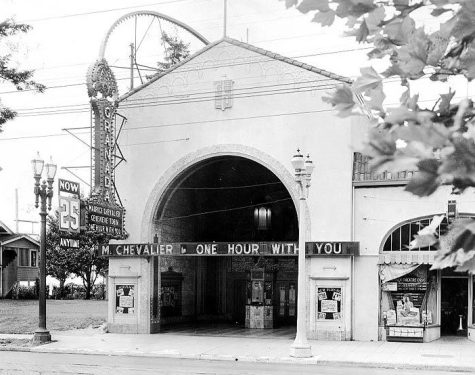
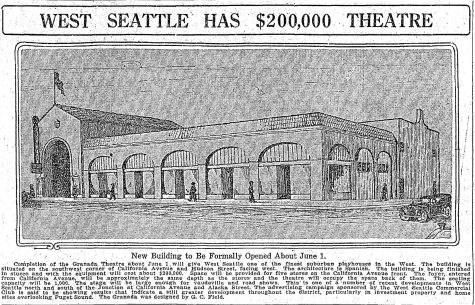
Such was almost the fate of the Granada Theatre in West Seattle, a spiffy little neighborhood venue built in 1926, at the height of the theatre building boom. After starting life as a silent house, it deftly made the transformation to sound, and continued serving the people of West Seattle for over 30 years, until fate nearly got the better of it. By the 1950s it was no longer the darling of the neighborhood and stood on the verge of closure. But then something miraculous occurred – not only to the venue but to the very type of entertainment it originally showcased. Not only was the Granada resurrected into a popular local showplace, but it did so on the back of the very silent films it originally showed.  In the case of this West Seattle theatre, for a brief time at least, old became new again.
Buster’s Last Stand: Silent Nights at the Granada Organ Loft

Reel 1: Becoming the Granada

Buster’s Last Stand: Silent Nights at the Granada Organ Loft

Reel 2: Golden Years

Buster’s Last Stand: Silent Nights at the Granada Organ Loft

Reel 3: Picking the Program

Buster’s Last Stand: Silent Nights at the Granada Organ Loft

Reel 4: The Break

As the 1960s drew to a close, changes were around the corner for the Granada Organ Loft, some of which contributed to its decline as a genre movie house.  This transition began in the summer of 1968 when Sterling Theatres, which still owned the Granada, decided to capitalize on the success of the venue’s weekly silent film screenings and reopen the house as a second-run movie theatre.  Residents of West Seattle were once again embracing the Granada as an entertainment venue, and Sterling felt that there was enough community support to convert the theatre back into a full-time picture house.

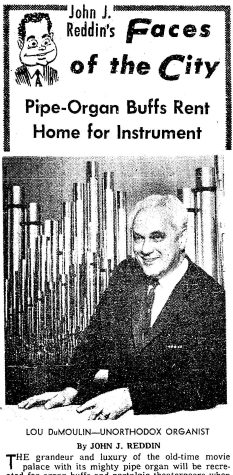
While the Wurlitzer remained, new sound and projection equipment were brought in and the Granada underwent renovations before reopening for daily shows.  Recognizing the popularity of the Club’s concert and silent film programming, however, Sterling allowed both to continue, though on a reduced schedule, with events limited to once or twice a month.  This put a dent in the Club’s fundraising, but Lou DuMoulin considered it somewhat of a blessing due to the difficulty of running a weekly film program staffed by volunteers.  “‘The strain became enormous,’” he admitted when the change was announced. “‘I had to be there every weekend. This new policy is in many ways a relief…The Sterling people have gone out of their way to make this possible…They have installed new sound and screen equipment that will not interfere with the organ sound or the presentation of silent [films] as they were first shown. We are very happy with the situation.’”[1]

Lou DuMoulin may have been relieved, but the change had a direct impact on the Organ Loft’s programming. With fewer opportunities to show silent films, the Club had to make sure that their screening dates paid – and that meant, and DuMoulin acknowledged, that the house would lean on popular film selections to carry the day.  In the short-term, at least, that meant that the smaller features and lesser stars would disappear from the Granada screen.  It was Buster Keaton over Bebe Daniels.

Despite Sterling’s investment, however, they eventually pulled the plug on the Granada experiment, determining there just wasn’t enough regular patronage to run it as a full-time venue.  Once Sterling made that decision, the Club brought back their weekly film programming to the Granada, in addition to scheduling regular concert engagements for organ musicians.  It was like nothing changed.

Except, it had.  In 1970 Lou DuMoulin began spearheading an effort for the Club purchase the Granada from Sterling Theatres. This was one idea, however, that he couldn’t get enough folks to back.  Tensions grew as a result, and when the effort failed it led to a falling out between DuMoulin and the organization he helped found.

Lou DuMoulin ended up resigning from the Granada Organ Loft Club, which was problematic since he owned the Granada’s Wurlitzer.  He and the Club negotiated a buyout, but the purchase agreement gave the group just 60 days to come up with the $10,000 necessary to purchase the organ.  This was a massive amount, but once again the Club managed to raise the funds through member donations and fundraisers, thus ensuring that their silent film programming would carry on.

That was well and good, but the Club was losing its founder and visionary, and the man who devoted the most time to ensuring that their screenings were a success.  This also occurred right as the Puget Sound region was falling into a massive recession – one that would swell unemployment to 13% locally and lead to the famous billboard near Sea-Tac Airport reading “Will the last person leaving Seattle – Turn out the lights.” So, too, were times changing with respect to specialized moviegoing. The Granada still had an audience for silent cinema, but that audience was generally skewed toward an older demographic, save for a handful of kids and devoted cinephiles.

While there was value in the revival programming offered by the Granada Organ Loft, it was getting more and more difficult to keep the operation afloat.  In 1972, just two years after DuMoulin left the organization, the Granada was drawing only about 300 patrons for two weekend screenings, or half of the attendance they were getting five years earlier. In response the Club’s new leadership played with the formula – they hired a publicist, added singalongs and song slides, devised programs that featured only comedy shorts, and took the occasional flyer on an early sound picture. One failed experiment was to book the type of cerebral films that had been largely absent from the Granada screen – movies like Sunrise, Intolerance and The Passion of Joan of Arc. It was a noble but ill-advised change, something that even John Hartl had to admit in 1972.  “…Intolerance, which had not been shown publicly in Seattle for many years, did not set the Granada box office on fire. The other films did worse. So much for art.”[2]

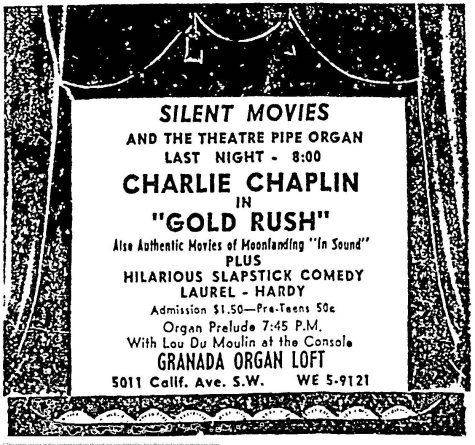
It wasn’t the Granada’s first attempt at trying something different.  The venue’s advertising had long relied on newspaper advertisements, but at one point, shortly before DuMoulin’s departure, they tried a good old-fashioned tie-up with the local Thriftway grocery store. In this case, the first 200 people who spent $5.00 or more on a shopping trip received a free pass to see Greta Garbo in The Kiss.[3]  It wasn’t the only time they mixed the old and the new.  For a show in 1965 they tied up with the Seattle Fire Department to create a bill of silent films around firefighting, while a show in November 1969, anchored by Chaplin’s The Gold Rush, also featured sound films of Neil Armstrong landing on the moon, something that had taken place a few months earlier.  The Granada Organ Loft specialized in showing the films of yesteryear, but also looked for ways to connect with modern audiences.

The combination of losing Lou DuMoulin and the terrible economic climate in the Puget Sound area took its toll on attendance. But it was apathy, according to Club President Fred DeWitt, that was the Granada’s biggest foe.  “‘We’ve tried just about everything we can think of,’” he told John Hartl in 1972.  “‘The Granada is a hobby for most of us. We’ve never been in commercial competition with other theaters. All our films are shown in 16-millimeter, and whatever excess profits we accumulate go to a scholarship fund for organ and piano students. We offer a unique service for the city, and a particularly fine place for families and older people. We even have a reserved section for people in wheelchairs; they can roll right in without problems…Movies are in a slump right now…But that doesn’t mean that all movies, past and present, are bad. So many people refer to ‘old’ movies as if they were dead and forgotten. It’s just not so.  If you haven’t seen a movie, it’s new to you, and that is what’s important.’”[4]

“Apathy,” as DeWitt noted, might not have been entirely correct, and that’s partly because in the early 1970s the Granada was not the only game in town.  Whereas once the Organ Loft seemed ahead of the curve, a growing appreciation for all forms of cinema was making older films more accessible to moviegoers throughout the city.  When Lou DuMoulin came back for a guest appearance behind the Granada console in 1971, for example, he not only reminisced about his days at the Organ Loft but also discussed a silent film series he looking to organize over at the Moore Theatre which skewed toward the films like Intolerance that weren’t typically shown at the Granada.[5]  Meanwhile, the Seattle Art Museum – while not concentrating on silent films, in particular – began showing cinema classics, particularly film noir, as part of their programming.  The Granada even had competition from organized religion.  One weekend in April 1973, while the Organ Loft was featuring a series of Buster Keaton comedy shorts, Bloedel Hall at St. Marks Cathedral, on the edge of Capitol Hill, was showing Erich von Stroheim’s Greed – one in a series of silent features they had been showing in their space.

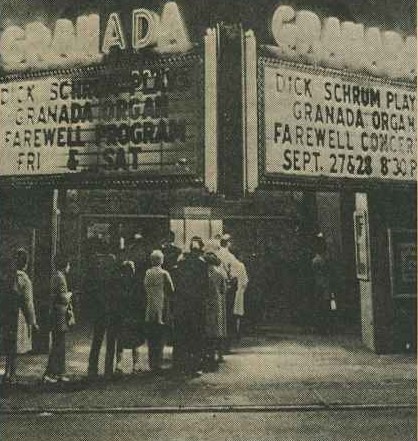
But no matter what the Club did, they just couldn’t tap into a formula that would bring back the Organ Loft’s glory days in the mid- to late-1960s.  Dwindling funds and audiences eventually forced them to curtail their graphic movie advertising in early 1972, though these ads continued to run for their organ concerts.  Finally, in September 1974, the group abruptly ended their film and concert programs after four years of progressively smaller houses.  No silent films marked the end of the Granada Organ Loft, just a pair of farewell concerts by organist Dick Schrum on September 27th and 28th.  They were going out with a whimper, but for the Granada itself, things were going to get worse.

The fact that the times had changed dramatically was evident in the films playing in and around Seattle on the weekend the Granada Organ Loft ended its 11-year run.  The film landscape was littered with contemporary hits that audiences at the time would have found attractive – extended engagements for Blazing Saddles, Harold and Maude, The Sting and The Exorcist, for example.  There were genre films, too, that would have been of interest for certain movie patrons, such as Bruce Lee’s Enter the Dragon, playing the Coliseum at Fifth and Pike, a house that originally opened in 1916.  Revival films, too, were evident, demonstrating that the Granada was not alone in presenting the classics.  The University Theatre, for example, was showing the Marx Brothers in A Night at the Opera, while a few blocks away, at the Varsity, they were in the middle of a Charlie Chaplin film festival – City Lights was paired with his 1957 release A King in New York.  On the other hand, certain film options in Seattle were a sign of the times.  The Embassy Theatre – built in 1925 and bombed as part of the labor campaign waged against the Danz brothers – was now a porn theatre showing The Story of O, gleefully advertised as “the ultimate in sadism.” Meanwhile, just a couple of blocks down Third Avenue was the New Garden Art Theatre, known as the Winter Garden when James Clemmer opened it in 1920.   The Garden Art was wrapping up an extended run of Deep Throat, starring Linda Lovelace, which they showed as a double feature along with The Devil and Miss Jones, then enjoying its 77th straight week in Seattle.  Shocking, perhaps, but a trend. Whereas the Granada Organ Loft, a nearly 50-year-old neighborhood venue, was struggling to stay afloat, many of Seattle’s once-grand downtown movie theatres (the ones that hadn’t already been torn down) where either in a state of disrepair or just barely clinging to life.  And some of those, ironically, like the Embassy and the old Winter Garden, owed their extended lives to the 1970s boom in pornographic films.

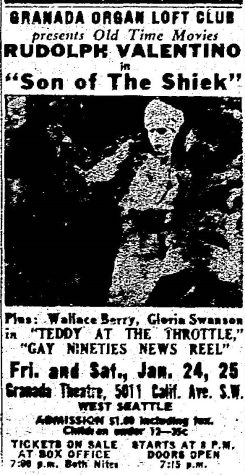
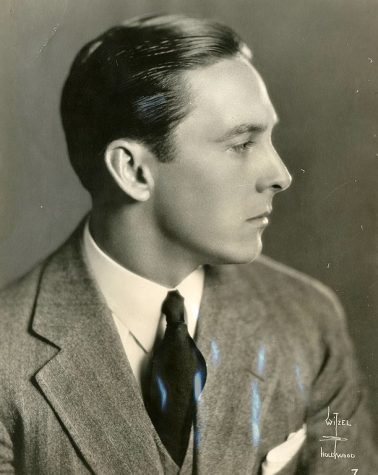
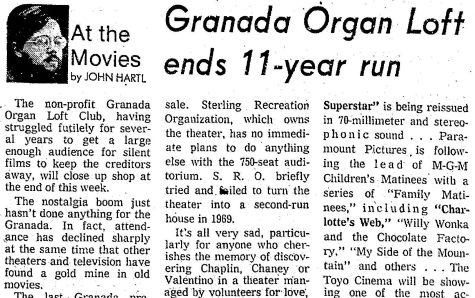
It was left to longtime Seattle film critic John Hartl to eulogize the Organ Loft. “The nostalgia boom just hasn’t done anything for the Granada,” he reflected. “In fact, attendance has declined sharply at the same time that other theaters and television have found a gold mine in old movies.”  But while the story of the Granada may have been ending on a sour note, Hartl insisted that its demise shouldn’t take away from what it achieved.  “It’s all very sad, particularly for anyone who cherishes the memory of discovering Chaplin, Chaney or Valentino in a theatre managed by volunteers for love, not profit…For most of [its 11 years], almost no one else in Seattle was regularly calling attention to the poetry and excitement of silent films, and members of the Granada Organ Loft Club can justifiably be proud of that accomplishment.”[6]

So the Granada went dark, again, but now there wasn’t a lifeline. Club members and community activists tried to have the city of Seattle designate the Granada Theatre as a historic landmark, but were unsuccessful.  From its closure in 1974 to its demolition three years later, the space usually sat empty, though sometimes it was used for church services.

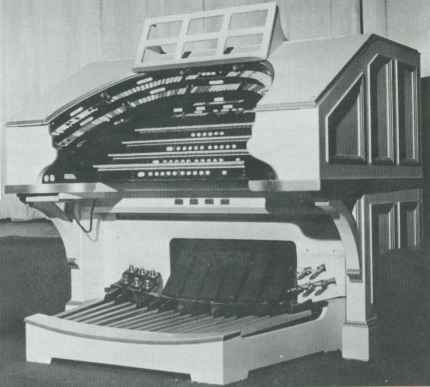
Finally, in early 1977 Sterling Theatres sold the Granada to Sambo’s, Inc., and plans were made to demolish the building and put up a restaurant in its place – ironically, the only thing slated to survive this demolition was the theatre’s original parking lot.  Before that occurred, however, salvage crews went through the once-proud Granada to remove anything of value, offering pieces to the general public.  “It’s…decorations were sold off, presumably to adorn many a rec room,” reported the Post-Intelligencer.  “The rich carpeting went. Oak stairways went. Even the tiles on the ticket office went – at 25 cents apiece. That’s what a ticket cost in the 1930s.”  The 1928 Wurlitzer that Lou DuMoulin installed in 1963 had already been removed, dismantled and sold for parts.  Some pieces returned to Portland, from where instrument originally came, ending up in a Wurlitzer organ that had been installed at the Organ Grinder Restaurant, an establishment that remained open until 1996. But most of the instrument was scrapped – forgotten pieces of history, much like the Granada Theatre and the silent films it proudly showed for more than a decade.

Two folks dropped by the Granada in these waning days to pick up pieces of the old theater, both former employees.  “…[T]hey had worked at the Granada as teenagers,” noted the Post-Intelligencer, “and each of them had customarily let a special boyfriend through a rear exit, free…That was a way to the guys’ hearts. They are now husbands of the women who once bent the rules a little.”[7] In the end it was left to a West Seattle band, Castle, to play the Granada’s last show – not for an audience, but as a publicity event to highlight the passing of an era.

These were nice, sentimental moments, but West Seattle’s Granada Theatre had a pair of indignities left to go.  As the 51-year-old venue was prepped for the wrecking ball, vandals struck in the early morning hours of February 15, 1977.  At about 12:50 that morning police and fire officials were notified of an arson attempt; someone had set fire to a small pile of debris near the structure, but it was extinguished quickly.  But officials were called back to the Granada later, at 4:30 a.m., when a second fire hit the front of the building – this one larger and had been fueled by gasoline.  About a quarter of the building was demolished in this second blaze, but much of that damage stemmed from the fire department’s reluctance to send men inside.  With the building slated for demolition anyway, for safety reasons fire crews chose to battle the fire only from the street, increasing the physical damage and prolonging the effort to put it out.[8]  The fires were almost certainly related, but police and fire officials had no evidence to prove that.

So the Granada Theatre in West Seattle bowed out of existence in 1977, almost 50 years after The Jazz Singer premiered locally at the Blue Mouse Theatre and ushered in a new era of moviegoing, as well as a new era of movie exhibition. Unlike many so many similar venues, it cheated death once, in the late 1950s/early 1960s, eventually experiencing a renaissance with its silent film programming. That wasn’t enough to save the venue from the wrecking ball, but the decade it spent as a specialty movie house did much to cement its legacy in Seattle film history and to revitalize local interest in silent cinema.

By Eric L. Flom – November 2025


Notes:

[1] John Hartl, “Organ Loft Given Reprieve (Of Sorts),” Seattle Times, 28 July 1968, Page 16C.
[2] John Hartl, “The Granada: Seattle’s ‘Pioneer’ Silent-Movie House,” Seattle Times, 16 January 1972, Magazine Section, Page 7.
[3] See Thriftway advertisement, West Seattle Herald, 11 September 1969, Page 9.
[4] John Hartl, “The Granada: Seattle’s ‘Pioneer’ Silent-Movie House,” Seattle Times, 16 January 1972, Magazine Section, Page 7.
[5] John Hartl, “Harry Recalls TV Drama,” Seattle Times, 29 January 1971, Page C1; see also “Moore Brings Back Modern Times,” Seattle Post-Intelligencer, 29 January 1971, AREA 206 Section, Page 2.
[6] John Hartl, “Granada Organ Loft Ends 11-Year Run,” Seattle Times, 23 September 1974, Page 15.
[7] “The Granada’s Last Gig,” Seattle Post-Intelligencer, 17 January 1977, Page A9.
[8] See “The Granada’s Hot Times are Over but Arsonists Strike Theatre Twice,” Seattle Times, 15 February 1977, Page B5; and “2 Arson Fires at Theater,” Seattle Post-Intelligencer, 16 February 1977, Page 3.