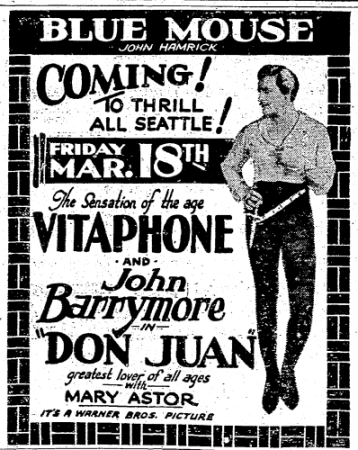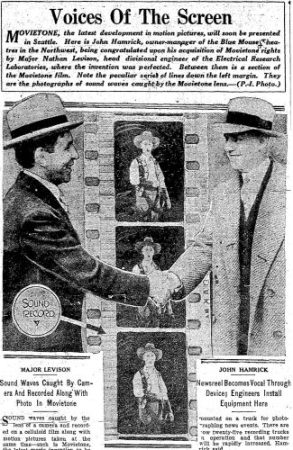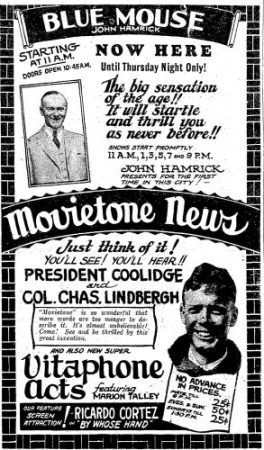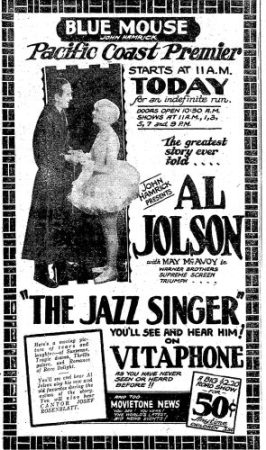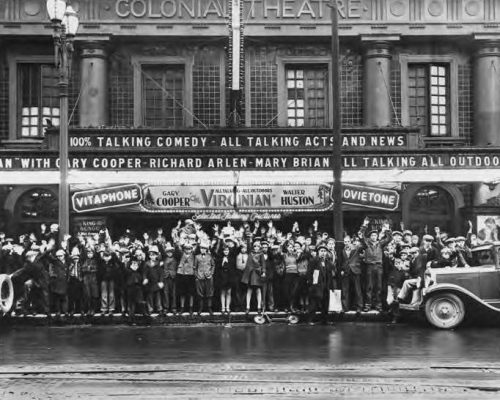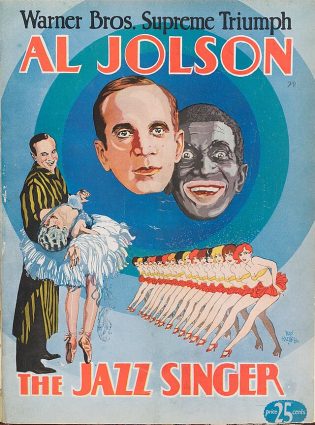
When sound finally came to motion pictures, in the late 1920s, everything changed overnight, from acting to production to exhibition to viewing. Audiences were bowled over by the new technology, and the industry underwent a massive upheaval – almost everything about moviegoing in America changed within the span of a few months. Suddenly the movies seemed newer and more vibrant, with an exciting new set of stars, stories and techniques that pushed the industry to new heights. It was tidal wave of change, and audiences jumped headlong into the future, leaving cinema’s early period behind.
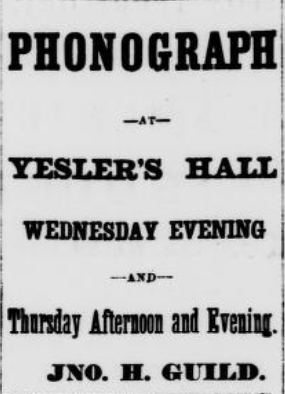
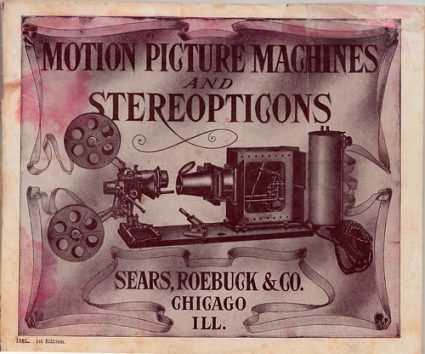
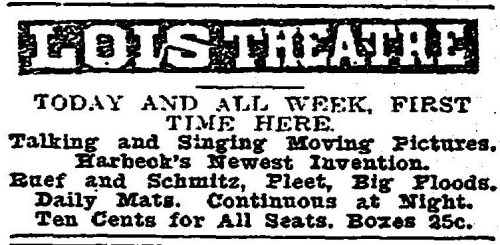
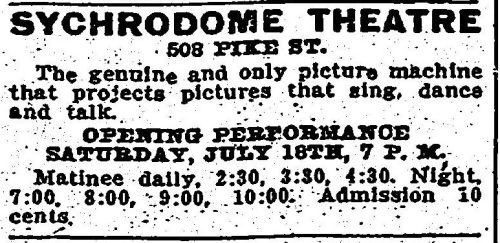
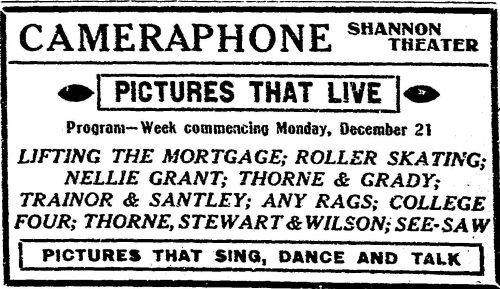
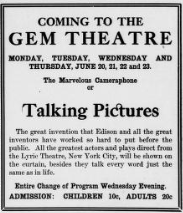
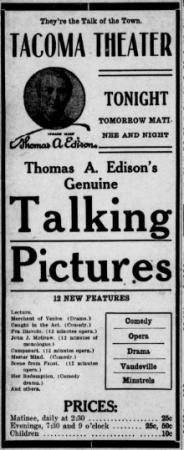
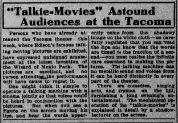
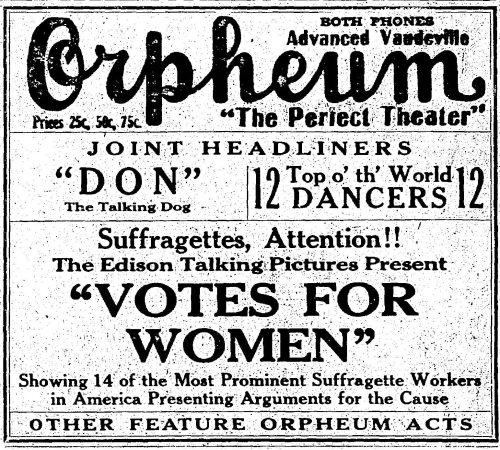
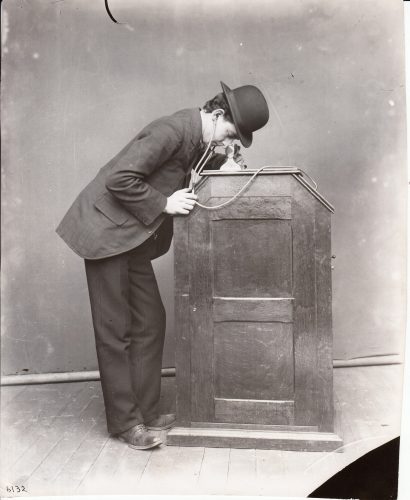
Well, no. That’s not how it happened at all – not by a longshot. Sound in the late 1920s did indeed transform the industry, along with the audience’s relationship to the movies. But it didn’t happen overnight – in fact, sound movies had been decades in the making. They may have been embraced by audiences at the time, but those audiences were primarily urban moviegoers, since many rural venues didn’t have to the funds to install sound equipment, at least not right away. And even the reaction of urban audiences in the late 1920s was counter to recent history. Earlier experiments with sound didn’t always meet with public approval, at least in Washington state, and while moviegoers may have enjoyed the novelty of pairing sound with the moving image, they actually tired of these pictures rather quickly. Too often, it seems, the earliest sound pictures showcased the technology’s limitations rather than its potential.
The arrival of sound in the late 1920s wasn’t some earth-shattering moment in which everything suddenly changed. It was, in fact, the culmination of a long series of experiments that came before it.