War of the Danzs:
Or, How I Learned to Stop Worrying and Love the Bomb(s)

Preview

As the films inspired by the Seattle General Strike of 1919 showed, labor unions in the Pacific Northwest weren’t afraid to flex their muscles when need be. This was certainly the case for the many unions that covered the local theatrical and motion picture industry, which included small groups (such as ushers, stagehands and janitors) all the way up to significant players like musicians and projectionists. Union organizations had long been part of the industry. One of the first to organize in the Northwest were the moving picture operators in Spokane, who applied for a charter to become a separate local under the existing stage employees’ union in early 1908. This became the International Association of Theatrical and Stage Employees (IATSE) Local No. 9, and it started an avalanche; later that fall projectionists in Portland became IATSE Local No. 28, while Seattle eventually organized as IATSE Local No. 154.[1]

Union representation did much to improve working conditions and increase wages at moving picture theatres across the country. They were also helpful in fighting measures that either impeded or put additional burdens on certain types of work. But the advocacy for union interests could also, on occasion, be a tad forceful. Motion pictures were a thriving industry and, particularly in urban areas, there were times when management was at loggerheads with their own workers. These situations could become contentious, but rarely were they dangerous. Unless you were Seattle exhibitor John Danz, who forcefully, consistently, and gleefully took on local unions, in battles that didn’t last for weeks or months, but for years.


Notes:

[1] See “Washington Operators Apply for Union Charter,” Moving Picture World, 9 May 1908, Page 417; “Operators’ Union in Spokane, Wash.,” Moving Picture World, 23 May 1908, Page 457; “Notes of the Trade,” Moving Picture World, 3 October 1908, Page 256; and “Notes of the Trade,” Moving Picture World, 14 November 1908, Page 380.

War of the Danzs: Or, How I Learned to Stop Worrying and Love the Bomb(s)

Reel 1: Down with Danz

War of the Danzs: Or, How I Learned to Stop Worrying and Love the Bomb(s)

Reel 2: Blowing the Dispute Wide Open

War of the Danzs: Or, How I Learned to Stop Worrying and Love the Bomb(s)

Reel 3: 1928 Comes in Like a Lion...

War of the Danzs: Or, How I Learned to Stop Worrying and Love the Bomb(s)

Reel 4: ...But Goes Out Like a Lamb

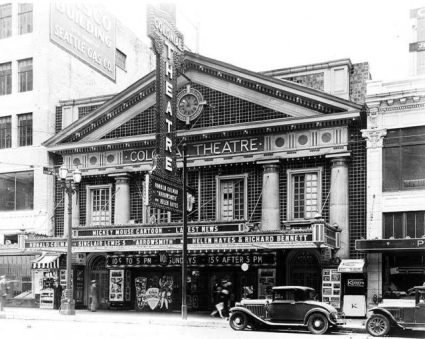
If the Danz brothers thought the bombing campaign against their houses was over now that a few individuals had been apprehended, they were sadly mistaken. On the evening of May 11th, three weeks after the second attack on the Embassy, the Colonial Theatre on Fourth Avenue was hit. The bombing was orchestrated from behind the venue, as with the Palace Hip and State, with the bomber(s) getting more bang for their buck with this target. That’s because Danz’s Colonial Theatre was directly across the alleyway from his Capitol Theatre, which faced out onto Third Avenue. Because of this, it wasn’t immediately clear which theatre had been hit when the blast occurred. Audiences, to be sure, didn’t stick around to find out – the patrons in both venues fled into the street after the explosion, which could be distinctly heard in both locations.

With this blast, the tactics were new. This incident did not occur in the dead of night, but at 8 p.m. in the evening, a time that, potentially, put more people in harm’s way, even though neither the Colonial nor Capitol were as crowded as they could have been. The device, which was tossed onto the Colonial roof, was also different – dynamite placed inside an empty film canister, with pieces of scrap metal filling the empty space. While the bomb wasn’t near anyone when it exploded, the shrapnel component made it more dangerous than previous versions. The fact that it blew a crater in the Colonial roof lent credibility to the idea that the bombers wanted to terrorize the audience, and possibly bring pieces of the ceiling down inside the auditorium.[1]

A witness in a nearby building claimed to see two men fleeing the alleyway shortly before the blast occurred. Armed with that information, one would think that Seattle police would pay an immediate visit to Thomas Woodhouse, who was out on bail and awaiting trial for his alleged connection to the second Embassy bombing. They may have, but it wasn’t Woodhouse who was taken in – inexplicably, it was Arthur W. Campbell, the 22-year-old who allegedly dropped a tear bomb inside the Embassy several weeks previous. Campbell was convicted of the crime in April, earning a six-month jail sentence, but was free pending appeal. He was picked up about 1½ miles away, at Sixth Avenue South and Dearborn, questioned and released in short order.[2]

Once again, Seattle police were mired by dead-end tips that failed to pan out; the whole series of bombings were “a black mark of shame against the City of Seattle, the exhibitors of the town, of the state, and the police authorities,” noted Motion Picture Record.[3]

But union forces (assuming labor was behind these attacks) were already seeing dividends. Just two weeks after the Colonial was bombed, Joseph Danz quietly made a change at his Embassy Theatre, agreeing to take it from a nonunion to a union house.[4]

Following the May 11th incident at the Colonial, there was a lull in activity that coincided with the pending court cases related to the prior bombings. Arthur Campbell’s case was a quick one; in June 1928 his appeal was denied, and he was ordered to begin serving a six-month prison term.[5]

Woodhouse’s case, taking place the same month, was more complicated.

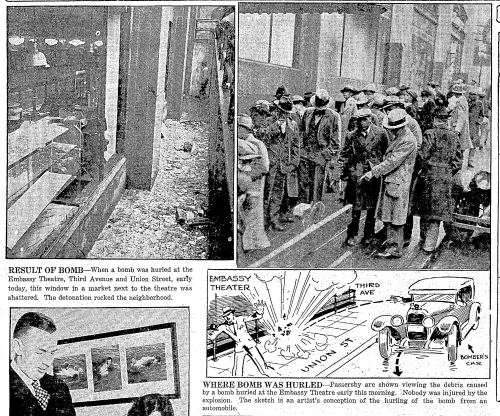
Two witnesses told Judge Malcom Douglas’ courtroom that they saw Thomas Woodhouse driving his automobile past the Embassy at 3:50 a.m. on April 23rd, seconds before a bomb destroyed the marquee above the Union Street entrance. In addition, one of them claimed that Woodhouse circled the block at least four times in succession, prompting the witness to approach the car and inquire what the driver was doing. Attorneys for Woodhouse countered by calling his wife Florence to the stand, who testified that her husband was at home at the time the blast occurred. In addition, Woodhouse brought in the King County Treasurer, W.W. Shields, as a character witness.[6]

None of that worked. In late June Thomas Woodhouse was convicted of throwing an explosive at the Embassy Theatre, earning him a sentence of four years in the state penitentiary in Walla Walla, a decision he immediately appealed. That verdict made Thomas Woodhouse the only person convicted of bombing a Danz-owned theatre in the entire six years the exhibitor claimed to have been harassed by organized labor. (This is, of course, if you’re willing to set aside the fact that the Embassy was operated by Joseph Danz, not John.) Thomas Woodhouse was freed on appeal, but the state Supreme Court declined to take up the case in June 1929.[7] With that, he promptly re-arrested at his Ballard home and shipped off to the Walla Walla State Penitentiary.

Unfortunately, whatever pause that occurred during the trials of Arthur Campbell and Thomas Woodhouse didn’t last for long. More precisely, it lasted until 2:30 a.m. on the morning of July 28, 1928, when an explosion occurred in the alley behind the Florence Theatre at 512 Second Avenue, a house owned and operated by Joseph Danz. It was the call no one at the police department wanted to get; despite a pair of recent convictions, the theatre bombing campaign had resumed.

Police throughout downtown Seattle converged on the scene almost immediately, and the Florence was awash with officers looking for bomb fragments, questioning eyewitnesses and checking alibis. However, in their eagerness to get a jump on this latest incident, Seattle police probably should have paused to consider the crime scene. Yes, once again there was an explosion in the early morning hours at a Danz-owned movie theatre. But this explosion barely registered – in fact, it may have been nothing more than a large firecracker, since there was no damage to either the Florence or the surrounding buildings. But none of that mattered at the time; police investigators devoted manpower and considerable time to combing the location and questioning witnesses.

Interestingly, the investigators were right in at least one respect – there was an incident unfolding on lower Second Avenue that evening. It just didn’t take place at the Florence. Instead, the real action was half a block away, at the post office inside the Smith Tower. There, burglars slipped inside, cracked the safe and were making off with about $600 in cash, leaving behind 600-plus blank money orders that were also inside the safe at the time. In all likelihood, while police converged on the Florence and were in the process of questioning movie patrons about the so-called “blast,” these burglars were quietly slipping away from the Smith Tower with their loot. There was even speculation, in fact, that the Florence incident may have been a ruse by these criminals to divert attention away from where they were working.[8]

So this alarm was indeed a false one, but it highlighted the fact that theatre bombings had become so prevalent by the time that they may have been copycatted by others. That was not good news for Captain Tennant and the newly-formed bomb squad.

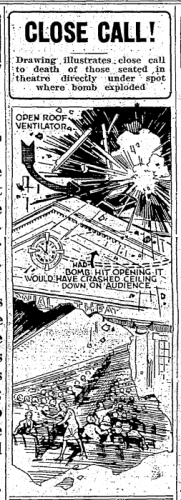
Barely a week later the bombings resumed, this time for real. This next blast once again struck the Colonial Theatre on Fourth Avenue, detonating at 10 p.m. on August 4th, in the middle of a packed show. No one was injured, but this time the perpetrators went for maximum damage. Or at least the police were now so fed up with these incidents that that’s how they wanted the story presented in the media. As before, this bomb was thrown onto the roof of the Colonial, possibly from the Bigelow Building next door, landing near the opening of a ventilation shaft during a busy Saturday night show. Rightly or wrongly, police may have deliberately inflated the danger this bomb posed to the general public as a way to sway public opinion. One policeman, for example, asserted to the Daily Times that “[h]ad the bomb hit its apparent objective, a ventilator in the roof the theatre, almost directly in the center of the playhouse, scores of persons might have been killed.”[9]

The blast left another crater in the Colonial roof, shredded some support beams, and some windows from nearby buildings were blown out. Occurring, as it did, so close to a ventilation shaft, the noise from the blast was amplified inside the house as the building shook violently, with shards of plaster falling from the roof and smoke descending into the auditorium. Despite this shock, however, patrons for the most part remained orderly, helped in no small part by the Colonial’s quick-thinking organist, who may have been startled by the noise but quickly regained his composure and kept right on playing. Projectionist E.V. Vike threw on the house lights while people composed themselves, but all the while left the picture running. John Danz, who was at the Colonial when the blast occurred, rushed into the auditorium to help calm the situation. “‘I think that most of those in the audience were so gripped from the climax of [the James Cruze naval adventure Old Ironsides] that, for at least a few seconds, they did not realize what had happened,’” recalled one patron. Both the Daily Times and Post-Intelligencer reached Danz for comment, but for once he had nothing to say; the exhibitor mysteriously wouldn’t speculate on what happened or who he thought was responsible.[10]

This attempt to bomb the Colonial in the middle of a weekend show was the sixth incident to occur since the beginning of the year, and it was the final straw for the Daily Times. “Once again a Seattle theatre has been bombed,” they began in a stern, front-page editorial on August 6th.

          It is inconceivable that one such demonstration may have occurred that was unpreventable by authorities; but the fact that all succeeding similar demonstrations have been directed against one ‘string’ of theatres gives fair indication of official negligence and fault…It is only by the mercy of God that no one had been maimed or killed; and yet that kindly dispensation of Providence seems somehow to have been twisted into excuse for continued official indifference and sloth. The record reads as if the authorities were determined not to be stirred to effective action by anything short of tragedy. This will not do, gentlemen of our city and county governments…the people of Seattle now make preemptory demand that you shall wait no longer. They are not concerned about the inward details of individual or business quarrels among men, but they are gravely concerned for their own protection and for the reputation of this city, which has already suffered serious injury…The rights and wrongs of this matter [are of] no debate. There is no room for any argument. Bombings must cease. No issue of any kind with which our officials have to deal calls as loudly for instant and conclusive action. The people of Seattle will not stand for any more palliation or paltering.[11]

This was certainly embarrassing for the Seattle police department, but it was also embarrassing for the city’s new mayor, Frank Edwards. Edwards assumed the office on June 4th, well into the 1928 bombing campaign, but was formerly a moving picture exhibitor by trade. Not only had he worked for the Danz organization, but he was the former manager the Winter Garden Theatre (across Third Avenue from John Danz’s Capitol), and operated several small venues in Seattle’s outlying neighborhoods.

This was one of Mayor Edwards’ first big tests and, as an exhibitor himself, he knew all about the labor issues plaguing John Danz, his former boss. But Mayor Edwards fumbled the ball, giving a politician’s statement that “‘these bombings must not occur again” and offering a $1,000 reward for apprehending the perpetrator(s). That kind of tepid response wasn’t going to move the needle, and it was certainly a moment of weakness for the new mayor. It was left to prosecutor Ewing Colvin to express the outrage felt by others in city government. “‘It is a source of great humiliation to such a proud city as Seattle to have to cow to the mercy of terrorists,’” he angerly announced. “‘The damage to the city’s fair name in eastern centers cannot be calculated.’”[12]

John Danz was uncharacteristically quiet, shrugging off the two Colonial bombings by noting that no one had been hurt, the damage was minimal and the incidents had been the subject of too much public comment. And he continued to resist the temptation to speculate on who may have been responsible, merely stating his intention to hire extra security at his theatres and, at one point, intimating that he may hire private detectives to run a parallel investigation, separate from the one being conducted by Seattle police.

But while John Danz was downplaying these latest incidents in public, the AFL and Central Labor Council went on the offensive. Together they issued a joint statement denying responsibility, and once again suggested that Danz was orchestrating these blasts to gain sympathy for his “failing business.” That charge was an affront to John Danz, who vented to a reporter from the Daily Times. “‘Would I commit suicide on my own doorstep to get public sympathy? The suggestion, if such, is ridiculous and grotesque!’” That prompted a reply from W.J. Douglas, secretary of Musicians’ Local No. 76, who had been grappling with the exhibitor for years. “‘Our organization does not approve of any violence, and wouldn’t stand for anything of such as nature. We know nothing about it, and we have no explanation. We have been unable to reach any agreement with Mr. Danz over his musicians’ contract, but we do not bother him, and have nothing unkind to say about him.’”[13]

But despite the heightened public attention, media coverage and the potential reward, Seattle police STILL couldn’t come up with any real suspects in the days after the Colonial bombing, much to their own (and the mayor’s) embarrassment. They had few clues, and although a provoked John Danz had started to volunteer his own theories, even he admitted that none of it would hold up in court. The Seattle police department started by doing the obvious – questioning Thomas Woodhouse, the convicted Embassy bomber, to see if he was somehow connected to the Colonial incident. But it was clear from the get-go that Woodhouse wasn’t involved, nor did he have any knowledge of who may have been. Although police claimed to be pursuing several leads, they wouldn’t discuss any of them publicly and the investigation, again, seemed to be grinding to a halt.[14]

But then, five days after the blast at the Colonial, law enforcement made a significant announcement: it was their belief that organized labor had nothing to do with the rash of bombings against John Danz’s theatrical interests, which included the recent incidents at the Colonial Theatre. “‘I am positive…that the organized and federated labor groups had no connection with them,’” remarked Seattle Police Chief Louis J. Forbes. Instead, he posited a new theory. “‘The eight or ten men responsible banded together on their own hook to satisfy a personal grudge, I have learned. They had outsiders to help them.’”[15] Forbes also claimed that no further bombings were likely to occur, and that any lingering antagonism “will be ironed out satisfactorily in the few days.”

This was a surprising announcement – a sharp turn from what the facts suggested and where previous investigations had gone. A mystery group with a chip on its shoulder had been responsible all along, and the animosity between John Danz and the theatrical unions was nothing more than a side show clouding the true facts. Moreover, the police chief was confidently predicting an end to the bombings, but wasn’t saying much about the suspects or whether they’d ever be apprehended. All of that was a little tough to swallow, especially for folks in the movie business. Calling Chief Forbes’ announcement “[o]ne of the oddest statements ever issued to the daily press…,” local trade paper Motion Picture Record wasn’t buying it.

          Those in the trade who are familiar with the events prior to the Colonial bombing are unable to understand how the police chief could get an “agreement” from the responsible parties without having a confession of some sort that would enable him to convict the perpetrators. If he knows the guilty parties or “group,” as he calls them, why doesn’t he follow up his knowledge by putting them behind the bars as they belong?
          Some weird things have happened in the political world in Seattle, but it is hoped by the trade that there will be no laxity on the part of the officers of the law in dealing with bomb terrorists.[16]

The paper may have been skeptical, but John Danz, curiously, was totally on board. “‘I am certainly glad to get this assurance from the chief,’” he claimed, after learning from Chief Forbes that there was less likelihood of future trouble. “‘I knew sooner or later that the persons responsible would come to the conclusion that such [bombing] tactics were futile.’”

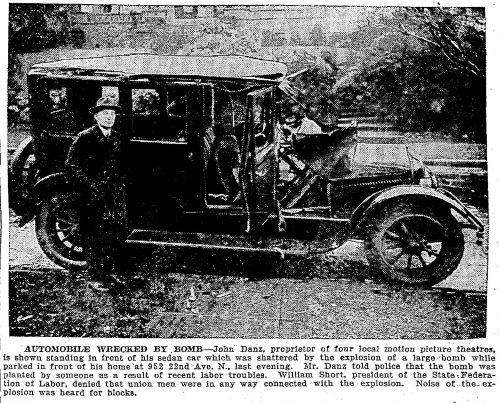
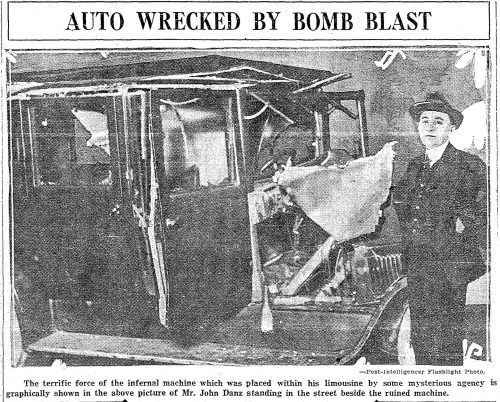
So what happened? Was there really an outside group of individuals with an ax to grind against Danz and his business interests? That’s possible, given his combative management style. Or was a truce brokered between Danz and organized labor that obligated both parties to step away for a period, similar to what seems to have occurred after the 1922 car bombing? It was certainly true that all parties (and that included the Seattle Police Department and Mayor Frank Edwards) were looking for an off-ramp that afforded less public scrutiny.

Lending credence to the notion of a temporary truce was the fact that the Colonial bombing in August 1928 was the last of its kind, ending what had been a busy seven months of activity. Within a week of the Colonial incident, in fact, the issue had already moved off the front pages and was slowly fading into the background. If Seattle police continued their investigation after their big announcement, there were never any arrests of this so-called “rogue group” plotting against John Danz. Nor did Danz push for a resolution, keeping his head down and getting back to the business of running his movie houses. After months of heated rhetoric, John Danz once again stopped criticizing organized labor in public, and they stopped criticizing him.

As before this truce wouldn’t last, but things were settled in the short term. Eventually John Danz and the amusement trade unions resumed their battle, though never at the heated pitch that occurred in 1928. It wouldn’t be until 1935 before the two finally came to an agreement, but it was hardly cause for celebration. The arrival of sound film in 1927, followed shortly thereafter by the Great Depression, gutted union membership, particularly the musicians. These rapid developments, coming more or less simultaneously, forced many unions to abandon previous squabbles and reposition themselves to focus on protecting member jobs. The musicians still had issues with John Danz, but in the early 1930s they had bigger fish to fry. So when Danz agreed to make some concessions and finally settled with his union antagonists, their membership numbers and bargaining power were so diminished that it was hardly classed as a victory. It had been a long and bitter fight, and following the 1935 agreement Sterling Theatres never again found themselves in that kind of protracted labor dispute.

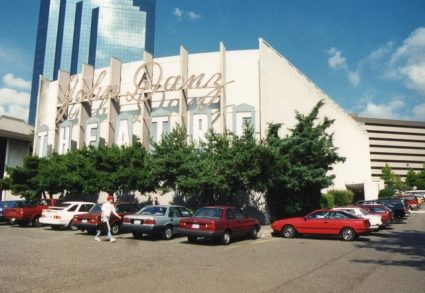
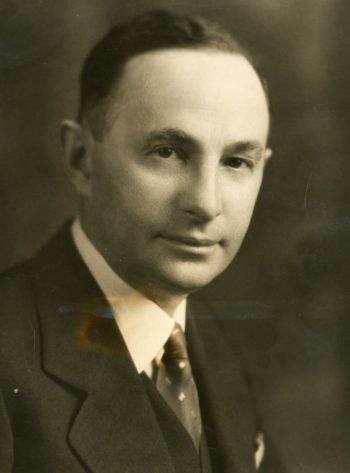
John Danz remained active in the Northwest exhibition business until his death in 1961. By that time his Sterling Theatres Company had interests throughout Washington state, along with several theatres in Oregon and California, and had diversified their entertainment holdings to include the management of bowling alleys, among other things. Danz and his wife Jessie were active philanthropists, and in the days before his passing they had made a sizable donation to the University of Washington that had yet to be announced. The University, coupled with Children’s Orthopedic Hospital and Children’s Home Society of Washington, were listed as beneficiaries in his will, as were members of his extended family and a few longtime business associates. And, as a tribute to their founder, the Sterling organization (son Frederic assumed the reigns) named their newest theatre, nearing completion in Bellevue at the time of his death, the John Danz Theatre, which remained in operation until 1994.[17]

By Eric L. Flom – November 2025


Notes:

[1] “2 Theatres Are Bombed; Suspect Held by Police,” Seattle Daily Times, 12 May 1928, Pages 1 and 2.
[2] See “2 Theatres Are Bombed; Suspect Held by Police,” Seattle Daily Times, 12 May 1928, Pages 1 and 2; and “Police Fail to Find Theatre Bomb Clue,” Seattle Daily Times, 13 May 1928, Page 4.
[3] “Editorial Paragraphs,” Motion Picture Record, 19 May 1928, Page 3; see also “Another Bomb Outrage Against John Danz Theatres in Seattle; No One Caught,” Motion Picture Record, 19 May 1928, Page 4.
[4] See “Seattle,” Motion Picture Record, 2 June 1928, Page 7.
[5] “Suspect Again on Trial in Theatre Odor Bomb Case,” Seattle Daily Times, 26, June 1928, Page 17. According to Motion Picture Record, Arthur Campbell’s case was mishandled from the get-go. Prosecutors filed the charges in district court rather than in King County Superior Court, where the maximum penalty would have been up to a full year in jail and a $1,000 fine. The Motion Picture Theatre Owners Association of Washington was unhappy with that decision by the prosecution, and it played into a subsequent lobbying campaign to get the state legislature to pass a law elevating crimes such as Campbell’s to a felony and, therefore, subject to stiffer penalties. See “Bomb Thrower Gets Penalty,” Motion Picture Record, 21 April 1928, Page 4.
[6] “Witnesses Accuse Bombing Suspect,” Seattle Daily Times, 21 June 1928, Page 4; and “County Treasurer Character Witness in Explosion Case,” Seattle Daily Times, 22 June 1928, Page 13.
[7] See “New Trial Sought in Theatre Bombing,” Seattle Daily Times, 23 June 1928, Page 5; “Theatre Bomber is Sentenced to Prison,” Seattle Daily Times, 5 July 1928, Page 2; “$2,500 Bombing Reward Held Up,” Seattle Daily Times, 6 July 1928, Page 39; and “Theatre Bomber is Ordered Confined Behind Prison Bars,” Seattle Daily Times, 12 June 1929, Page 3.
[8] “$600 Taken from Vault; Other Cash Overlooked,” Seattle Daily Times, 28 July 1928, Page 1. Once the Smith Tower robbery was discovered the next morning, the building’s night staff were detained for questioning, since it appeared that the robbers used a set of duplicate keys to slip to in and out of the post office. The speed with which they appeared to open the safe, too, suggested that they were familiar with the layout of the office and how the safe operated.
[9] “Blast Rocks Playhouse as Crowds are Passing,” Seattle Daily Times, 5 August 1928, Page 1.
[10] Ibid., Pages 1 and 2; see also “Bomb Blast Causes Panic in Colonial,” Seattle Post-Intelligencer, 5 August 1928, Pages 1 and 2.
[11] Editorial, “People of Seattle Demand Action for Public Safety,” Seattle Daily Times, 6 August 1928, Page 1.
[12] See “Mayor Offers $1,000 Reward for Bombers, Seattle Daily Times, 6 August 1928, Pages 1 and 5; and “Edwards Says There Must Be No More Bombs,” Seattle Daily Times, 6 August 1928, Pages 1 and 5.
[13] The Danz and Douglas quotes are from “Edwards Says There Must Be No More Bombs,” Seattle Daily Times, 6 August 1928, Page 5.
[14] See “No Trace of Bomber is Found,” Seattle Daily Times, 7 August 1928, Pages 1 and 2; “Clues Develop in Bomber Hunt,” Seattle Daily Times, 8 August 1928, Page 1; and “Chief Gives Word That Crimes Will Not Reoccur,” Seattle Daily Times, 9 August 1928, Page 1.
[15] Seattle Police Chief Louis J. Forbes, quoted in “Chief Gives Word That Crimes Will Not Reoccur,” Seattle Daily Times, 9 August 1928, Page 1.
[16] “Seattle Police Chief Gives Word That Theatre Atrocities Will Not Occur Again,” Motion Picture Record, 20 August 1928, Page 5.
[17] See “John Danz, Theater Owner, Dies,” Seattle Daily Times, 26 October 1961, Page 42; “A Gift of Enduring Value,” Seattle Daily Times, 31 October 1961, Page 10; “Additional Bequests of Danz Disclosed,” Seattle Daily Times, 2 November 1961; and “Movie Theater to be Named for John Danz,” Seattle Sunday Times, 19 November 1961, Page 25.