Judge and Jury:
I Fought the Exchange and the Exchange Won

Preview

The primary way movies were distributed in the silent era was through studio-operated exchanges, which also played key roles in the advertising and promotion of their pictures. Whether an exhibitor came directly to Film Row in Seattle or talked to a visiting salesman, business deals were negotiated to deliver films and materials to movie houses throughout Washington state, allowing these venues to offer patrons a steady stream of new and attractive picture bills. Contracts, of course, were the key component of that process, spelling out the number of films an exhibitor was to show, the time period in which they would screen, and the financial terms for each engagement. Every theatre, large and small, contracted for a variety of services. A house that changed bills twice a week, showing films from two different studios, would need at least two contracts for their features alone. But, if they also showed newsreels and/or comedies on each bill, then they’d have additional contracts, sometimes with entirely different exchanges, to provide those services. Not all contracts ran for the same length of time – one might run for six months, another for eight, and another for 10, and they would all be running concurrently. Some may be older contracts nearing completion, while others were just beginning. It was a complicated process that got even more complicated for houses that changed their bills more frequently than twice a week, or for the exhibitor who operated multiple venues.

Contacts put a legal framework around the distribution process and were the subject of intense scrutiny. Disputes arose between exchanges and exhibitors all the time, usually when one party claimed that the other wasn’t meeting their stated obligations. Some were misunderstandings, but others became so contentious that they ended up in a court of law – an unwanted and expensive step for exhibitor and exchange alike.

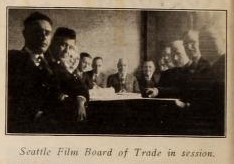
Contractual issues eventually became such a persistent headache that the industry created a mandatory arbitration process in the 1920s to help mitigate some of these problems. No one wanted to go into arbitration, but what happened there was a big deal for those in the industry, with decisions that impacted film exhibition throughout Washington and, sometimes, other parts of the country as well.

But while arbitration was created as a tool to help settle disputes, it also laid bare what went on behind the scenes at the local movie house. And sometimes it wasn’t pretty. Every dispute involved a legitimate business transaction, but that doesn’t mean the parties involved operated in good faith. These cases involved a spectrum of behaviors that ranged from innocent mistakes to small fibs to outright deception, almost always because someone thought the effort gave them a leg up in the business.

Much of this was out of the public eye; movie fans came to the theatre to see their favorite pictures and didn’t put much thought into what it took to get them there. A sampling of the arbitration cases heard in Washington during the 1920s, however, offers a vivid picture of how the local entertainment business could sometimes be anything but entertaining.
Judge and Jury: I Fought the Exchange and the Exchange Won

Reel 1: The Process

Judge and Jury: I Fought the Exchange and the Exchange Won

Reel 2: Trial by Arbitration

Judge and Jury: I Fought the Exchange and the Exchange Won

Reel 3: Here's Waldo

Judge and Jury: I Fought the Exchange and the Exchange Won

Reel 4: Déjà Vu All Over Again

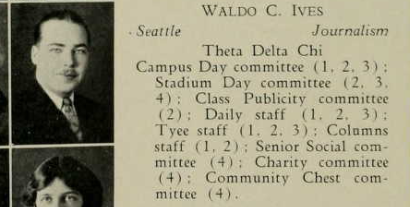
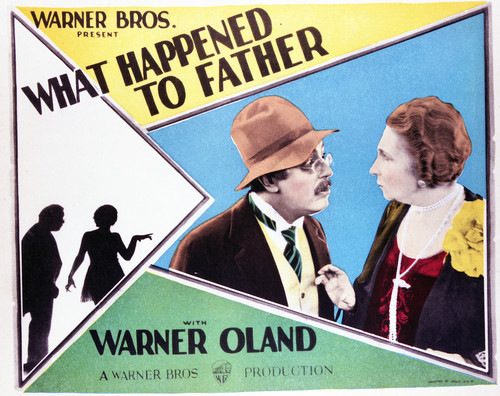
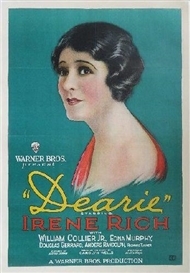
Obviously Warner Bros. was floored by the Ives ruling, since it flew on the face of the Board’s previous decisions, and got to work on a response.  They spent a month lining up support behind the scenes and, at the January 10, 1928, meeting of the Board of Arbitration, they formally requested that the Ives case be reopened.  Their entire argument rested on the movie Simple Sis.  That picture had been advertised as a Lewis Milestone film, but he was replaced in the director’s chair by Herman Raymaker.  However, as Waldo Ives also contended, Simple Sis was supposed to be based on a story by Daryl Zanuck.  At the end of the day, however, the picture’s story credit went to Melville Crossman.

At the January hearing, Warner Bros. asked that the Board reconsider their December ruling based on single piece of new information: a signed affidavit from Daryl Zanuck revealing that he was, in fact, Melville Crossman.  Crossman was just a Zanuck pen name, so in this case there was no substitution when it came to the story for Simple Sis.  James Hone of the MPTO responded by noting that the new evidence only addressed a minor issue around one of the five pictures in question.  What it didn’t do, in his opinion, was change the material facts around the rest of the Ives’ case.  And besides, he warned, the Board of Arbitration needed to be careful about reopening cases.  The decision they made in December was supposed to be final; the next step, if there was one, was to file a lawsuit.  If unpopular decisions could somehow be reversed at subsequent hearings, when a new set of volunteer arbiters was seated, what was the point of this exercise?  The slightest bit of new information could be used to reopen cases, and Board decisions would be litigated and re-litigated, ad nauseam.

Hone was confident that because the new evidence wasn’t substantial, the Board wouldn’t be so reckless as to reverse their original decision.  But he was confident in the same way that Warner Bros. was confident back in December, when they felt that longstanding historical precedent would be upheld.  This Board, consisting of five new members (only one also participated in the December hearing) ruled that there was, in fact, sufficient grounds to reopen the case.  All three of the exchange members supported the motion to reopen, along with two of the three exhibitors.

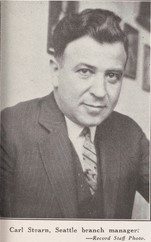
If the first Ives decision created turmoil, reopening the case polarized the entire Northwest film business.  To address the case once again, the Board of Arbitration scheduled a special meeting for Monday, January 31st, where Warner Bros. vs. Waldo Ives would be the only hearing on the docket.  How important did the studio consider this case, which was now being watched around the country?  So much so that they brought Joseph Haren all the way from their New York corporate office to make their argument.  Local exchange manager Carl Stearn, who lost in December, was also on hand, as were several district and regional managers from throughout the Warner organization.  Some, like Haren, came to Seattle from the East Coast, while others made the trip up from southern California. This was serious, and Warner Bros. was taking no chances.

At the January 31st hearing, James Haren argued that production changes like the ones Waldo Ives was objecting to were commonplace in the business, and in no way indicated that the picture would be inferior.  When a change was significant – not the case with the five films in question – Warner Bros. had made (and would continue to make) concessions to impacted exhibitors.  Furthermore, Haren noted that the service contract Waldo Ives signed, like most film contracts, contained only the name of the production, not the names of its stars, directors, writers or a description of the storylines.  The annual campaign booklet, which exhibitors used to make booking decisions, was issued only as guidance; on that point, Haren introduced signed affidavits from the sales managers of other Northwest exchanges backing up his argument.  All of them used their campaign books as sales material, and didn’t include production details in their final contracts.  The Board of Arbitration’s job was to render a decision based on the terms of the contract, Haren argued, not the materials used to negotiate it.

James Hone represented Waldo Ives, who once again came down from Anacortes to provide support.  Hone didn’t vary much from his original argument in December.  Waldo Ives made purchasing decisions based on information from the exchange, which included the annual campaign book.  True, only the title of the picture was written into the contract, but that selection might not have been made if Ives had known the full production details.  It was James Hone’s contention that the annual campaign book was technically part of the contract – no agreements, in fact, would be signed without it.  The fact that Daryl Zanuck used a pen name for one of the films didn’t move the needle.  All five films had substitutions, compromising each picture after the fact. Whereas Warner Bros. wanted a very narrow interpretation of the contractual terms, Hone went in the opposite direction – a film service agreement was inclusive of the materials used by the exhibitor to make buying decisions.

In a sign of how contentious this January 31st hearing was, Motion Picture Record covered the proceedings without publicizing the names of the exchange men and exhibitors who sat for the case.  This was a deliberate omission, and unlike the paper’s usual practice.  Over the next six months Motion Picture Record would discuss the Ives case several times, and not once did they reveal who made up the Board at the January 31st meeting, despite reporting this information for all other arbitration cases.[1]

However the Board was comprised at the January 31st meeting, once arguments concluded and questions were asked of both sides, the group deliberated privately for over two hours before returning a verdict: they would reverse their December decision and award the case to Warner Bros. in the amount $117.28.  This represented Ives’ fees on the two pictures he originally rejected; for the remaining three pictures in question, he was required to play or pay within 90 days.  And, to twist the knife a little more, the Board also reversed their earlier decision and directed Waldo Ives to repay the $14 in travel expenses that the exchange gave him back in December.[2]

Now the Waldo Ives case spiraled out of control.  The original decision in December 1927 reversed years of precedent, and gave exhibitors hope that they could claw back some leverage when it came to matters of distribution.  Deciding to reopen the case in early January let everyone know that the Board’s final decision wasn’t really their final decision, and that new evidence or new arguments could be used to challenge.  And the January 31st decision just confirmed what many exhibitors felt all along – when it came to the Board of Arbitration, the exchanges held all the cards.  The Ives case was simply reinforcing the idea that mandatory arbitration was a tool benefiting the filmmakers and distributors, not for those who actually showed the films.

Motion Picture Record admitted that the entire episode was giving “the system as a whole a black eye,” but arbitration was also under fire on a national level.  At an MTPO conference in Chicago, occurring at the same time the Ives case was being heard, the group’s Contract Committee was considering 22 proposed changes to the standard film contract language.  Most weren’t controversial, but proposed changes to the arbitration clause were.  In this case, exhibitors no longer wanted to be bound by mandatory arbitration – they wanted the option of going directly into the court system if they chose.  But the more contentious change was to propose that exhibitors wouldn’t be bound by arbitration decisions.  This led to a split amongst the Committee’s exhibitor and exchange representatives, with the exchanges fearful that the changes would open the door for exhibitors to walk away from arbitration altogether.  And yet, at the same time, in Minneapolis, a contentious dispute was litigating that very issue in reverse.  The Minneapolis Board decided a case against Warner Bros., and the local exchange, unhappy with the results, simply refused to comply.  Minneapolis exhibitors protested, declining to consider additional arbitration cases involving the local Warner Bros. exchange, and prompting the exchange to sue the local MPTO to demand their cases be heard anyway.[3]  The whole affair turned into a standoff that brought the arbitration process in Minneapolis to a screeching halt, with no cases heard whatsoever for more than three months.

The Board’s decision in the Northwest to reverse the Ives verdict was a key development, both locally and nationally, and inflamed passions in the movie business.  As such, you’d expect a local trade paper like Motion Picture Record to provide context and perspective, or perhaps to offer words to calm the waters.  But, curiously, the paper reported on the January 31st decision in their next issue and then went radio silent.  It’s not that the Ives case didn’t come up over the next several issues, it’s just that they didn’t have a lot to say other than reporting basic facts.  But, in reality, Motion Picture Record was probably displaying its loyalty.  This was a small local trade paper whose existence relied on content and advertising dollars from the businesses along Film Row.  Exhibitors may have read it, but it wasn’t necessarily their dollars paying for it.  Like the Board of Arbitration itself, Motion Picture Record claimed to support both exhibitors and exchanges.  But all things appearing equal, things were actually unequal.

Waldo Ives didn’t waste time attempting to reverse the Board of Arbitration’s reversal.  He went straight to court, with attorney Jay Allen getting a two-part injunction until the matter could be heard.  One part prevented the Warner Bros. exchange from enforcing the January 31 play or pay decision, while the other prevented local exchanges from retaliating by forcing Waldo Ives to put up deposit money on his film rentals.  That injunction later became permanent as both sides hunkered down for a court fight.[4]  In an effort to broker a solution, in March 1928 attorney Gabriel Hess, from the Hays Office in Hollywood, came up to Seattle attempting to mediate a settlement, though nothing came of the discussions.

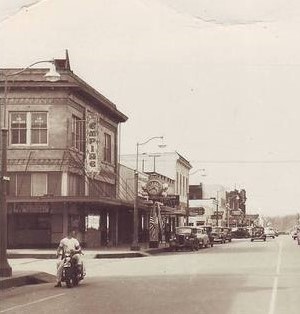
The injunction covering deposit money was a key one.  The Ives decision didn’t just anger the Warner Bros. exchange, but all the exchanges, and he still needed them to supply his houses.  Residual bad feelings may have led to another spat Waldo Ives had with Film Row later that spring, this time with the United Artists exchange.   In that case Ives was visited by a United Artists salesman and cut a deal to show Charlie Chaplin’s The Circus at the Empire, along with two additional films.  All three pictures, according to Ives, were straight percentage deals – the amount he would pay the exchange was a specific cut of the box office.  But the contract was rejected by the exchange because it was their policy, they claimed, never to accept percentage deals.  Ives countered with an offer of guaranteed minimum payments, which was also rejected.  Normally this would have been chalked up as a failed negotiation, but Ives later claimed to have received a phone call from the United Artists salesman who told him that the deal was torpedoed because he wouldn’t accept a block booking deal for 12 additional films.  That was part of the original offer, but Waldo Ives rejected it – many of those 12 films, he felt, were either old or featured performers who had no box-office value in Anacortes.  “‘The point I want to bring out is that the UA Corporation works on the slogan ‘Sold individually, on merit,’” Ives later wrote in a letter to Motion Picture Record.  “‘Yet when I make a good offer for some of their pictures, they do the same thing that every other block booking company does – sell all, or none.’”[5]  In response the Record reached out to D.J. McNerney, manager of the Seattle UA office, for comment.  He reiterated that his office didn’t make straight percentage deals, and although negotiations didn’t work out with Waldo Ives, he was certain that a “fair and equitable” solution could be found.  As for the alleged phone call, McNerney claimed not to know anything about it but firmly asserted that none of his people would break internal protocol.  In fact, to emphasize that point, McNerney told the Record that he would immediately terminate any salesman found to have made such a call.

With respect to the Warner Bros. issue, however, both sides eventually squared off in a King County courtroom in June 1928, with Judge Gilliam issuing a decision in favor of Waldo Ives. Gilliam took no position on the facts of the case since he considered the entire thing a matter of procedure.  Waldo Ives demonstrated that he had a legitimate case, and that matter was heard and decided back in December 1927, in accordance with the rules governing the Board of Arbitration’s operations.  Judge Gilliam did not dispute that a case could, under certain circumstances, be overturned, but this would generally occur in the face of impartiality, fraud or misconduct by members of the Board.  He did not agree, in this situation, that the original decision could be undone based simply on new information.  The rotating membership on the Board of Arbitration was a key factor in his decision.  “..[O]ne Board might make one ruling, and another Board, as it has done in this case, reverse the ruling of the Board on the first hearing,” Judge Gilliam observed.  “[Parties] might change the Board and open [cases] up again and have another hearing and run on indefinitely.”[6]

So Waldo Ives prevailed in his dispute with the Seattle Warner Bros. exchange, at least in this stage of the legal process.  But despite being a “nationally famous” case, as Motion Picture Record called it, it turns out that the Ives decision wasn’t as momentous as exhibitors hoped it would be.  Rather than open the floodgates for litigating a variety of distribution practices, the industry collectively shrugged and went back to business, with the local Board of Arbitration continuing to hear cases, most of which were adjudicated the way they always had – in favor of the exchanges.  This was even the case with Waldo Ives; within months of being the exhibitors’ cause célèbre, he himself was sitting as a volunteer arbiter, hearing disputes between other parties.  Some feared the Ives decision would change everything, but in fact it changed almost nothing.

Why was this the case?  Perhaps because Waldo Ives was the victim of poor timing – there was plenty going on in the industry that kept local exhibitors preoccupied.  This included the arrival of sound; The Jazz Singer hit Northwest theatres mere weeks after the original Ives decision in December 1927, and was now being rolled out to other Washington cities.  Not only was sound posing challenges for exhibitors, but it was also impacting the employment security of musicians, in particular, leading to a rise in labor tensions.  Then, of course, there was ongoing consolidation across the movie industry, with the studios buying up theatres from individual or regional movie men, creating chains of venues that allowed Hollywood to control the movie business from production to distribution to exhibition.

On a national level, however, the arbitration process was breaking down – not just in Washington, but in other areas as well.  Whereas the situation in Seattle remained stable, in Minneapolis and other cities there were continued (and contentious) disputes between exhibitors and exchanges.  Government regulators were also getting involved with industry matters, particularly in light of the vertical integration occurring throughout the business.  This culminated in a lawsuit decided on October 15, 1929, by Judge Thomas Thatcher, in the case of United States vs. Paramount Famous Players-Lasky Corp.  Known as the “Thatcher decision” in the trade papers, the case was one of several brought by the U.S. government in the 1920s challenging anti-competitive practices within the film industry, which included distribution practices such as block booking and blind bidding.

In a wide-ranging decision Judge Thatcher, a district court judge in New York, ruled against the compulsory arbitration clause in the standard film contract, though the court’s decision didn’t go so far as to prohibit distribution practices like block booking.[7]  Arbitration was good in principle, Thatcher observed, but the existing process needed significant revision.  To that end, representatives of the Hays Office in California were already meeting with government representatives to broker a solution.  Ideas floating around included reinstating the deposit system (used in an earlier era and something exhibitors vigorously opposed), or perhaps they’d ditch the standard film contract in favor of different versions, giving the exhibitor the option to negotiate under different terms.

Reaction to the Thatcher decision showed that different parts of the country had different takes on arbitration.  In states like Colorado, Ohio, Georgia, Kansas and Missouri, the process continued as usual, with few interruptions.  In Mississippi, Louisiana and Alabama, everything shut down and no cases were heard until there was additional clarity.  Meanwhile, in states like Illinois, Indiana, Nebraska, Wisconsin, Iowa and Oregon, arbitration continued as before but the awards were considered, for the time being, unenforceable, so the loser of any case had the luxury of ignoring the decision altogether.  Washington state was one of the those adopting a “wait and see” approach, temporarily suspending arbitration meetings while both exchange men and exhibitors took time to review the Thatcher decision and decide how each side was impacted. Of course, “wait and see” didn’t last for very long. When the stock market crashed some two weeks after the Thatcher decision was handed down, the thorny issue of arbitration took a backseat to larger economic concerns, which threatened the livelihoods of not only individual exhibitors but even the Hollywood studios themselves.

Like the Waldo Ives case, the Thatcher decision failed to bring closure to the many questions around arbitration and distribution, but helped set the stage for the next round of arguments. Matters of timing helped delay some decisions. Despite continued scrutiny of industry practices, for example, the United States government voluntarily chose to take its foot off the accelerator. Since movies were playing a significant role in boosting public moral during the Depression, they agreed to not to strongly enforce decisions like U.S. vs. Paramount Famous Players-Lasky Corp. in return for the studios adopting certain union and labor reforms, thus limiting the impact that case (and others) had on film distribution practices.[8]

The case that eventually brought about lasting change to the industry dates from the late 1930s, although United States v. Paramount Pictures, Inc. et al. wasn’t actually decided until 1948. The suit was originally to help protect the rights of small theatre owners against the larger chains, but the decision had far-reaching ramifications, helping uncouple production and distribution from exhibition and weakening the old Hollywood studio system. For exhibitors, this included changes around to run-time clearances, limitations on block booking and the elimination of blind bidding. It also paved the way for more independent theaters and production companies to enter the marketplace, something that contributed to the growing interest in foreign and art-house cinema during the 1960s and 1970s.

By Eric L. Flom – November 2025


Notes:

[1] See “Arbitration Board Reverses Decision,” Motion Picture Record, 4 February 1928 (Vol. 5, No. 5), Page 4; “Judge Gilliam Says Original Arbitration Award Stands,” Motion Picture Record, 7 July 1928, Page 4; and “Seattle,” Motion Picture Record, 7 July 1928, Page 8.
[2] “Arbitration Board Reverses Decision,” Motion Picture Record, 4 February 1928, Page 4.
[3] See “Arbitration Clause Big Issue at Chicago,” Motion Picture Record, 11 February 1928, Page 4; “Warners [sic] in Arbitration Jam in Minneapolis Territory,” Motion Picture Record, 25 February 1928, Page 3; “Minneapolis Film Bd. May Appoint Arbiters,” Motion Picture Record, 3 March 1928, Page 3; “Arbitration Resumed in Minneapolis,” Motion Picture Record, 21 April 1928, Page 3; and “Editorial Paragraphs,” Motion Picture Record, 26 May 1928, Page 3.
[4] See “Famous Warner Bros. vs. Waldo Ives Case to go Into Court; Temporary Injunction Granted,” Motion Picture Record, 3 March 1928, Page 4; “Seattle,” Motion Picture Record, 3 March 1928, Page 9; “Permanent Injunction In Warner-Ives Case,” Motion Picture Record, 31 March 1928, Page 3; and “Warners’ Arbitration Fight Due for Hearing in Seattle Court,” Motion Picture News, 24 March 1928, Page 951.
[5] Waldo Ives, as quoted in “Ives Complains That United Artists Will Not Sell Him ‘Individually,’” Motion Picture Record, 3 March 1928, Page 13; see also “McNerney Says Ives Proposition Turned Down Because Wasn’t Satisfactory,” Motion Picture Record, 3 March 1928, Page 13.
[6] Judge Gilliam, as quoted in “Judge Gilliam Says Original Arbitration Award Stands,” Motion Picture Record, 7 July 1928, Page 4.
[7] J.A. Aberdeen, Hollywood Renegades: The Society of Independent Motion Picture Producers (Los Angeles: Cobblestone Entertainment – 2000), Page 53.
[8] Ibid.